Accessing the series
The full series is available on ABC iview.
Schools can purchase a downloadable copy from the ACTF Shop.
Professional Learning
Join us for our free professional learning sessions exploring how to use My Place in the classroom.
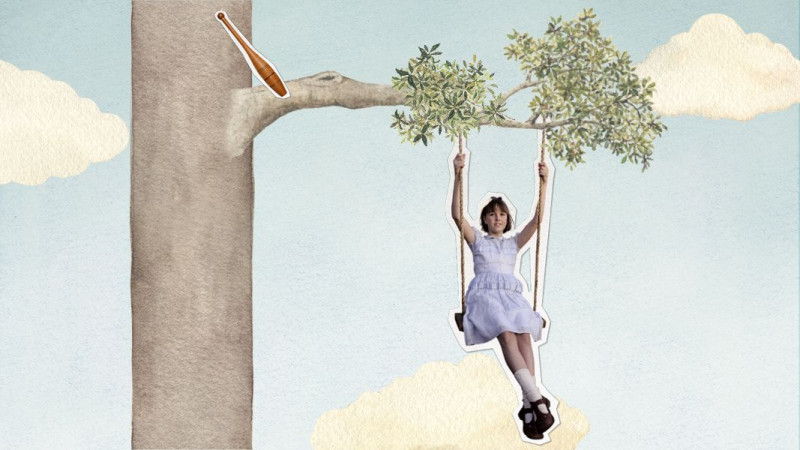
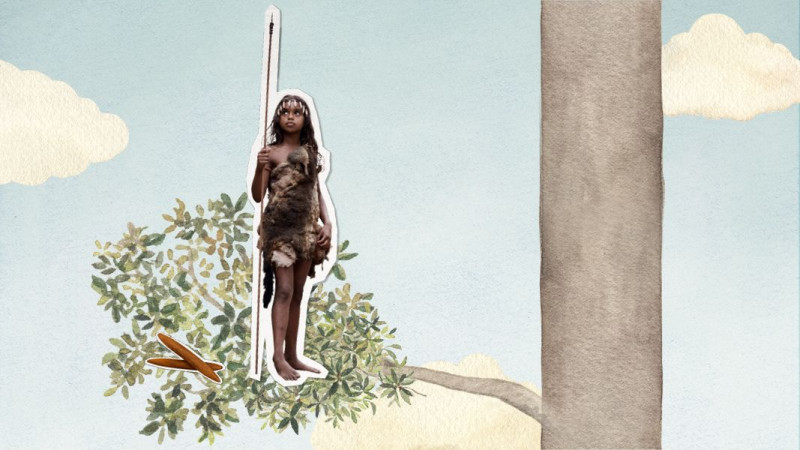
My Place brings Australian history to life through the stories of children who live in the same place across different decades. Explore the dropdown below for four simple getting started activities to introduce the series to your class.
There is no single prescribed pathway through this resource. Teachers and students are encouraged to approach the material in ways that align with their interests, curriculum priorities and available time. Inquiry sprints may be used as standalone activities, combined across a sequence of lessons or adapted to support differentiated learning within the classroom. This resource supports learning across the following curriculum areas:
- Humanities and Social Sciences (HASS)
- English
It also engages with key general capabilites and cross-curriculum priorities. Relevant curriculum links are provided at the end of each module to support planning and alignment with teaching goals.
The resource is organised by episode, with each episode exploring a different decade through the experiences of a central character. Each episode is presented as a module and can be accessed through the timeline tree or the navigation menu.
Modules can be used as complete learning sequences or as standalone clip-and-activity combinations, offering flexibility for different classroom contexts. Each module includes the following elements:
Decade timeline
The decade timeline provides context for the episode, exploring significant historical events, social changes and attitudes of the time. It also includes a First Nations Focus, highlighting enduring connections to Country, culture and community, and recognising the continuing histories and experiences of First Nations peoples.
Provocation question
The provocation question is designed to spark curiosity, conversation and critical thinking. Taking time to explore this question with students before engaging with the inquiry sprint activities can help build connections, encourage reflection and support deeper inquiry.
Inquiry sprints
Learning activities are organised into inquiry sprints, supporting students to investigate ideas, ask questions and develop understanding through focused inquiry. See below for more information about this key feature of the resource.
Additional materials
Each module includes a range of supporting resources, such as additional scenes from the episode, behind-the-scenes content, extracts of Nadia Wheatley reading My Place and images that provide further opportunities for exploration and discussion.
The learning design of My Place is grounded in inquiry pedagogy, drawing on the work of Kath Murdoch. Murdoch’s inquiry approach supports students to build understanding through curiosity, questioning and meaningful investigation. It encourages learners to move beyond surface knowledge, engaging deeply with ideas, perspectives and connections.
In this resource, that model has been adapted into inquiry sprints. These are short, focused learning sequences designed to work within the realities of classroom time while retaining the integrity of inquiry learning. Each sprint is anchored in a carefully selected clip from the series, offering a rich stimulus for thinking, discussion and exploration.
Inquiry sprints are designed to be:
Responsive – allowing teachers to follow student interests and questions
Flexible – able to be completed in a single lesson or extended over time
Purposeful – connecting directly to key themes of place, identity and change
Imaginative – inviting creative and critical responses
Rather than following a full, extended inquiry cycle, these sprints distil key phases of Murdoch’s model into accessible classroom practice. They provide repeated opportunities for students to engage in inquiry, building confidence and capability over time.
Structure of an inquiry sprint
Each inquiry sprint follows three core stages. These stages reflect essential elements of inquiry learning while supporting clear and manageable classroom implementation.
Tuning in
Students are introduced to a short clip from the episode and invited to engage with it in an open and reflective way. They consider what they notice, what they wonder and how the clip makes them feel. This stage activates prior knowledge and surfaces student thinking. It creates space for curiosity and helps teachers identify existing understandings and questions. Students may respond through:
- whole-class or small group discussion
- drawing or visual response
- quick writes or sentence starters
- think-pair-share activities
Finding out & sorting out
Students begin to investigate the ideas raised in the clip. They explore context, gather information and consider different perspectives, including those represented in the episode and those that may be missing. This stage supports students to organise their thinking and deepen their understanding. It may include:
- guided research
- discussion and debate
- analysing characters, events or themes
- comparing past and present experiences
- engaging with primary and secondary sources
Teachers may choose to scaffold this stage more closely or allow for greater student direction, depending on the focus and the needs of the class.
Making connections
Students reflect on their learning and connect new understandings to their own lives, other texts and broader concepts. They consider why the learning matters and how their thinking has changed.This stage supports meaning-making and encourages students to see themselves in relation to the content.Students may:
- share reflections through discussion or writing
- create creative responses, such as artworks, stories or role play
- draw links between different decades or episodes
- connect themes to contemporary issues or their own experiences
Building inquiry over time
While each inquiry sprint is designed to stand alone, together they build a culture of inquiry in the classroom. Repeated engagement with this structure helps students to:
- ask thoughtful questions.
- consider multiple perspectives.
- develop empathy and historical understanding.
- make meaningful connections across time and place.
Teachers can use individual sprints as entry points or sequence several to develop a deeper investigation across an episode or theme.
The history of this country is shaped by tens of thousands of years of continuous Aboriginal and Torres Strait Islander cultures, knowledge and connection to Country. These are the oldest continuing cultures in the world and remain central to understanding Australia’s past, present and future.
My Place Reimagined recognises that every story of place sits within First Nations histories. Across each decade timeline, a First Nations focus highlights continuing connection to Country, community perspectives and the ways in which histories are experienced differently. These moments invite students to consider whose stories are told, whose voices are heard and how place is understood across time.
Teachers are encouraged to approach these elements with care, respect and openness. The resource supports students to:
- recognise the ongoing presence of First Nations peoples and cultures
- understand that history is shared, contested and experienced in different ways
- build respectful curiosity and empathy
- reflect on their own connection to place
Additional guidance to support teaching and learning in this area is available in the following episode-specific teacher guide pages:
These guides provide further context, teaching considerations and suggested approaches for engaging with First Nations perspectives in the classroom.
This section allows you to search episodes of My Place through three themes: Family and Community, Lifestyle and Technologies. Each theme brings together episodes that relate to a particular topic, helping students investigate how life in Australia has changed over time.