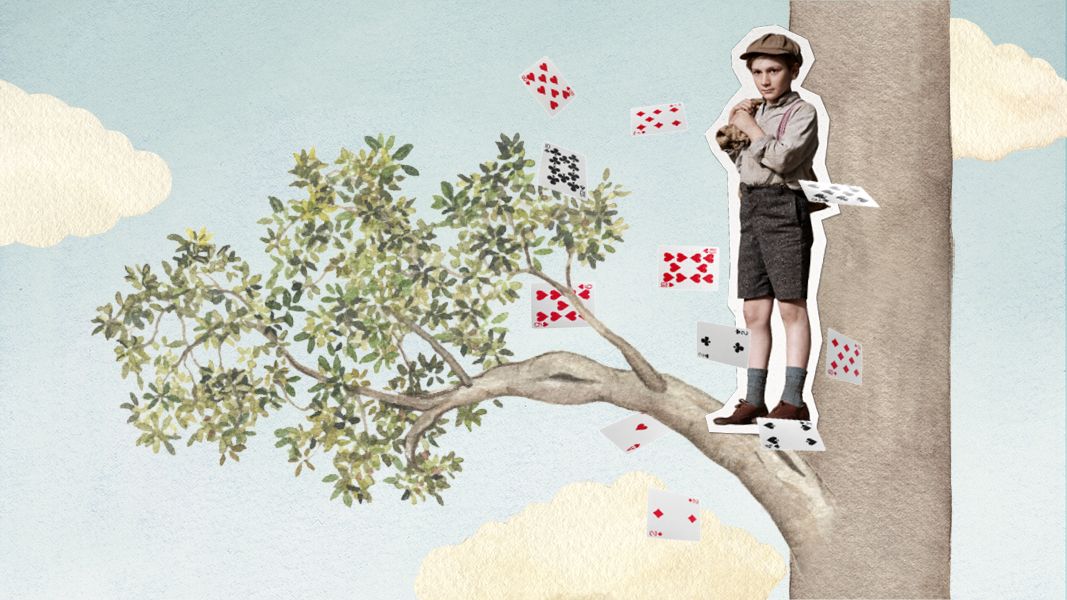
1918: Bertie
Bertie is determined to buy a pair of brogue shoes to welcome his brother Eddie home from World War I. As he scrambles to earn the final shilling, Bertie performs magic tricks, visits the repatriation hospital, and shares moments with returned soldiers. Amid grief, loss, and the announcement of Armistice, Bertie’s story explores resilience, generosity, and the quiet ways communities honour those who return, and those who don’t.
1910s Decade Overview
The 1910s were a decade of war, sacrifice, and profound social change, with the ANZAC legend born at Gallipoli and conscription debates dividing Australians. Amid grief from the Spanish flu, women stepped into new civic roles, First Nations soldiers served despite exclusion, and scientific advances like CSIRO and wireless communication began connecting the nation.
1911: Margaret Fisher, wife of Prime Minister Andrew Fisher, led the Australian delegation in support of British women’s suffrage in London.
1912: Aya-I-G, a First Nations man, received Australia’s first gallantry medal for saving Constable W. F. Johns from drowning.
1913: Australia’s first navy was established with seven ships, enhancing national defence capabilities.
1914: The Australian Red Cross was formed, providing humanitarian aid during World War I.
1915: ANZAC troops landed at Gallipoli in April and retreated in December, marking a defining moment in Australian military history. The first female police officers were appointed in Victoria, South Australia, and New South Wales.
1916 & 1917: Two national plebiscites on conscription failed, revealing deep divisions in wartime Australia.
1917: CSIRO was founded, laying the groundwork for scientific research and innovation in Australia. The Trans-Australian Railway opened, connecting the east and west coasts and transforming travel and trade.
1918: The first direct wireless telegram using radio waves was transmitted from Britain to Australia, revolutionising communication.
1919: The Spanish flu pandemic reached Australia, causing widespread illness and social disruption.
First Nations Focus: First Nations Australians served in World War I despite exclusion from rights, recognition, and enlistment policies, with many enlisting unofficially and showing courage in the face of systemic discrimination. Aya-I-G’s 1912 gallantry medal illustrates civic contribution, while stories of families maintaining cultural traditions through kinship and resilience deepen understanding of service, injustice and continuity.
Provocation Question
How do we honour those who serve, and what helps us carry their stories forward?
Clip 1: On Tick
Bertie is trying to pay off the last shilling owing on his present for his brother Eddie who is returning home after serving in the First World War. Mr Watson, the store owner, will not advance him a loan. Bertie goes to the repatriation hospital to bring his mother (a nurse) fresh goat's milk, and shares jokes with his friends Sid and Mr Bracey who are both returned soldiers.
Tuning In
As a class, discuss the following questions:
-
What does Bertie’s gift show about his hopes and values?
-
How did families welcome soldiers home after World War I?
-
What does “on tick” mean, and what does it tell us about life in 1918?
Finding Out & Sorting Out
Create a class mind map about family life after the war. Include ideas like rationing, repatriation, and emotional recovery.
In pairs, create a venn diagram comparing Bertie’s community care with modern support for veterans.
Making Connections
Write a radio or podcast script exploring how children contributed to family wellbeing during wartime. Reflect on the emotional significance of gift-giving in times of hardship.
Clip 2: Impact of War
Evelyn, Bertie's sister, receives news of the death of Freddie Miller. Bertie laments the death of his father and Freddie; both killed in the war. He tells Sid, a First Nations soldier, about his plan to buy his brother Eddie a present on his return from the war and they devise a plan to raise the money to purchase the gift.
Tuning In
As a class, discuss the following:
- Notice the opening scene where Bertie says, “Everyone is afraid of the telegraph boy.” Why does Bertie say this?
- What was the role of the telegram during the war?
- How did telegrams change family life and bring news of soldiers?
Finding Out & Sorting Out
Investigate the experiences of First Nations soldiers during World War I. Focus on:
- Enlistment: What barriers did Indigenous Australians face when trying to join the army? Were there official restrictions?
- Service: What roles did they perform during the war? Were they treated the same as non-Indigenous soldiers?
- After the War: How were they treated when they returned home? Did they receive equal benefits and recognition?
- Voices and Perspectives: Can you find letters, diaries, or oral histories that share their experiences?
- Legacy: How has their contribution been remembered or overlooked in Australian history?
As a class, discuss the following questions:
- Why did many First Nations Australians choose to enlist despite discrimination?
- How does this history connect to broader issues of equality and citizenship in Australia?
Making Connections
Talk about how war affected families and communities and write a short reflection: “How would I feel if my family received a telegram during wartime?”
Create a class brainstorm: What does fairness and recognition mean for soldiers then and now?
Clip 3: Armistice
Eddie speaks with Bertie about how lucky he is to survive the war with only a leg missing. Sid arrives to tell of the Armistice that signals the end of the war. The community celebrates the end of war with music, dancing and games, but not everyone can be happy at this time.
Tuning In
As a class, hold a discussion answering the following questions:
- What does armistice mean to different people in the episode?
- How do we honour those who return, and those who don’t?
- What helps us carry stories of service and loss forward?
Finding Out & Sorting Out
Research the Armistice that ended World War I on 11 November 1918. Use books, trusted websites, or classroom resources to answer:
- What does the word armistice mean?
- When and where was the Armistice signed?
- Why was the Armistice important for soldiers and civilians?
- How did Australians mark the end of the war?
- What traditions or commemorations came from this event (for example, Remembrance Day)?
Choose one of these creative ways to organise and share what you’ve learned:
Option 1: Create a timeline showing the events leading up to the Armistice and what happened afterwards.
Option 2: Design a 1918 newspaper front page, headline and short article announcing the Armistice. Include quotes or imagined reactions from Australians at the time.
Option 3: Make a colourful mind map with the word Armistice in the centre and branches for meaning, date, significance and traditions.
Option 4: Write a short diary entry from the perspective of an Australian soldier or family member on the day the Armistice was announced.
Making Connections
Think about what you learned about the Armistice and connect it to your own life and the world today. Answer these questions in complete sentences:
- Past and Present: How is the Armistice remembered in Australia today? What traditions or events keep its memory alive?
- Personal Connection: Why do you think it is important for people your age to learn about the Armistice? How does it relate to ideas of peace and fairness?
- Global Connection: Can you think of a recent event or news story where countries worked together to stop fighting or make peace? How is this similar or different to the Armistice of 1918?
Australian Curriculum Links
|
|
Year 3 |
Year 4 |
Year 5 |
Year 6 |
Knowledge and Understanding - History |
causes and effects of changes to the local community, and how people who may be from diverse backgrounds have contributed to these changes significant events, symbols and emblems that are important to Australia’s identity and diversity, and how they are celebrated, commemorated or recognised in Australia, including Australia Day, Anzac Day, NAIDOC Week, National Sorry Day, Easter, Christmas, and other religious and cultural festivals |
the diversity of First Nations Australians, their social organisation and their continuous connection to Country/Place the causes of the establishment of the first British colony in Australia in 1788 the experiences of individuals and groups, including military and civilian officials, and convicts involved in the establishment of the first British colony
|
the economic, political and social causes of the establishment of British colonies in Australia after 1800 the impact of the development of British colonies in Australia on the lives of First Nations Australians, the colonists and convicts, and on the natural environment the role of a significant individual or group, including First Nations Australians and those who migrated to Australia, in the development of events in an Australian colony |
significant individuals, events and ideas that led to Australia’s Federation, the Constitution and democratic system of government changes in Australia's political system and to Australian citizenship after Federation and throughout the 20th century that impacted First Nations Australians, migrants, women and children the motivation of people migrating to Australia since Federation and throughout the 20th century, their stories and effects on Australian society, including migrants from the Asia region |
Skills – Questioning and Researching |
develop questions to guide investigations about people, events, places and issues locate, collect and record information and data from a range of sources, including annotated timelines and maps |
develop questions to guide investigations about people, events, places and issues locate, collect and record information and data from a range of sources, including annotated timelines and maps |
develop questions to investigate people, events, developments, places and systems locate, collect and organise information and data from primary and secondary sources in a range of formats |
develop questions to investigate people, events, developments, places and systems locate, collect and organise information and data from primary and secondary sources in a range of formats |
Skills - Interpreting, analysing and evaluating |
analyse information and data, and identify perspectives |
analyse information and data, and identify perspectives |
evaluate primary and secondary sources to determine origin, purpose and perspectives |
evaluate primary and secondary sources to determine origin, purpose and perspectives |
Skills - Concluding and decision-making |
draw conclusions based on analysis of information |
draw conclusions based on analysis of information |
develop evidence-based conclusions |
develop evidence-based conclusions |
Skills - Communicating |
present descriptions and explanations, using ideas from sources and relevant subject-specific terms |
present descriptions and explanations, using ideas from sources and relevant subject-specific terms |
present descriptions and explanations, drawing ideas, findings and viewpoints from sources, and using relevant terms and conventions |
present descriptions and explanations, drawing ideas, findings and viewpoints from sources, and using relevant terms and conventions |
|
|
Year 3 |
Year 4 |
Year 5 |
Year 6 |
Language |
|
|
understand how to move beyond making bare assertions by taking account of differing ideas or opinions and authoritative sources
|
understand the uses of objective and subjective language, and identify bias
|
Literature |
|
|
identify aspects of literary texts that represent details or information about historical, social and cultural contexts in literature by First Nations Australian, and wide-ranging Australian and world authors
|
identify responses to characters and events in literary texts, drawn from historical, social or cultural contexts, by First Nations Australian, and wide-ranging Australian and world authors |
Literacy |
recognise how texts can be created for similar purposes but different audiences
use interaction skills to contribute to conversations and discussions to share information and ideas
identify the audience and purpose of imaginative, informative and persuasive texts through their use of language features and/or images
plan, create, edit and publish imaginative, informative and persuasive written and multimodal texts, using visual features, appropriate form and layout, with ideas grouped in simple paragraphs, mostly correct tense, topic-specific vocabulary and correct spelling of most high-frequency and phonetically regular words
plan, create, rehearse and deliver short oral and/or multimodal presentations to inform, express opinions or tell stories, using a clear structure, details to elaborate ideas, topic-specific and precise vocabulary, visual features, and appropriate tone, pace, pitch and volume
|
compare texts from different times with similar purposes and audiences to identify similarities and differences in their depictions of events listen for key points and information to carry out tasks and contribute to discussions, acknowledging another opinion, linking a response to the topic, and sharing and extending ideas and information identify the characteristic features used in imaginative, informative and persuasive texts to meet the purpose of the text plan, create, edit and publish written and multimodal imaginative, informative and persuasive texts, using visual features, relevant linked ideas, complex sentences, appropriate tense, synonyms and antonyms, correct spelling of multisyllabic words and simple punctuation
plan, create, rehearse and deliver structured oral and/or multimodal presentations to report on a topic, tell a story, recount events or present an argument using subjective and objective language, complex sentences, visual features, tone, pace, pitch and volume
|
describe the ways in which a text reflects the time and place in which it was created
use appropriate interaction skills including paraphrasing and questioning to clarify meaning, make connections to own experience, and present and justify an opinion or idea
explain characteristic features used in imaginative, informative and persuasive texts to meet the purpose of the text
plan, create, edit and publish written and multimodal texts whose purposes may be imaginative, informative and persuasive, developing ideas using visual features, text structure appropriate to the topic and purpose, text connectives, expanded noun groups, specialist and technical vocabulary, and punctuation including dialogue punctuation
plan, create, rehearse and deliver spoken and multimodal presentations that include relevant, elaborated ideas, sequencing ideas and using complex sentences, specialist and technical vocabulary, pitch, tone, pace, volume, and visual and digital features
|
examine texts including media texts that represent ideas and events, and identify how they reflect the context in which they were created
use interaction skills and awareness of formality when paraphrasing, questioning, clarifying and interrogating ideas, developing and supporting arguments, and sharing and evaluating information, experiences and opinions
plan, create, edit and publish written and multimodal texts whose purposes may be imaginative, informative and persuasive, using paragraphs, a variety of complex sentences, expanded verb groups, tense, topic-specific and vivid vocabulary, punctuation, spelling and visual features
plan, create, rehearse and deliver spoken and multimodal presentations that include information, arguments and details that develop a theme or idea, organising ideas using precise topic-specific and technical vocabulary, pitch, tone, pace, volume, and visual and digital features
|
Critical and Creative Thinking
Students develop critical and creative thinking by investigating historical sources and perspectives, evaluating the experiences of soldiers and families, and creating original responses such as podcasts, diary entries, timelines and newspaper articles.
Ethical Understanding
Students develop ethical understanding by examining issues of fairness, sacrifice, recognition and citizenship, particularly in relation to the treatment of First Nations soldiers during and after World War I.
Intercultural Understanding
Students develop intercultural understanding by exploring the experiences and contributions of First Nations Australians during World War I and considering how different groups experienced the war and its aftermath.
Personal and Social Capability
Students develop personal and social capability by reflecting on themes of grief, resilience, empathy, community support and remembrance, and by discussing how individuals and communities respond to loss and hardship.