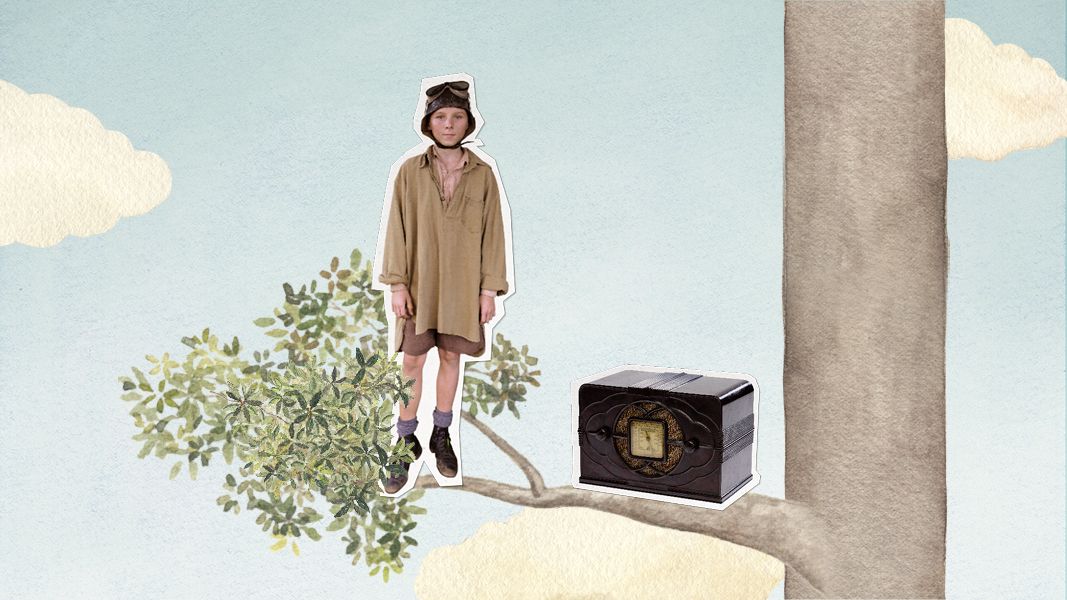
1938: Colum
Colum wants to stop his best mate Thommo’s family from being evicted and summon the courage to ride his billycart down Brickpits Hill. Through radio plays, punting schemes, and community resilience, Colum’s story explores economic hardship, friendship, and civic ingenuity during the Great Depression.
1930s Decade Overview
The 1930s were a time of economic hardship, resilience, and rising civic awareness. The Great Depression left over 30% of Australians unemployed, forcing families to rely on charity, backyard gardens, and informal economies. The government introduced ‘the susso’ in 1932, but women were excluded. First Nations activism gained momentum, with the 1938 Day of Mourning marking the first national protest against discrimination.
1929: The Stock Market Crash triggered global depression. The Wall Street crash led to widespread economic collapse, with Australia facing soaring unemployment, wage cuts, and mass hardship.
1930: Phar Lap won the Melbourne Cup. The beloved racehorse became a Depression-era icon of hope and resilience, capturing the hearts of Australians during tough times. Amy Johnson flew solo from England to Australia. The pioneering British aviator completed a record-breaking solo flight, inspiring admiration and advancing women’s visibility in aviation.
1932: The sustenance payment ‘susso’ was introduced as unemployment relief to support jobless Australians, although women were excluded due to gendered assumptions. The Sydney Harbour Bridge opened, connecting Sydney’s north and south, providing vital jobs during the Depression, and becoming a symbol of national pride and engineering achievement. The Australian Broadcasting Commission (ABC) launched, bringing news, music, and drama into homes and shaping national identity through radio.
1935: Cane toads were introduced. Released in Queensland to control beetles in sugarcane crops, they quickly became an invasive species with lasting ecological impact.
1936: The last Tasmanian Tiger died in captivity. The extinction of the thylacine in Hobart’s Beaumaris Zoo marked a tragic loss in Australia’s biodiversity and conservation history.
1937: The Cummeragunja Walk Off by Yorta Yorta people saw more than 200 First Nations residents leave the mission in protest of poor conditions and government control, an early act of Indigenous resistance.
1938: On Australia Day, First Nations leaders held the Day of Mourning protest - the first national protest against colonisation and injustice, demanding civil rights and recognition.
First Nations Focus: First Nations activism, resilience, and protest shaped civic identity and challenged injustice during the 1930s. The 1938 Day of Mourning marked the first national protest against the treatment of First Nations peoples, led by William Cooper, Pearl Gibbs, and Jack Patten. This event, and earlier actions like the 1937 Cummeragunja Walk Off, highlighted the fight for fair wages, freedom of movement, and family rights. These stories offer powerful insights into leadership, resistance, and the enduring struggle for recognition and justice.
Provocation Question
How do people stay strong and hopeful during hard times?
Clip 1: The Dole Inspector
The dole inspector is a feared authority in the neighbourhood where Colum and his family live. When the alarm is given that he is on his way, the families hide any evidence of making a living. The dole inspector could enter the homes of people receiving the dole and tell them to leave their house or sell their belongings.
Tuning In
Hold a class discussion about what life was like during the Great Depression and how people managed during tough times. Discuss the following questions:
- What does the dole inspector represent?
- How did families survive without formal unemployment support?
- What does this tell us about resilience and community?
Finding Out & Sorting Out
In small groups, research what life was like in Australia during the 1930s. Use these prompts to guide your inquiry:
- What was the Great Depression?
- How did people survive during the Great Depression?
Look closely at everyday life in the 1930s, including unemployment, family routines and informal ways people earned money. Try to find real stories and evidence by exploring oral histories, old newspaper articles, and government records.
Once you have gathered your information, organise your findings in a creative way:
- Make a timeline showing key events and changes during the Depression, or;
- Create a mind map that shows how communities adapted and supported each other during hard times
Present your findings back to the class and discuss what this tells us about resilience and the importance of community.
Making Connections
Connect what you've learned in your own lives to how communities adapted during the Great Depression. As a class, discuss the following questions:
- How do communities today support people who are struggling?
- What can we learn from the resilience shown during the Great Depression?
Write a short reflection or journal entry about what surprised you most and how these stories help us understand the importance of community and change.
Clip 2: The Shadow & Clip 3: Punting
Clip 2: The Shadow
The Shadow is a famous a comic character, popular at this time with children. The character and his adventures were made into a radio play, which was broadcast as a serial each week. We also see Colum and Thommo calculate how much they need to win on the Melbourne Cup to save Thommo’s family.
Clip 3: Punting
Colum and Thommo are collecting bets from their neighbours on horses in the 1938 Melbourne Cup. They present these bets to Mr O'Sullivan, the local shopkeeper. Colum and Thommo hope to win big in order to save Thommo's family from eviction.
Tuning In
In these clips, we see Colum and Thommo collecting bets for the Melbourne Cup to help Thommo’s family avoid eviction. We also learn about The Shadow, a popular comic character whose adventures were broadcast as a radio serial, giving people entertainment and escape during the Great Depression.
As a class, discuss the following questions:
As a class, discuss the following questions:
- Why do you think radio shows like The Shadow were so popular?
- What does the Melbourne Cup represent for Colum and Thommo?
- How do these clips show hope and risk during difficult times?
Finding Out & Sorting Out
Find out how Australians coped during the Great Depression and what gave them hope. Choose one research task:
Option 1: Investigate the Melbourne Cup and why it was culturally significant.
Option 2: Explore radio and entertainment in the 1930s and how it impacted Australian life.
As you research:
- Compare sources such as radio clips, betting records, and oral accounts.
- Identify what these reveal about hope and risk during the Depression.
- Present your findings as a poster, timeline, or Venn diagram.
Making Connections
In small groups, write and record a short radio play about life in the Depression. Show how radio gave people hope and sparked imagination. Share your play with the class and reflect on why media was so important for communities at the time.
Connect these ideas to our own lives and communities. As a class, discuss the following questions:
- Have I ever helped someone during a tough time?
- What helps me stay hopeful when things feel uncertain?
- How do stories of hardship shape our values?
Australian Curriculum Links
|
|
Year 3 |
Year 4 |
Year 5 |
Year 6 |
Knowledge and Understanding - History |
causes and effects of changes to the local community, and how people who may be from diverse backgrounds have contributed to these changes
|
|
|
changes in Australia's political system and to Australian citizenship after Federation and throughout the 20th century that impacted First Nations Australians, migrants, women and children |
Understanding – Civics and Citizenship |
why people participate within communities and how students can actively participate and contribute to communities |
|
how citizens (members of communities) with shared beliefs and values work together to achieve a civic goal |
|
Skills – Questioning and Researching |
develop questions to guide investigations about people, events, places and issues locate, collect and record information and data from a range of sources, including annotated timelines and maps |
develop questions to guide investigations about people, events, places and issues locate, collect and record information and data from a range of sources, including annotated timelines and maps |
develop questions to investigate people, events, developments, places and systems locate, collect and organise information and data from primary and secondary sources in a range of formats |
develop questions to investigate people, events, developments, places and systems locate, collect and organise information and data from primary and secondary sources in a range of formats |
Skills - Interpreting, analysing and evaluating |
analyse information and data, and identify perspectives |
analyse information and data, and identify perspectives |
evaluate information and data in a range of formats to identify and describe patterns and trends, or to infer relationships evaluate primary and secondary sources to determine origin, purpose and perspectives |
evaluate information and data in a range of formats to identify and describe patterns and trends, or to infer relationships evaluate primary and secondary sources to determine origin, purpose and perspectives |
Skills - Concluding and decision-making |
draw conclusions based on analysis of information |
draw conclusions based on analysis of information |
develop evidence-based conclusions |
develop evidence-based conclusions |
Skills - Communicating |
present descriptions and explanations, using ideas from sources and relevant subject-specific terms |
present descriptions and explanations, using ideas from sources and relevant subject-specific terms |
present descriptions and explanations, drawing ideas, findings and viewpoints from sources, and using relevant terms and conventions |
present descriptions and explanations, drawing ideas, findings and viewpoints from sources, and using relevant terms and conventions |
|
|
Year 3 |
Year 4 |
Year 5 |
Year 6 |
Literacy |
use interaction skills to contribute to conversations and discussions to share information and ideas plan, create, rehearse and deliver short oral and/or multimodal presentations to inform, express opinions or tell stories, using a clear structure, details to elaborate ideas, topic-specific and precise vocabulary, visual features, and appropriate tone, pace, pitch and volume |
listen for key points and information to carry out tasks and contribute to discussions, acknowledging another opinion, linking a response to the topic, and sharing and extending ideas and information plan, create, rehearse and deliver structured oral and/or multimodal presentations to report on a topic, tell a story, recount events or present an argument using subjective and objective language, complex sentences, visual features, tone, pace, pitch and volume
|
use appropriate interaction skills including paraphrasing and questioning to clarify meaning, make connections to own experience, and present and justify an opinion or idea plan, create, rehearse and deliver spoken and multimodal presentations that include relevant, elaborated ideas, sequencing ideas and using complex sentences, specialist and technical vocabulary, pitch, tone, pace, volume, and visual and digital features |
use interaction skills and awareness of formality when paraphrasing, questioning, clarifying and interrogating ideas, developing and supporting arguments, and sharing and evaluating information, experiences and opinions plan, create, rehearse and deliver spoken and multimodal presentations that include information, arguments and details that develop a theme or idea, organising ideas using precise topic-specific and technical vocabulary, pitch, tone, pace, volume, and visual and digital features |
Critical and Creative Thinking
Students develop critical and creative thinking by researching the Great Depression, evaluating historical sources, comparing different forms of evidence and drawing conclusions about how people responded to economic hardship.
Ethical Understanding
Students develop ethical understanding by considering issues of poverty, unemployment, eviction and fairness, and reflecting on how individuals and communities supported one another during difficult times.
Personal and Social Capability
Students develop personal and social capability by exploring resilience, empathy, hope and community support, and by reflecting on how people can help others and respond positively to challenges.