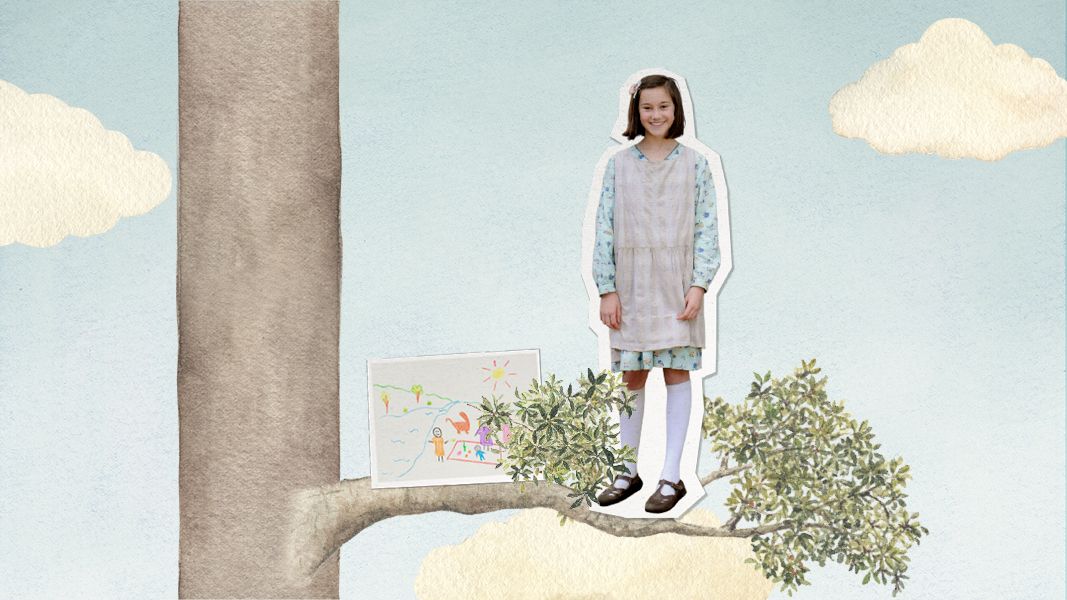
1928: Bridie
Bridie and her sister Kath are expected to care for baby Colum and complete household chores while their parents work. Bridie feels excluded as Kath and her friend Lorna sneak away for a picnic. When tragedy strikes, Bridie must navigate grief, guilt, and the emotional weight of responsibility.
1920s Decade Overview
The late 1920s were marked by economic strain, shifting gender roles, and cultural traditions. Families faced growing hardship as the economy edged toward depression. Children like Bridie and Kath carried heavy responsibilities at home while parents worked long hours. Irish migration shaped cultural identity, and funeral customs reflected deep emotional and spiritual values.
1920: The Country Party (later the Nationals) was formed to represent rural and regional Australians.
1921: Edith Cowan became the first woman elected to an Australian Parliament (Western Australia).
1922: The Country Women’s Association (CWA) was founded to support rural families and strengthen community ties.
1923: Vegemite went on sale, becoming a uniquely Australian food icon. 2SB, Australia’s first radio station, began broadcasting in Sydney, transforming communication and entertainment.
1924: Electricity from the La Trobe Valley was transmitted into Melbourne, powering homes and modernising daily life. Compulsory voting was introduced in federal elections, increasing civic participation.
1927: Aeroplane Jelly was released, soon becoming a household favourite.
1928: Charles Kingsford Smith and Charles Ulm completed the first trans-Pacific flight from San Francisco to Brisbane, a major aviation milestone.
1929: The Jazz Singer, the first film with synchronised dialogue, was shown in Australia, ushering in the era of “talkies.”
First Nations Focus: While not foregrounded in this episode, students can explore how First Nations families experienced similar economic pressures and maintained cultural traditions through kinship, storytelling, and resilience.
Provocation Question
What helps us carry responsibility, and how do we cope when things go wrong?
Clip 1: Children's Chores
Bridie's family is having breakfast and discussing what they will do that day. Her father and brother are going to work at the brickworks, her mother will be cleaning floors for neighbours, and Bridie and her older sister Kath are expected to look after baby Colum and do chores around the house. Bridie spies on Kath and her friend Lorna as they plan to sneak away from their responsibilities and have a picnic by the river.
Tuning In
Think about what family life was like in the 1920s and how children contributed to household responsibilities.
As a class, discuss the following questions:
- What chores are the girls responsible for?
- How do these compare with chores today?
- What does this tell us about family roles and expectations?
Finding Out & Sorting Out
Investigate what childhood responsibilities were like in different times and why they were so important. In small groups, research:
- What chores and responsibilities did children have in the 1920s and 1930s?
- Why were these responsibilities important for families during tough economic times?
- How do these compare with childhood responsibilities today?
Use primary and secondary sources such as:
- Oral histories (interview a grandparent or older family member)
- Photographs and diaries from the 1920s–1930s
- Online archives or library resources
Create a “Chores Then and Now” table comparing tasks from the past and present.
Making Connections
Connect what we’ve learned to your own lives and values. Reflect on these questions:
- How do chores and responsibilities shape family life today?
- Have I ever wanted to escape chores like Bridie?
- What helps me feel proud of contributing to my family?
Write a short journal entry linking your own experiences to Bridie’s story. Then, as a class, create a “Family Roles Then and Now” display that shows how expectations have changed over time.
Clip 2: The Funeral
It is the day of Lorna's funeral and the procession to the cemetery is commencing. It is a tradition to celebrate the life of the deceased person by holding a 'wake'. During this sombre celebration, Bridie tries to console her sister with the help of Miss Miller.
Tuning In
Explore how families and communities honour loved ones and cope with loss. As a class, discuss the following questions:
- What do you notice about the funeral traditions shown in the clip?
- Why do you think wakes are important for families?
- How do these traditions compare with funerals today?
Create a quick observation chart:
Column 1: Traditions shown in the clip
Column 2: Traditions you know from your own family or community
Finding Out & Sorting Out
Research how different cultures and communities honour loved ones and why these customs matter.
Investigate two or three cultures and find out how they honour and remember people who have passed away. Look for details such as ceremonies, clothing, music, food and symbols. Create a presentation and share what you have learnt with the class.
Imagine you are writing a sympathy card to Bridie and Kath. Use respectful language and include a comforting message. Decorate the card with simple, thoughtful designs or symbols that represent care and hope.
Making Connections
Connect these ideas to our own lives and traditions. Reflect on Bridie’s emotional journey and the cultural practices shown in the story. Use these prompts:
-
Have I ever felt responsible for something that went wrong?
-
What helps me feel connected to my family’s traditions?
-
How do rituals help us express grief?
Design a scrapbook showing how families keep memories alive. Compare old ways (like photo albums) with modern ways (like digital photos or social media). Write a short reflection about why these traditions matter and how they help us feel connected.
Australian Curriculum Links
|
|
Year 3 |
Year 4 |
Year 5 |
Year 6 |
Understanding – Civics and Citizenship |
why people participate within communities and how students can actively participate and contribute to communities |
diversity of cultural, religious and/or social groups to which they and others in the community belong, and their importance to identity |
|
|
Skills – Questioning and Researching |
develop questions to guide investigations about people, events, places and issues locate, collect and record information and data from a range of sources, including annotated timelines and maps |
develop questions to guide investigations about people, events, places and issues locate, collect and record information and data from a range of sources, including annotated timelines and maps |
develop questions to investigate people, events, developments, places and systems locate, collect and organise information and data from primary and secondary sources in a range of formats |
develop questions to investigate people, events, developments, places and systems locate, collect and organise information and data from primary and secondary sources in a range of formats |
Skills - Interpreting, analysing and evaluating |
interpret information and data displayed in different formats analyse information and data, and identify perspectives |
interpret information and data displayed in different formats analyse information and data, and identify perspectives |
evaluate information and data in a range of formats to identify and describe patterns and trends, or to infer relationships evaluate primary and secondary sources to determine origin, purpose and perspectives |
evaluate information and data in a range of formats to identify and describe patterns and trends, or to infer relationships evaluate primary and secondary sources to determine origin, purpose and perspectives |
Skills - Concluding and decision-making |
draw conclusions based on analysis of information
|
draw conclusions based on analysis of information
|
develop evidence-based conclusions
|
develop evidence-based conclusions
|
Skills - Communicating |
present descriptions and explanations, using ideas from sources and relevant subject-specific terms |
present descriptions and explanations, using ideas from sources and relevant subject-specific terms |
present descriptions and explanations, drawing ideas, findings and viewpoints from sources, and using relevant terms and conventions |
present descriptions and explanations, drawing ideas, findings and viewpoints from sources, and using relevant terms and conventions |
|
|
Year 3 |
Year 4 |
Year 5 |
Year 6 |
Literacy |
plan, create, edit and publish imaginative, informative and persuasive written and multimodal texts, using visual features, appropriate form and layout, with ideas grouped in simple paragraphs, mostly correct tense, topic-specific vocabulary and correct spelling of most high-frequency and phonetically regular words plan, create, rehearse and deliver short oral and/or multimodal presentations to inform, express opinions or tell stories, using a clear structure, details to elaborate ideas, topic-specific and precise vocabulary, visual features, and appropriate tone, pace, pitch and volume |
plan, create, edit and publish written and multimodal imaginative, informative and persuasive texts, using visual features, relevant linked ideas, complex sentences, appropriate tense, synonyms and antonyms, correct spelling of multisyllabic words and simple punctuation
plan, create, rehearse and deliver structured oral and/or multimodal presentations to report on a topic, tell a story, recount events or present an argument using subjective and objective language, complex sentences, visual features, tone, pace, pitch and volume
|
plan, create, edit and publish written and multimodal texts whose purposes may be imaginative, informative and persuasive, developing ideas using visual features, text structure appropriate to the topic and purpose, text connectives, expanded noun groups, specialist and technical vocabulary, and punctuation including dialogue punctuation plan, create, rehearse and deliver spoken and multimodal presentations that include relevant, elaborated ideas, sequencing ideas and using complex sentences, specialist and technical vocabulary, pitch, tone, pace, volume, and visual and digital features |
plan, create, edit and publish written and multimodal texts whose purposes may be imaginative, informative and persuasive, using paragraphs, a variety of complex sentences, expanded verb groups, tense, topic-specific and vivid vocabulary, punctuation, spelling and visual features plan, create, rehearse and deliver spoken and multimodal presentations that include information, arguments and details that develop a theme or idea, organising ideas using precise topic-specific and technical vocabulary, pitch, tone, pace, volume, and visual and digital features |
Critical and Creative Thinking
Students investigate childhood responsibilities and funeral traditions across different time periods and cultures, using primary and secondary sources to compare perspectives and draw conclusions about change over time.
Ethical Understanding
Students reflect on responsibility, guilt, empathy and caring for others as they consider Bridie’s experiences and discuss how people respond when things go wrong.
Intercultural Understanding
Students research and compare how different cultures honour loved ones through funeral customs, helping them recognise and respect diverse beliefs, traditions and practices.
Personal and Social Capability
Students explore emotions, relationships, responsibility and resilience through Bridie’s story while reflecting on their own family roles, experiences and ways of coping with challenges.