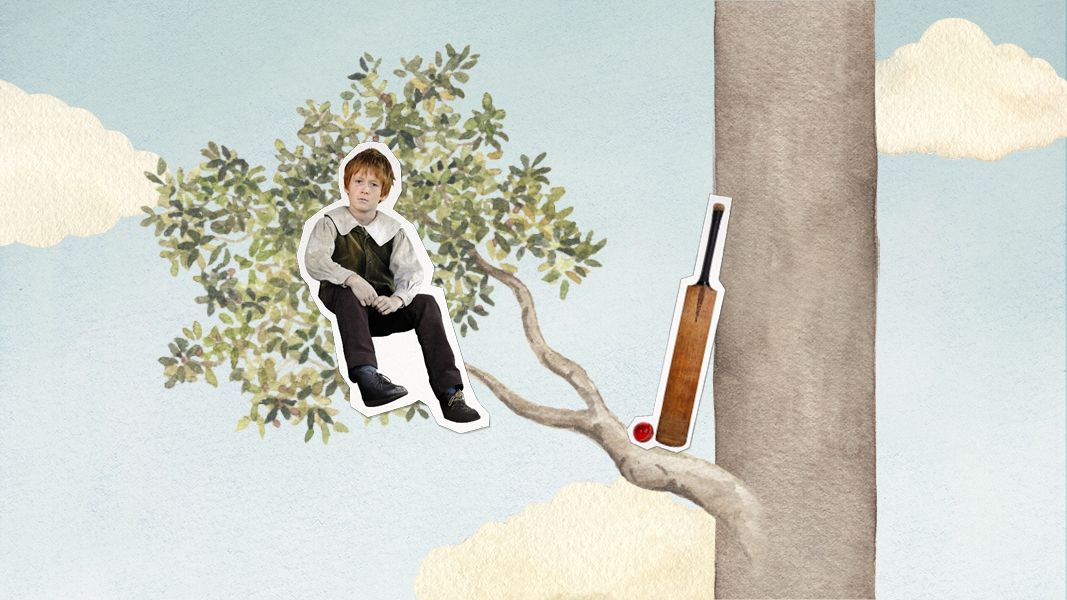
1898: Rowley
Rowley is a larrikin boy living in Sydney in 1898. He spends his days roaming the streets, dodging chores, and dreaming of adventure. His family struggles with poverty during the depression, and Rowley often finds himself in trouble with authority. Through his eyes, we glimpse the tensions of the 1890s: strikes, hardship, and the growing call for Federation. Rowley’s story highlights resilience, humour, and the everyday lives of working‑class families in a decade of change.
1890s Decade Overview
The 1890s were a time of hardship in Australia, with banks collapsing, unemployment rising and major strikes failing. During this struggle, ideas of Federation grew stronger, and First Nations people were excluded and faced harsh restrictions.
1890: The Maritime strike began, exposing tensions between workers and employers.
1891: The Australian Shearers’ strike took place, with its defeat leading to creation of Labor Leagues. The first draft of the Australian Constitution was prepared.
1892–93: Banking collapse and economic depression deepened hardship.
1894: South Australian women gained the right to vote and stand for parliament - the first in Australia.
1897–98: Constitutional conventions were held; Federation debates intensified.
1898: The first referendum on Federation was held in several colonies.
1899: The second referendum on Federation was held, with majority support achieved. The Boer War began; Australian troops were sent overseas.
1901: Federation was achieved and the Commonwealth of Australia was proclaimed.
First Nations Focus: While not foregrounded in this episode, students can explore how First Nations Australians were excluded from Federation negotiations and denied recognition in the Constitution. Colonial governments imposed restrictions on movement, employment, and cultural practices. Some leaders were given breastplates as symbolic titles, but these were imposed without consultation and reflected inequality rather than genuine respect. Despite exclusion, First Nations communities maintained cultural continuity through kinship, storytelling, and resilience. Their absence from Federation debates highlights the injustice of nation‑building that ignored the continent’s oldest custodians.
Provocation Question
What does it mean to build a nation, and whose voices are heard, or silenced in the process?
Clip 1: 1,000 Good Deeds
Rowley is working to complete his 1,000 good deeds, believing this will bring his father home. He collects manure and firewood, and spies on private school cadets who are practising to become soldiers.
Tuning In
As a class, discuss the following questions:
-
Why does Rowley believe doing chores and good deeds will help his family?
-
What kinds of chores does Rowley do, and why were these important in the 1890s?
-
How do his actions show responsibility and hope?
- Why do you think Rowley and his friend like watching the cadets at military training?
Finding Out & Sorting Out
Make a class mind map of family life and children’s responsibilities in the 1890s.
Making Connections
Write a short reflection: “If I had to do 1,000 good deeds for my family today, what would they be?”
Clip 2: Early Photography
Rowley visits Mr Merry, a photographer and boarder in Rowley's house. Mr Merry gives Rowley a photograph of the brickworks where Rowley's father worked. His mother asks Rowley about his 'book of good deeds' and Rowley explains that when he gets to 1,000 his father will come home.
Tuning In
As a class, discuss the following questions:
- How did photography help families remember people and places?
- What does the brickworks photo tell us about work and community identity?
- Why does Rowley believe his good deeds will bring his father back?
Finding Out & Sorting Out
In pairs, complete one of the following activities and then share your findings with the class:
Option 1: Research early photography in Australia and create a timeline showing how cameras and photos changed over time.
Option 2: Look closely at the brickworks photo. What does it show about work, industry and community in the 1890s? Add labels or captions to explain your ideas.
Option 3: Write a diary entry from Rowley’s perspective about his father and the photo. How does the photo make him feel?
Option 4: Design a chart for Rowley’s 1,000 good deeds. What chores or tasks would you include? Why do you think these mattered to families in the 1890s?
Making Connections
Rowley’s hope shows how families coped with hardship in the 1890s. As a class, discuss why people believed in rituals or promises like Rowley’s. Do we have similar hopes or traditions today?
Clip 3: Workers' Rights & Clip 4: Founding the ALP
Clip 3: Workers' Rights
Rowley tells his mother that he went to see the manager of the brickworks about getting his father a job. His mother eventually tells Rowley what caused Rowley's father to leave home. Rowley learns of his father's involvement in sticking up for the workers and his eventual sacking.
Watch Clip 4: Founding the ALP
In this clip, Rowley and Tom Müller visit Mr Merry when he is convening a meeting of the newly formed Labor Party. They are discussing the development of a new brickworks and are concerned with protecting the rights, health and safety of workers. Rowley and his mother discuss Rowley's father and his employment at the brickworks.
Tuning In
As a class, discuss the following questions:
- What does this reveal about workers’ struggles in the 1890s?
- How did strikes and unions shape family life?
- Should workers risk their jobs to stand up for rights?
- Why was the Labor Party founded in the 1890s?
- How did workers’ rights connect to Federation debates?
- What does Rowley’s father’s story tell us about courage and sacrifice?
Finding Out & Sorting Out
In pairs or small groups, complete one of the following activities and then share it with the class.
Option 1: Design a newspaper front page with headline and article: “Workers Demand Fair Treatment in 1898.” Include an image or drawing.
Option 2: Create a Venn diagram comparing Rowley’s father’s struggle with modern workers’ rights. What is similar? What is different?
Option 3: Create a poster promoting workers’ rights in 1898. Use bold slogans and images.
Once everyone has shared back their findings hold a class debate exploring the question, “Should all workers receive equal recognition and protection?”
Making Connections
Rowley’s story reveals how family, work, and activism shaped nationhood.
As a class, create a KWHL chart about Federation:
K: What do you already Know about Federation?
W: What do you Wonder or want to find out?
H: How will you find out the answers?
L: After completing the research, what have you Learned?
As a class, discuss the following questions:
- What does Federation mean to different people in Rowley’s world?
- Whose voices were heard during Federation, and whose were silenced?
- How do stories of work and struggle shape civic identity?
Extension Challenge
In small groups, create a podcast or letter about what Federation meant for families like Rowley’s.
Australian Curriculum Links
|
|
Year 3 |
Year 4 |
Year 5 |
Year 6 |
Knowledge and Understanding - History |
causes and effects of changes to the local community, and how people who may be from diverse backgrounds have contributed to these changes significant events, symbols and emblems that are important to Australia’s identity and diversity, and how they are celebrated, commemorated or recognised in Australia, including Australia Day, Anzac Day, NAIDOC Week, National Sorry Day, Easter, Christmas, and other religious and cultural festivals
|
|
the economic, political and social causes of the establishment of British colonies in Australia after 1800 the impact of the development of British colonies in Australia on the lives of First Nations Australians, the colonists and convicts, and on the natural environment the role of a significant individual or group, including First Nations Australians and those who migrated to Australia, in the development of events in an Australian colony |
significant individuals, events and ideas that led to Australia’s Federation, the Constitution and democratic system of government changes in Australia's political system and to Australian citizenship after Federation and throughout the 20th century that impacted First Nations Australians, migrants, women and children |
Understanding – Civics and Citizenship |
why people participate within communities and how students can actively participate and contribute to communities |
the roles of local government and how members of the community use and contribute to local services |
the key values and features of Australia’s democracy, including elections, and the roles and responsibilities of elected representatives how citizens (members of communities) with shared beliefs and values work together to achieve a civic goal |
the key institutions of Australia’s system of government, how it is based on the Westminster system, and the key values and beliefs of Western democracies |
Skills – Questioning and Researching |
develop questions to guide investigations about people, events, places and issues locate, collect and record information and data from a range of sources, including annotated timelines and maps |
develop questions to guide investigations about people, events, places and issues locate, collect and record information and data from a range of sources, including annotated timelines and maps |
develop questions to investigate people, events, developments, places and systems locate, collect and organise information and data from primary and secondary sources in a range of formats |
develop questions to investigate people, events, developments, places and systems locate, collect and organise information and data from primary and secondary sources in a range of formats |
Skills - Interpreting, analysing and evaluating |
interpret information and data displayed in different formats analyse information and data, and identify perspectives |
interpret information and data displayed in different formats analyse information and data, and identify perspectives |
evaluate information and data in a range of formats to identify and describe patterns and trends, or to infer relationships evaluate primary and secondary sources to determine origin, purpose and perspectives |
evaluate information and data in a range of formats to identify and describe patterns and trends, or to infer relationships evaluate primary and secondary sources to determine origin, purpose and perspectives |
Skills - Concluding and decision-making |
draw conclusions based on analysis of information propose actions or responses to an issue or challenge that consider possible effects of actions |
draw conclusions based on analysis of information propose actions or responses to an issue or challenge that consider possible effects of actions |
develop evidence-based conclusions propose actions or responses to issues or challenges and use criteria to assess the possible effects |
develop evidence-based conclusions propose actions or responses to issues or challenges and use criteria to assess the possible effects |
Skills - Communicating |
present descriptions and explanations, using ideas from sources and relevant subject-specific terms |
present descriptions and explanations, using ideas from sources and relevant subject-specific terms |
present descriptions and explanations, drawing ideas, findings and viewpoints from sources, and using relevant terms and conventions |
present descriptions and explanations, drawing ideas, findings and viewpoints from sources, and using relevant terms and conventions |
|
|
Year 3 |
Year 4 |
Year 5 |
Year 6 |
Literacy |
recognise how texts can be created for similar purposes but different audiences use interaction skills to contribute to conversations and discussions to share information and ideas plan, create, edit and publish imaginative, informative and persuasive written and multimodal texts, using visual features, appropriate form and layout, with ideas grouped in simple paragraphs, mostly correct tense, topic-specific vocabulary and correct spelling of most high-frequency and phonetically regular words plan, create, rehearse and deliver short oral and/or multimodal presentations to inform, express opinions or tell stories, using a clear structure, details to elaborate ideas, topic-specific and precise vocabulary, visual features, and appropriate tone, pace, pitch and volume |
compare texts from different times with similar purposes and audiences to identify similarities and differences in their depictions of events listen for key points and information to carry out tasks and contribute to discussions, acknowledging another opinion, linking a response to the topic, and sharing and extending ideas and information plan, create, edit and publish written and multimodal imaginative, informative and persuasive texts, using visual features, relevant linked ideas, complex sentences, appropriate tense, synonyms and antonyms, correct spelling of multisyllabic words and simple punctuation
plan, create, rehearse and deliver structured oral and/or multimodal presentations to report on a topic, tell a story, recount events or present an argument using subjective and objective language, complex sentences, visual features, tone, pace, pitch and volume
|
describe the ways in which a text reflects the time and place in which it was created use appropriate interaction skills including paraphrasing and questioning to clarify meaning, make connections to own experience, and present and justify an opinion or idea plan, create, edit and publish written and multimodal texts whose purposes may be imaginative, informative and persuasive, developing ideas using visual features, text structure appropriate to the topic and purpose, text connectives, expanded noun groups, specialist and technical vocabulary, and punctuation including dialogue punctuation plan, create, rehearse and deliver spoken and multimodal presentations that include relevant, elaborated ideas, sequencing ideas and using complex sentences, specialist and technical vocabulary, pitch, tone, pace, volume, and visual and digital features |
examine texts including media texts that represent ideas and events, and identify how they reflect the context in which they were created use interaction skills and awareness of formality when paraphrasing, questioning, clarifying and interrogating ideas, developing and supporting arguments, and sharing and evaluating information, experiences and opinions plan, create, edit and publish written and multimodal texts whose purposes may be imaginative, informative and persuasive, using paragraphs, a variety of complex sentences, expanded verb groups, tense, topic-specific and vivid vocabulary, punctuation, spelling and visual features plan, create, rehearse and deliver spoken and multimodal presentations that include information, arguments and details that develop a theme or idea, organising ideas using precise topic-specific and technical vocabulary, pitch, tone, pace, volume, and visual and digital features |
Critical and Creative Thinking
Students analyse historical sources, consider different perspectives on workers’ rights and Federation, and investigate whose voices were heard or silenced in the building of the nation.
Ethical Understanding
Students examine issues of fairness, justice and responsibility by exploring workers’ struggles, labour rights and the personal sacrifices made by people seeking social change.
Intercultural Understanding
Students consider how different groups experienced the lead-up to Federation and reflect on whose perspectives were included or excluded in narratives of Australian nationhood.
Personal and Social Capability
Students develop empathy and social awareness through Rowley’s experiences of family hardship, while collaborating in discussions, debates and group research activities to explore community participation and collective action.