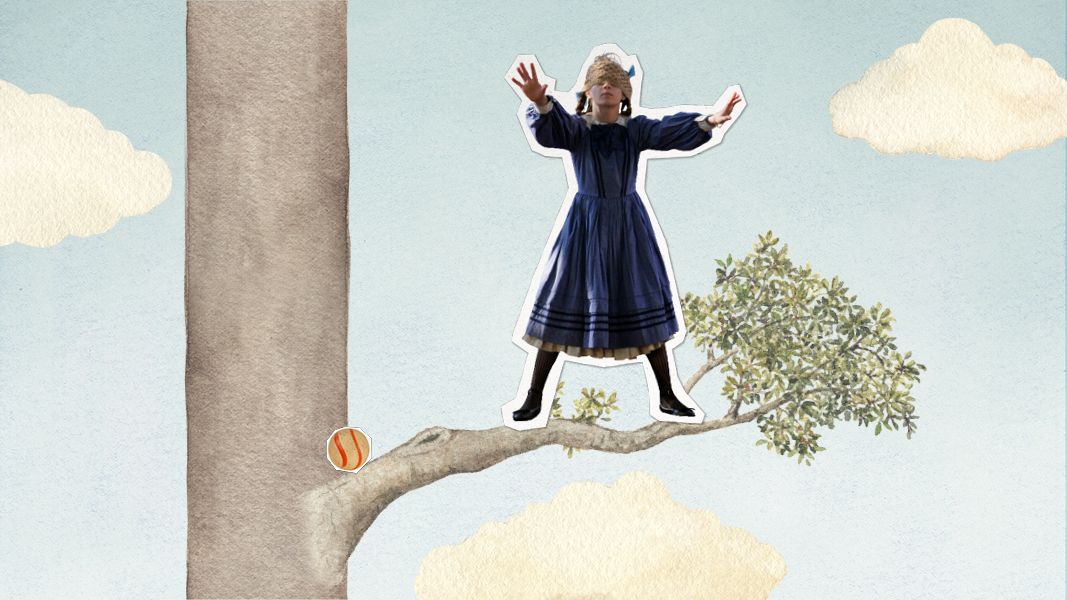
1888: Victoria
Victoria and her family have just moved into the terrace house that her father has built. She'll do anything to ensure that they stay there forever, but financial worries loom in the background. Through playful games, family rituals, and treasured objects, Victoria begins to notice the contrasts between wealth and struggle, tradition and superstition, and inclusion and exclusion. Her encounters with Alexandra Owen, Miss Müller, and her own family reveal the social hierarchies of the time, while the Centennial optimism of the 1880s masks deeper inequalities.
1880s Decade Overview
Australia was booming in the 1880s, with high wages and new jobs attracting many migrants. While some people enjoyed progress, First Nations Australians faced harsh rules that limited their freedom and culture.
1880: Ned Kelly was captured and executed; King Street in Sydney was paved with wooden blocks.
1882: Tailoresses Union was formed in Melbourne, Australia’s first women’s trade union.
1883: The NSW Aboriginal Protection Board was established, following Victoria’s lead.
1885: The first women’s suffrage bill was introduced in South Australia (unsuccessful).
1886: The Shearers’ Union was formed by W.G. Spence, growing rapidly to 9,000 members.
1887: Queen Victoria’s Golden Jubilee was celebrated across the colonies.
1888: The Centennial International Exhibition opened in Melbourne’s Royal Exhibition Building. Henry Lawson’s first story was published. Louisa Lawson launched The Dawn, advocating women’s rights.
1889: Henry Parkes delivered the Tenterfield Oration, calling for Federation.
First Nations Focus: During the 1880s, Aboriginal Protection Boards in Victoria and New South Wales imposed strict controls over First Nations peoples, limiting freedom of movement, employment and family life. While colonzier society celebrated prosperity and progress, First Nations communities endured dispossession and exclusion, yet maintained cultural continuity through community, storytelling and resilience.
Provocation Question
What does prosperity mean, and who benefits or is excluded from it?
Clip 1: Children's Games
Victoria and her siblings are playing Blind Man’s Bluff under the fig tree when Alexandra Owen arrives and claims the marble. Alexandra’s words reveal her sense of ownership over the land, the tree and even the marble, while the brief glimpse of a First Nations young girl raises questions about belonging and exclusion.
Tuning In
Reflect on the clip and as a class, discuss the following questions:
-
What do these games tell us about what life was like for children in the 1880s?
-
Why do you think children played games like Blind Man’s Bluff back then?
- Why does Alexandra say the land, the tree and the marble belong to her?
Finding Out & Sorting Out
In groups, play a game of Blind Man's Bluff. Then research and compare the games children's played in the 1880s to the games you play with your friends and family today. What is the same and what is different? Create a poster sharing your findings and present it back to the class.
Making Connections
As a class, have a discussion about ownership and belonging. Discuss the following questions:
- How do Alexandra’s words about the land, tree and marble make you feel?
- What do they tell us about who had power at that time?
- Think about the First Nations girl Victoria sees briefly. Why do you think the filmmaker chose to show her for only a moment in this scene?
- How does this connect to the impact of colonizers on First Nations peoples' sense of belonging in the 1880s?
Clip 2: Victoria's Family Supper
At dinner, Victoria’s family shares food and conversation, while superstition and social expectations creep in. Her mother comments on Miss Müller’s work, revealing attitudes towards women’s roles, while the Irish tradesman suggests hiding a dead cat in the roof for luck.
Tuning In
Watch the clip and listen carefully to what they talk about and notice the different attitudes and beliefs. As a class, discuss the following questions:
- What do family meals in the 1880s tell us about daily life?
- Why did people believe in superstitions like hiding a cat in the roof for luck?
- What do Victoria’s mother’s comments about Miss Müller tell us about women’s roles at the time?
- What foods can you spot in the scene? How are they different from what families eat today?
Finding Out & Sorting Out
Research what families ate in the 1880s and compare it to what your family eats today. Look for the types of food, how people got their food and what was considered a special treat. Think about how social class and money affected meals – what foods were common for most families and what was rare or a delicacy for wealthier households? Create a simple chart or draw two plates, one showing an 1880s meal and one showing a modern meal. Label the differences.
Making Connections
As a class, discuss the following questions:
- What does sharing food mean in your family or community? Does it show care, celebration or something else?
- Why do you think eating together can make people feel like they belong?
Write a journal entry and answer the question - what does belonging at the dinner table mean to me?
Then, think about this question and write a response: If someone new joined your family meal, what could you do to help them feel welcome?
Clip 3: Treasured Objects
Victoria and her siblings hide treasured objects around the house to ward off bad luck. Their ritual shows how superstition and hope shaped family resilience.
Tuning In
As a class, discuss superstition and hope in the 1880s. Answer the following questions:
- Why do the children believe these objects will protect their family?
- What do these objects tell us about superstition and hope in the 1880s?
- How do possessions show resilience in hard times?
- If you had to choose one object to protect your family, what would it be and why?
Finding Out & Sorting Out
In pairs, research superstitions and explain why people believed in them. Share your findings back to the class and discuss the similarities between these superstitions.
Making Connections
Victoria’s story shows how prosperity and inequality shaped everyday life in the 1880s. As a class, discuss the following questions:
- What does prosperity mean to different groups in Victoria’s world?
- How do class, gender and exclusion shape identity?
- Whose voices are heard in the clip, and whose are silenced?
- Why do you think people followed superstitions in the past? Do we have similar beliefs today?
Objects hold meaning. Victoria and her siblings hide special objects around their house to bring good luck. Make a list of the treasured objects you would choose from your own home. Next to each object, write why it is special and how you think it could help your family.
Extension Challenge
Design your own 'lucky object' and explain its meaning.
Australian Curriculum Links
|
|
Year 3 |
Year 4 |
Year 5 |
Year 6 |
Knowledge and Understanding - History |
|
|
the impact of the development of British colonies in Australia on the lives of First Nations Australians, the colonists and convicts, and on the natural environment the role of a significant individual or group, including First Nations Australians and those who migrated to Australia, in the development of events in an Australian colony
|
|
Skills – Questioning and Researching |
develop questions to guide investigations about people, events, places and issues locate, collect and record information and data from a range of sources, including annotated timelines and maps
|
develop questions to guide investigations about people, events, places and issues
locate, collect and record information and data from a range of sources, including annotated timelines and maps
|
develop questions to investigate people, events, developments, places and systems locate, collect and organise information and data from primary and secondary sources in a range of formats
|
develop questions to investigate people, events, developments, places and systems
locate, collect and organise information and data from primary and secondary sources in a range of formats
|
Skills - Interpreting, analysing and evaluating |
interpret information and data displayed in different formats
|
interpret information and data displayed in different formats
|
evaluate information and data in a range of formats to identify and describe patterns and trends, or to infer relationships
|
evaluate information and data in a range of formats to identify and describe patterns and trends, or to infer relationships
|
Skills - Concluding and decision-making |
draw conclusions based on analysis of information propose actions or responses to an issue or challenge that consider possible effects of actions
|
draw conclusions based on analysis of information
propose actions or responses to an issue or challenge that consider possible effects of actions
|
develop evidence-based conclusions
propose actions or responses to issues or challenges and use criteria to assess the possible effects
|
develop evidence-based conclusions propose actions or responses to issues or challenges and use criteria to assess the possible effects
|
Skills - Communicating |
present descriptions and explanations, using ideas from sources and relevant subject-specific terms
|
present descriptions and explanations, using ideas from sources and relevant subject-specific terms
|
present descriptions and explanations, drawing ideas, findings and viewpoints from sources, and using relevant terms and conventions
|
present descriptions and explanations, drawing ideas, findings and viewpoints from sources, and using relevant terms and conventions
|
|
|
Year 3 |
Year 4 |
Year 5 |
Year 6 |
Literature |
discuss characters, events and settings in different contexts in literature by First Nations Australian, and wide-ranging Australian and world authors and illustrators |
recognise similar storylines, ideas and relationships in different contexts in literary texts by First Nations Australian, and wide-ranging Australian and world authors
|
identify aspects of literary texts that represent details or information about historical, social and cultural contexts in literature by First Nations Australian, and wide-ranging Australian and world authors |
identify responses to characters and events in literary texts, drawn from historical, social or cultural contexts, by First Nations Australian, and wide-ranging Australian and world authors |
Literacy |
recognise how texts can be created for similar purposes but different audiences use interaction skills to contribute to conversations and discussions to share information and ideas plan, create, edit and publish imaginative, informative and persuasive written and multimodal texts, using visual features, appropriate form and layout, with ideas grouped in simple paragraphs, mostly correct tense, topic-specific vocabulary and correct spelling of most high-frequency and phonetically regular words plan, create, rehearse and deliver short oral and/or multimodal presentations to inform, express opinions or tell stories, using a clear structure, details to elaborate ideas, topic-specific and precise vocabulary, visual features, and appropriate tone, pace, pitch and volume |
compare texts from different times with similar purposes and audiences to identify similarities and differences in their depictions of events listen for key points and information to carry out tasks and contribute to discussions, acknowledging another opinion, linking a response to the topic, and sharing and extending ideas and information plan, create, edit and publish written and multimodal imaginative, informative and persuasive texts, using visual features, relevant linked ideas, complex sentences, appropriate tense, synonyms and antonyms, correct spelling of multisyllabic words and simple punctuation
plan, create, rehearse and deliver structured oral and/or multimodal presentations to report on a topic, tell a story, recount events or present an argument using subjective and objective language, complex sentences, visual features, tone, pace, pitch and volume
|
describe the ways in which a text reflects the time and place in which it was created use appropriate interaction skills including paraphrasing and questioning to clarify meaning, make connections to own experience, and present and justify an opinion or idea plan, create, edit and publish written and multimodal texts whose purposes may be imaginative, informative and persuasive, developing ideas using visual features, text structure appropriate to the topic and purpose, text connectives, expanded noun groups, specialist and technical vocabulary, and punctuation including dialogue punctuation plan, create, rehearse and deliver spoken and multimodal presentations that include relevant, elaborated ideas, sequencing ideas and using complex sentences, specialist and technical vocabulary, pitch, tone, pace, volume, and visual and digital features |
examine texts including media texts that represent ideas and events, and identify how they reflect the context in which they were created use interaction skills and awareness of formality when paraphrasing, questioning, clarifying and interrogating ideas, developing and supporting arguments, and sharing and evaluating information, experiences and opinions plan, create, edit and publish written and multimodal texts whose purposes may be imaginative, informative and persuasive, using paragraphs, a variety of complex sentences, expanded verb groups, tense, topic-specific and vivid vocabulary, punctuation, spelling and visual features plan, create, rehearse and deliver spoken and multimodal presentations that include information, arguments and details that develop a theme or idea, organising ideas using precise topic-specific and technical vocabulary, pitch, tone, pace, volume, and visual and digital features |
Critical and Creative Thinking
Students critically examine ideas about prosperity, ownership, belonging and exclusion by comparing perspectives from colonial Victoria and evaluating who benefited from social and economic change.
Ethical Understanding
Students explore ethical questions about fairness, power and inequality as they consider the impacts of colonisation, social hierarchy and exclusion on different groups in the 1880s.
Intercultural Understanding
Students develop intercultural understanding by examining the experiences and perspectives of First Nations peoples, migrants and other social groups, and reflecting on how cultural beliefs and histories shape identity and belonging.
Personal and Social Capability
Students build personal and social capability through collaborative research, discussion and reflection activities that encourage empathy, respectful communication and consideration of how people create belonging and inclusion within families and communities.
Additional Resources
Additional Clip: The Horse and Carriage
In this clip, Miss Müller is picked up by the newly furbished horse and carriage owned by the Müller Horse & Carriage Company. Victoria follows the carriage until Miss Müller is let off at the cemetery. Victoria runs into the Irish tradesman and learns that her father is having financial difficulties. This is also confirmed when she arrives home to hear her parents arguing.