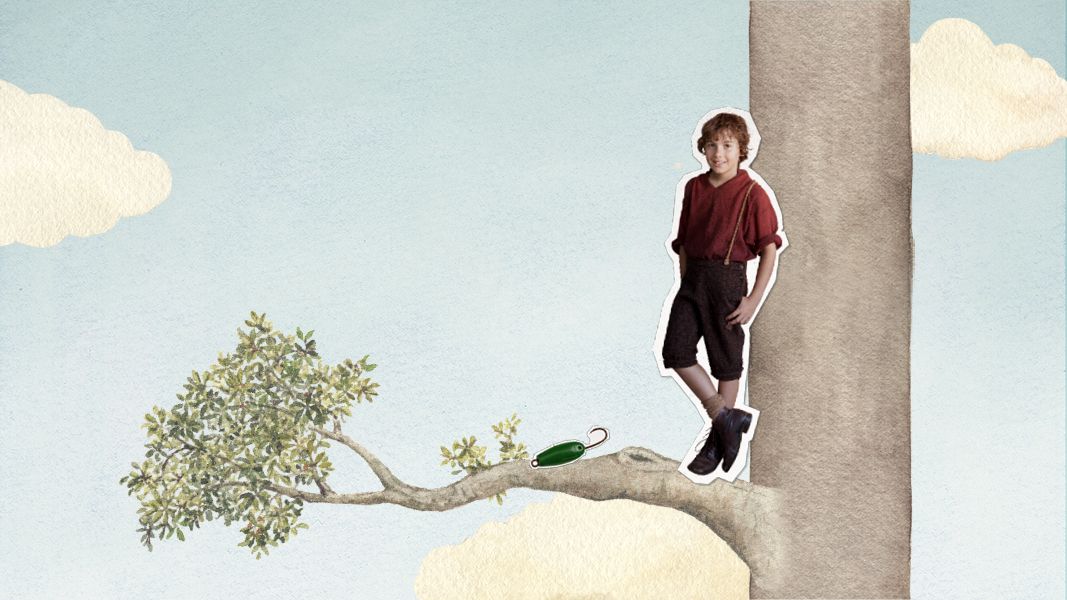
1858: Ben
Benjamin’s one wish is for his wandering American family to celebrate a proper Thanksgiving dinner in their new place, complete with a real roast turkey. But his efforts lead him into an escalating rivalry with a local Chinese boy, Leck, forcing both boys to confront misunderstandings, pride, and the challenge of building friendships across cultures.
1850s Decade Overview
The 1850s were a decade of gold, migration, and rapid social change. People from Europe, America, and China arrived in large numbers, reshaping towns and communities.
1851: Gold rushes began in New South Wales and Victoria.
1854: The Eureka Stockade highlighted tensions around rights and representation.
1856: The secret ballot was introduced in Victoria and South Australia, a reform that changed democracy in Australia and around the world.
1858: Chinese communities continued to grow despite restrictive migration laws.
First Nations Focus: Students can explore how the gold rush era intensified pressures on Country, disrupted cultural practices, and increased conflict. Despite this, First Nations Peoples maintained strong cultural identities, knowledge systems, and connections to place.
Provocation Question
How do misunderstandings shape relationships, and what helps people find common ground?
Clip 1: Eggs for Tuppence
After foraging in the forest for plover’s eggs, Ben competes with Leck to sell them to the local townspeople. Their rivalry intensifies when Ben repeats an ugly stereotype about Chinese people that he learned from Mr Wilson, leading to trouble with his father and tension between the boys.
Tuning In
Competition can bring out strong feelings. As you watch, notice:
- Why Ben and Leck start competing
- How each boy reacts to the situation
- What happens when Ben repeats a stereotype he doesn’t fully understand
As a class, discuss:
- Why people sometimes repeat things without thinking
- How stereotypes can harm relationships
- What Ben could have done differently
Finding Out & Sorting Out
Work together to explore how misunderstandings and stereotypes shape behaviour.
In small groups, brainstorm:
- What each boy wants in this situation
- How competition affects their choices
- What stereotypes are and why they are harmful
- How stereotypes spread
Create a Competition & Consequences Map using images, words, and arrows to show:
- The egg‑selling rivalry
- The stereotype Ben repeats
- How this affects his relationship with Leck
- What the consequences are
Share your map with the class and discuss what might have prevented the conflict.
Making Connections
Ben repeats something he heard without understanding its impact. Think about a time when you realised something you said or believed wasn’t true.
Write a short journal entry responding to:
- What you learned
- How you felt
- What helped you change your thinking
- What advice you would give Ben about questioning stereotypes
Clip 2: Working Together
Ben and Leck work together to repair Mr Owen’s broken clock. As they collaborate, Leck gently corrects the stereotype Ben repeated earlier, helping Ben understand the truth and rebuild their relationship.
Tuning In
Working together can change how people see each other. As you watch, notice:
- How Ben and Leck communicate
- What helps them begin to trust each other
- How Leck responds to the stereotype Ben repeated
As a class, discuss:
- What helps people repair a relationship
- Why listening matters
- How learning the truth can change someone’s perspective
Finding Out & Sorting Out
Work together to explore how cooperation builds understanding.
In pairs or small groups, brainstorm:
- What each boy contributes to fixing the clock
- How working together changes their attitudes
- What Ben learns from Leck
- Why correcting stereotypes is important
Create a Working Together Flowchart showing:
- The problem (the broken clock)
- The steps Ben and Leck take
- How their relationship shifts
- What they learn about each other
Share your flowchart with the class.
Making Connections
Ben learns that understanding someone’s story can change everything. Think about a time when working with someone helped you understand them better.
Write a short reflection responding to:
- What you learned about the other person
- How cooperation changed your relationship
- Why understanding someone’s perspective matters
Australian Curriculum Links
|
|
Year 3 |
Year 4 |
Year 5 |
Year 6 |
Knowledge and Understanding - History |
causes and effects of changes to the local community, and how people who may be from diverse backgrounds have contributed to these changes
|
|
|
|
Understanding – Civics and Citizenship |
why people participate within communities and how students can actively participate and contribute to communities |
diversity of cultural, religious and/or social groups to which they and others in the community belong, and their importance to identity |
|
|
Skills - Interpreting, analysing and evaluating |
analyse information and data, and identify perspectives |
analyse information and data, and identify perspectives |
|
|
Skills - Concluding and decision-making |
draw conclusions based on analysis of information propose actions or responses to an issue or challenge that consider possible effects of actions |
draw conclusions based on analysis of information propose actions or responses to an issue or challenge that consider possible effects of actions |
develop evidence-based conclusions propose actions or responses to issues or challenges and use criteria to assess the possible effects |
develop evidence-based conclusions propose actions or responses to issues or challenges and use criteria to assess the possible effects |
|
|
Year 3 |
Year 4 |
Year 5 |
Year 6 |
Language |
|
|
understand how to move beyond making bare assertions by taking account of differing ideas or opinions and authoritative sources
|
|
Literacy |
use interaction skills to contribute to conversations and discussions to share information and ideas
plan, create, edit and publish imaginative, informative and persuasive written and multimodal texts, using visual features, appropriate form and layout, with ideas grouped in simple paragraphs, mostly correct tense, topic-specific vocabulary and correct spelling of most high-frequency and phonetically regular words
plan, create, rehearse and deliver short oral and/or multimodal presentations to inform, express opinions or tell stories, using a clear structure, details to elaborate ideas, topic-specific and precise vocabulary, visual features, and appropriate tone, pace, pitch and volume
|
listen for key points and information to carry out tasks and contribute to discussions, acknowledging another opinion, linking a response to the topic, and sharing and extending ideas and information plan, create, edit and publish written and multimodal imaginative, informative and persuasive texts, using visual features, relevant linked ideas, complex sentences, appropriate tense, synonyms and antonyms, correct spelling of multisyllabic words and simple punctuation
plan, create, rehearse and deliver structured oral and/or multimodal presentations to report on a topic, tell a story, recount events or present an argument using subjective and objective language, complex sentences, visual features, tone, pace, pitch and volume
|
use appropriate interaction skills including paraphrasing and questioning to clarify meaning, make connections to own experience, and present and justify an opinion or idea
plan, create, edit and publish written and multimodal texts whose purposes may be imaginative, informative and persuasive, developing ideas using visual features, text structure appropriate to the topic and purpose, text connectives, expanded noun groups, specialist and technical vocabulary, and punctuation including dialogue punctuation
plan, create, rehearse and deliver spoken and multimodal presentations that include relevant, elaborated ideas, sequencing ideas and using complex sentences, specialist and technical vocabulary, pitch, tone, pace, volume, and visual and digital features
|
use interaction skills and awareness of formality when paraphrasing, questioning, clarifying and interrogating ideas, developing and supporting arguments, and sharing and evaluating information, experiences and opinions
plan, create, edit and publish written and multimodal texts whose purposes may be imaginative, informative and persuasive, using paragraphs, a variety of complex sentences, expanded verb groups, tense, topic-specific and vivid vocabulary, punctuation, spelling and visual features
plan, create, rehearse and deliver spoken and multimodal presentations that include information, arguments and details that develop a theme or idea, organising ideas using precise topic-specific and technical vocabulary, pitch, tone, pace, volume, and visual and digital features
|
Asia and Australia's Engagement with Asia
Knowing Asia and its Diversity
Students explore aspects of Chinese culture through Leck's experiences, cultural background and family traditions. The lesson encourages understanding of cultural diversity and challenges stereotypes about Chinese people and communities.
Growing Asia–Australia Engagement
Students examine the experiences of Chinese migrants in colonial Australia and the relationships that developed between Chinese and non-Chinese community members. The friendship between Ben and Leck highlights how cross-cultural understanding can develop through shared experiences, cooperation and community connections.
Critical and Creative Thinking
Students analyse the causes of conflict between Ben and Leck, challenge assumptions and stereotypes, and evaluate how cooperation and communication can help resolve misunderstandings.
Ethical Understanding
Students consider the ethical impacts of prejudice, stereotypes and unfair treatment, and reflect on the importance of respect, honesty and taking responsibility for their words and actions.
Intercultural Understanding
Students develop intercultural understanding by exploring Leck's experiences as a Chinese boy in colonial Australia and recognising how cultural differences and shared experiences influence relationships.
Personal and Social Capability
Students build personal and social capability through reflecting on empathy, perspective-taking, cooperation and the skills needed to develop trust and positive relationships across differences.