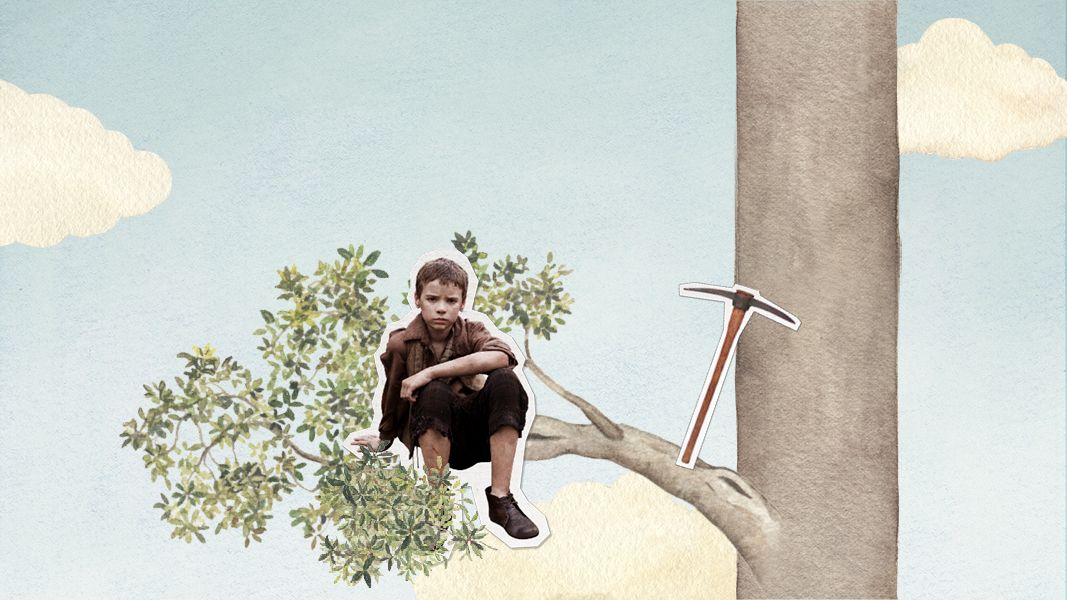
1798: Sam
Sam is a child convict, arrested in London for stealing a jacket. Now, having lived his whole life in towns and cities, he's sent to an isolated farm on the edge of the bush.
1790s Decade Overview
The 1790s were a decade of survival, scarcity and rapid adaptation in the early colony of New South Wales. Food shortages, harsh punishments, and the dominance of the NSW Corps shaped daily life for convicts, children and free settlers. Farms were small, labour was scarce, and assigned convicts, including children, formed the backbone of agricultural work. At the same time, First Nations Peoples continued to practise culture, law and custodianship of Country despite escalating conflict, disease and dispossession.
1790: The Second Fleet arrived with high mortality rates, worsening food shortages and increasing pressure on the colony’s limited resources.
1791–1792: Land grants to former convicts expanded small farming; assigned convict labour became central to agricultural survival.
1793: The first free settlers arrived, beginning slow demographic change and new expectations around land, labour and authority.
1794–1796: Settler expansion along the Hawkesbury River led to violent conflict with First Nations communities defending Country.
1795: The NSW Corps gained increasing economic and political power, controlling trade, alcohol and labour conditions.
1796–1797: Explorers Bass and Flinders mapped parts of the coastline, relying on Aboriginal knowledge and guidance.
1798: Child convicts like Sam were assigned to remote farms, performing essential labour with limited protection or rights.
c. 1790s: Convict transportation continued to rise; household service, child labour and assigned work remained central to survival; relationships between settlers and First Nations Peoples varied from cooperation to violent resistance.
First Nations Focus - Throughout the 1790s, First Nations communities faced profound disruption: loss of access to food sources, new diseases, violence linked to land seizures, and the imposition of foreign laws. Despite this, Aboriginal peoples maintained cultural practices, kinship systems, languages and custodial responsibilities to Country. Acts of resistance, negotiation and cultural continuity shaped the early colony as much as British authority did.
Connections to Sam’s story:
-
Sam’s fear of the bush contrasts with First Nations knowledge of Country.
-
The Aboriginal boy who guides Sam reflects ongoing generosity, skill and relational responsibility.
-
The return of the milk bucket models reciprocity and cultural protocol, even amid colonial disruption.
Provocation Question
What does Sam’s story reveal about survival, respect and belonging in the early colony, and what can we learn from those who guided him?
Clip 1: Farm Lad
Sam is escorted to the Owen farm as an assigned convict by two soldiers. Mr Owen introduces him to his chores and living quarters. He then meets the farm's goat, but is less than truthful about his experience with milking.
Tuning In
Being assigned as a convict child to a remote farm is both frightening and confusing. As you watch Sam’s story in a new country begin, what do you notice about:
- How Sam is treated by Mr Owen and the soldiers
- What chores he’s expected to do
- How truth and survival shape his choices
Class discussion prompts:
- What does it mean to be “assigned” to someone?
- How do fear and pride affect how Sam behaves?
- What do the goat and the milking task reveal about trust and responsibility?
Finding Out & Sorting Out
Explore how convict labour, truth, and survival shape Sam’s experience. In small groups, brainstorm:
- What Sam knows and pretends to know
- What Mr Owen expects and why
- What risks Sam faces if he fails
Choose one of the following tasks:
Option 1: Historical Image Analysis
Examine a painting or sketch of convict labour.
- Who made this image and why?
- What do you see? What’s missing?
- How might Sam’s experience differ from what’s shown?
Option 2: Mini Museum Curation
Create a small group display titled “Life on a Convict Farm”. Include:
- 3–5 artefacts (drawn, printed or described)
- Captions explaining each item’s role in survival
- One quote from Sam’s clip to interpret the display
Option 3: Dramatise the Arrival Scene
Improvise a short scene where Sam arrives at the farm. Include:
- Dialogue showing fear, pride and misunderstanding
- One moment of truth-telling
- One moment of adaptation
Making Connections
Sam pretends to know how to milk a goat to avoid punishment. Think about a time you felt pressure to pretend or perform.
Write a journal entry from Sam’s point of view:
- What did he expect?
- What surprised him?
- What does he now know about survival?
Clip 2: Milking Time
Sam enters Mr Owen's house through a hole in the roof and is amazed when he sees his reflection for the first time. After failing to milk the goat, Sam has a difficult night's sleep on his new bed. He uses his ingenuity to dig through hard ground.
Tuning In
Sam’s first night on the farm reveals hardship, ingenuity and a moment of wonder. As you watch, notice:
- How Sam reacts to seeing his reflection
- What he does when he fails at milking
- How he adapts to his new environment
Class discussion prompts:
- What does Sam’s reflection tell us about identity and isolation?
- How does failure help Sam learn?
- What does digging the hard ground show about resilience?
Finding Out & Sorting Out
Explore how adaptation, identity and resilience of convict children shape Sam’s experience. In small groups, brainstorm:
- What Sam learns about himself and the farm
- What tools and strategies he uses
- How his emotions shift across the clip
Choose one group activity:
Option 1: Source Comparison
Compare Sam’s experience with a real convict child’s diary or record.
- What’s similar? What’s different?
- What questions do you now have?
Option 2: Visual Timeline: ‘From London to the Farm’
Create a visual timeline showing Sam’s journey. Include:
- Key emotional shifts
- Changes in environment
- One question he might ask at each stage
Extension task
Write a short Empathy Letter from Sam to a friend or relative in London, describing his first night and what he’s learned.
Making Connections
Seeing his reflection helps Sam realise how much his life has changed. Think about a time when you saw yourself differently after a challenge.
Choose one option to show a key moment when Sam sees himself differently.
Option 1: Draw a sketch of Sam’s reflection at this moment. Include the caption: “This is the moment I saw myself differently.”
Option 2: Write a 150 to 200 word monologue from Sam’s point of view. Describe what he is thinking and feeling, including his fears and his hopes.
Make sure you use descriptive language, include at least one historical detail, and show Sam’s emotions clearly.
Clip 3: Oranges and Lemons
Sam is out looking for the farm's goat when he hears someone humming the same notes as he is singing. Following the sounds, he is guided back to the farm, where the goat is waiting. After leaving out some milk to thank an Aboriginal boy for leading him to the goat, his bucket is returned.
Tuning In
Lost in the bush, Sam is guided by an Aboriginal boy who returns his milk bucket. As you watch, notice:
- How Sam reacts to the humming and guidance
- What the milk gesture means
- How reciprocity and respect are shown
Class discussion prompts:
- What does this moment show about First Nations knowledge and generosity?
- How does Sam show respect in return?
- What does this exchange teach us about trust and cultural difference?
Finding Out & Sorting Out
Explore how reciprocity, cultural knowledge and respect shape this moment.
In small groups, brainstorm and record your thinking about:
- What the Aboriginal boy’s actions reveal
- How Sam responds
- What this exchange teaches about community and Country
Choose one group activity:
Option 1: Ethics & Reciprocity Circle
Use the ethics chart structure to explore:
- Motive → action → consequence → respectful response
- Include both Sam's and the Aboriginal boy’s perspectives
Option 2: Visual Interpretation: ‘Reading the Bush’
Use an image prompt to interpret a painting or photo of bushland.
- What local knowledge is needed to navigate this space?
- How might Sam and the Aboriginal boy see it differently?
Making Connections
Sam’s respectful gesture leads to a quiet act of reciprocity. Think about a time when someone helped you without words.
Work on your own or with a partner to create a short digital story that retells the clip from the Aboriginal boy’s point of view. You can choose the format, such as an audio story, a slideshow or an illustrated booklet.
Begin by creating a simple storyboard to plan your ideas and sequence the events.
Your story should have a clear beginning, middle and end. Show how events are connected through cause and effect. Include at least one respectful action taken by the boy.
Australian Curriculum Links
|
|
Year 3 |
Year 4 |
Year 5 |
Year 6 |
Knowledge and Understanding - History |
|
the experiences of individuals and groups, including military and civilian officials, and convicts involved in the establishment of the first British colony
|
|
|
Understanding – Civics and Citizenship |
|
diversity of cultural, religious and/or social groups to which they and others in the community belong, and their importance to identity
|
|
|
Skills – Questioning and Researching |
develop questions to guide investigations about people, events, places and issues locate, collect and record information and data from a range of sources, including annotated timelines and maps
|
develop questions to guide investigations about people, events, places and issues
locate, collect and record information and data from a range of sources, including annotated timelines and maps
|
|
|
Skills - Interpreting, analysing and evaluating |
analyse information and data, and identify perspectives
|
analyse information and data, and identify perspectives
|
|
|
Skills - Concluding and decision-making |
draw conclusions based on analysis of information |
draw conclusions based on analysis of information
|
|
|
Skills - Communicating |
present descriptions and explanations, using ideas from sources and relevant subject-specific terms
|
present descriptions and explanations, using ideas from sources and relevant subject-specific terms
|
present descriptions and explanations, drawing ideas, findings and viewpoints from sources, and using relevant terms and conventions
|
present descriptions and explanations, drawing ideas, findings and viewpoints from sources, and using relevant terms and conventions
|
|
|
Year 3 |
Year 4 |
Year 5 |
Year 6 |
Language |
|
|
understand that language is selected for social contexts and that it helps to signal social roles and relationships
|
|
Literature |
|
|
identify aspects of literary texts that represent details or information about historical, social and cultural contexts in literature by First Nations Australian, and wide-ranging Australian and world authors
|
|
Literacy |
recognise how texts can be created for similar purposes but different audiences
use interaction skills to contribute to conversations and discussions to share information and ideas
plan, create, edit and publish imaginative, informative and persuasive written and multimodal texts, using visual features, appropriate form and layout, with ideas grouped in simple paragraphs, mostly correct tense, topic-specific vocabulary and correct spelling of most high-frequency and phonetically regular words
plan, create, rehearse and deliver short oral and/or multimodal presentations to inform, express opinions or tell stories, using a clear structure, details to elaborate ideas, topic-specific and precise vocabulary, visual features, and appropriate tone, pace, pitch and volume
|
compare texts from different times with similar purposes and audiences to identify similarities and differences in their depictions of events listen for key points and information to carry out tasks and contribute to discussions, acknowledging another opinion, linking a response to the topic, and sharing and extending ideas and information plan, create, edit and publish written and multimodal imaginative, informative and persuasive texts, using visual features, relevant linked ideas, complex sentences, appropriate tense, synonyms and antonyms, correct spelling of multisyllabic words and simple punctuation
plan, create, rehearse and deliver structured oral and/or multimodal presentations to report on a topic, tell a story, recount events or present an argument using subjective and objective language, complex sentences, visual features, tone, pace, pitch and volume
|
describe the ways in which a text reflects the time and place in which it was created
use appropriate interaction skills including paraphrasing and questioning to clarify meaning, make connections to own experience, and present and justify an opinion or idea
plan, create, edit and publish written and multimodal texts whose purposes may be imaginative, informative and persuasive, developing ideas using visual features, text structure appropriate to the topic and purpose, text connectives, expanded noun groups, specialist and technical vocabulary, and punctuation including dialogue punctuation
plan, create, rehearse and deliver spoken and multimodal presentations that include relevant, elaborated ideas, sequencing ideas and using complex sentences, specialist and technical vocabulary, pitch, tone, pace, volume, and visual and digital features
|
examine texts including media texts that represent ideas and events, and identify how they reflect the context in which they were created
use interaction skills and awareness of formality when paraphrasing, questioning, clarifying and interrogating ideas, developing and supporting arguments, and sharing and evaluating information, experiences and opinions
plan, create, edit and publish written and multimodal texts whose purposes may be imaginative, informative and persuasive, using paragraphs, a variety of complex sentences, expanded verb groups, tense, topic-specific and vivid vocabulary, punctuation, spelling and visual features
plan, create, rehearse and deliver spoken and multimodal presentations that include information, arguments and details that develop a theme or idea, organising ideas using precise topic-specific and technical vocabulary, pitch, tone, pace, volume, and visual and digital features
|
Aboriginal and Torres Strait Islander Histories and Cultures
Country/Place
Students explore the deep connections First Nations Peoples have with Country through the Aboriginal boy's ability to navigate and understand the bush with confidence and skill. By contrasting Sam's fear and uncertainty with the Aboriginal boy's knowledge of the landscape, the lesson highlights different ways of knowing, using and relating to Country.
Culture
Students examine values of reciprocity, respect and care through the exchange between Sam and the Aboriginal boy, where acts of kindness are acknowledged and returned. The lesson demonstrates how cultural practices and understandings are expressed through actions, relationships and everyday interactions, reflecting the continuity and strength of First Nations cultures.
People
Students consider how identity, belonging and responsibility are shaped by connections to community, culture and Country. Comparing Sam's isolation as a newly arrived convict child with the Aboriginal boy's confidence and sense of place encourages students to explore different perspectives on belonging and community.
Critical and Creative Thinking
Students analyse the experiences of a child convict, compare historical sources and perspectives, and evaluate how Sam's choices help him adapt, survive and build relationships in an unfamiliar environment.
Ethical Understanding
Students explore ethical questions about honesty, trust, responsibility and reciprocity as they consider Sam's decisions and the respectful exchange between Sam and the Aboriginal boy.
Intercultural Understanding
Students develop intercultural understanding by examining interactions between Sam and the Aboriginal boy, recognising the value of First Nations knowledge, perspectives and ways of relating to Country.
Personal and Social Capability
Students build empathy, resilience and self-awareness by reflecting on Sam's experiences of isolation, belonging, adaptation and the importance of seeking and accepting help from others.