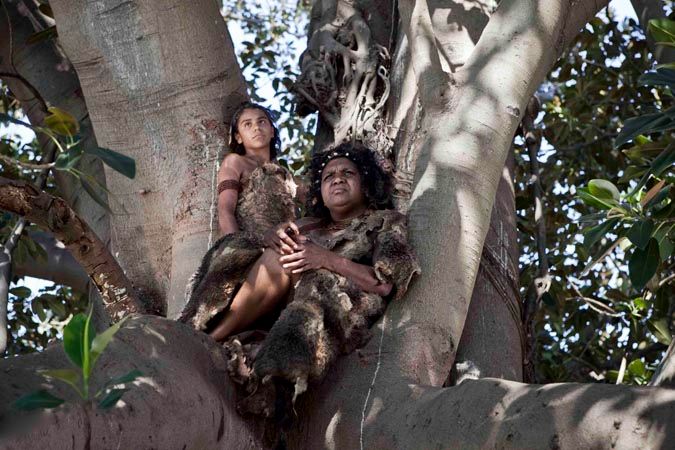
Teaching the 1780s with sensitivity, truth telling and empathy with For My Place Episode 23: '1788: Waruwi' and Epiosde 24: '1788: Dan'.
1788 Teacher Guide: Waruwi & Dan
Purpose of this Guide
Episodes 23 and 24 take place during one of the most sensitive and significant decades in Australian history: the 1780s, the moment of first sustained contact between First Nations peoples and British arrivals.
This guide supports teachers to approach these episodes with:
- truth-telling
- cultural safety
- historical accuracy
- empathy and multiple perspectives
- age-appropriate clarity for primary students
1. Why the 1780s Require Special Care
The arrival of the British in 1788 is a turning point in Australian history.
For many non‑Indigenous Australians, it marks the beginning of modern Australia.
For Aboriginal and Torres Strait Islander Peoples, it marks:
- invasion
- dispossession
- loss of land and resources
- disruption to law, culture and kinship
- the beginning of ongoing resistance and survival
Both truths must be held together.
Students can understand this when it is framed through stories, relationships, fairness, and empathy.
2. Principles for Ethical, Sensitive Teaching
A. Truth telling without trauma
Use clear, honest language without graphic detail.
Examples of safe, accurate phrasing:
- “The British arrived and began taking land that was already home to First Nations peoples.”
- “This caused conflict, fear and big changes for Aboriginal communities.”
- “First Nations peoples resisted, adapted and continued their cultures.”
Avoid euphemisms such as “peaceful settlement.”
B. Dual perspectives — not a single story
Episodes 23 and 24 show two children living through the same moment:
Waruwi (First Nations girl)
- deep connection to Country
- cultural knowledge, law and kinship
- curiosity and confusion about newcomers
- agency, skill and observation
- disruption to daily life
Dan (convict boy)
- harsh British justice system
- transportation and dislocation
- fear, survival and labour
- new relationships with land and authority
- limited understanding of First Nations law and culture
Teaching both perspectives helps students understand that history is lived differently by different people.
C. Language that honours First Nations sovereignty
Use terms aligned with AC v9 and contemporary truth-telling:
- Country (not “land”)
- First Nations Peoples
- invasion/arrival/landing (not “discovery”)
- custodianship
- resistance and resilience
- deep time history (65,000+ years)
D. Focus on relationships, not conflict
Primary students connect through:
- fairness
- belonging
- curiosity
- empathy
- problem‑solving
Frame early contact through:
- misunderstandings
- different worldviews
- moments of generosity
- moments of fear
- children making sense of change
E. Highlight continuity and cultural strength
Avoid framing 1788 as the “beginning” of Australian history.
Emphasise:
- tens of thousands of years of continuous culture
- sophisticated knowledge systems
- ongoing custodianship of Country
- cultural survival and adaptation
F. Inquiry questions that open thinking
Use questions that invite curiosity rather than judgement:
- What might Waruwi understand that the newcomers don’t?
- How might Dan feel arriving in a place already full of people, culture and law?
- What happens when two groups see the same place in different ways?
- How do children make sense of big changes they didn’t choose?
3. Curriculum Alignment (AC v9)
These episodes align strongly with the truth‑telling language embedded in AC v9.
History – Year 3
ACHASSK064 – Celebrations and commemorations, including Australia Day, ANZAC Day and National Sorry Day, and their significance to different groups.
→ Supports teaching 26 January as both Australia Day and Invasion Day/Survival Day.
History – Years 9 & 10
AC9HH9K02 / AC9HH10K02 – British colonisation as “settlement” or “invasion”; Frontier Wars; dispossession; impacts of European colonisation.
→ Provides language for truth‑telling and multiple perspectives.
Civics & Citizenship – Years 7–10
AC9HC7K03 / AC9HC8K03 / AC9HC9K03 – Australian identity, including Aboriginal and Torres Strait Islander perspectives on national days and historical events.
→ Supports discussion of Invasion Day / Survival Day.
Emphasises:
- Country/Place
- Culture
- People
- Continuity and change
- Perspectives and truth-telling
- Impact of colonisation
- Ongoing resilience
This priority requires embedding First Nations perspectives throughout the study of the 1780s.
- HASS (History + Civics & Citizenship)
- The Arts
- Science
- Technologies
- Cross‑Curriculum Priorities
- General Capabilities (Intercultural + Ethical Understanding)
Everything is aligned to AC v9 and written in language that supports truth-telling, cultural safety, and multiple perspectives.
Curriculum Links for Episodes 23 & 24 (1788) Years 4–6
Year 4
-
AC9HS4K02 – Diversity and longevity of First Nations Peoples and their connections to Country/Place.
-
AC9HS4K03 – Stories of early contact between First Nations Peoples and Europeans, including the nature and impact of these interactions.
-
AC9HS4S02 – Pose questions about the past from multiple perspectives.
-
AC9HS4S04 – Interpret information from visual, oral and written sources.
Year 5
-
AC9HS5K02 – Causes and effects of European exploration and colonisation.
-
AC9HS5K03 – Impact of colonisation on First Nations Peoples, including dispossession and resistance.
-
AC9HS5S03 – Analyse different points of view in historical sources.
Year 6
-
AC9HS6K02 – Significant events that shaped Australian society, including the arrival of the First Fleet.
-
AC9HS6K03 – Experiences of different groups in the colonial period (convicts, First Nations Peoples, settlers).
-
AC9HS6S04 – Evaluate sources for origin, purpose and perspective.
How the episodes support this:
-
Waruwi’s perspective foregrounds First Nations knowledge, custodianship and early contact.
-
Dan’s perspective highlights convict childhood, labour, justice and survival.
-
Both episodes allow students to compare experiences of the same event from different cultural viewpoints.
Year 4
-
AC9HC4K02 – Rules, laws and fairness in communities.
-
AC9HC4S01 – Identify ways people participate in communities.
Year 5
-
AC9HC5K02 – Values of justice, equality and respect in Australian society.
-
AC9HC5K03 – How communities manage conflict and support wellbeing.
Year 6
-
AC9HC6K02 – Australian identity, including First Nations perspectives.
-
AC9HC6K03 – How shared histories shape contemporary civic values.
How the episodes support this:
-
Waruwi’s story invites discussion about cultural law, kinship and custodianship.
-
Dan’s story raises questions about justice, punishment and children’s rights.
-
Both episodes support ethical discussions about fairness, belonging and responsibility.
Visual Arts
-
AC9AVA4E01 / AC9AVA5E01 / AC9AVA6E01 – Explore how artists represent Country, culture and identity.
-
AC9AVA4C01 – Create artworks that communicate ideas about place and perspective.
Drama
-
AC9ADR4C01 / AC9ADR5C01 / AC9ADR6C01 – Use role‑play, improvisation and character to explore relationships and cultural perspectives.
-
AC9ADR6D01 – Reflect on how drama can communicate social and historical ideas.
Media Arts
-
AC9AMA4C01 – Create multimodal stories showing different viewpoints.
-
AC9AMA6E01 – Analyse how media represents people and cultures.
How the episodes support this:
-
Students can create soundscapes of Country, retell scenes from Waruwi’s perspective, or storyboard Dan’s journey.
-
Image analysis tasks align with visual arts and media arts outcomes.
Year 4
-
AC9S4U01 – Living things depend on their environment.
-
AC9S4H02 – First Nations Peoples’ knowledge of sustainable practices.
Year 5
-
AC9S5U01 – Adaptations of living things to environments.
-
AC9S5H02 – First Nations ecological knowledge and land management.
Year 6
-
AC9S6U01 – Physical conditions of environments and survival.
-
AC9S6H02 – First Nations scientific knowledge of navigation, seasons and resource use.
How the episodes support this:
-
Waruwi’s knowledge of Country, tracking, sound, and movement aligns with First Nations science.
-
Dan’s struggle to adapt highlights environmental understanding and survival skills.
Design & Technologies
-
AC9TDE4K01 / AC9TDE5K01 / AC9TDE6K01 – Explore how communities use materials, tools and systems to meet needs.
-
AC9TDE4P01 – Investigate sustainable practices, including First Nations technologies.
Digital Technologies
-
AC9TDI4P01 / AC9TDI5P01 – Create digital stories, timelines or multimodal presentations.
-
AC9TDI6P01 – Analyse how information systems represent people and cultures.
How the episodes support this:
-
Students can design tools, shelters or survival systems used by Waruwi or Dan.
-
Digital storytelling tasks align with multimodal communication outcomes.
Aboriginal and Torres Strait Islander Histories and Cultures
- Country/Place – Waruwi’s relationship with Country.
- Culture – kinship, law, knowledge systems.
- People – identity shaped by community and Country.
- Continuity & Change – impact of 1788 on daily life.
- Perspectives – truth‑telling about invasion and contact.
- Empowerment – resilience, agency and cultural strength.
Asia & Australia’s Engagement with Asia
- Early maritime connections (Macassan traders).
- Comparative perspectives on migration and movement.
Sustainability
- First Nations ecological knowledge and sustainable practices.
Intercultural Understanding
Students learn to:
- recognise different cultural perspectives
- understand First Nations worldviews
- reflect on their own assumptions
- communicate respectfully across cultures
- appreciate deep time history and custodianship
Ethical Understanding
Students explore:
- fairness, justice and responsibility
- the ethics of colonisation and contact
- empathy for different lived experiences
- consequences of actions
- respectful decision‑making
Critical & Creative Thinking
- analysing sources
- comparing perspectives
- generating questions
- interpreting evidence
- designing solutions or responses
Literacy & Numeracy
- interpreting timelines, maps, images
- reading multimodal texts
- creating narratives, reports and digital stories
- analysing simple data (e.g., population, journeys)
When discussing Dan’s interactions with the British military, refer to them as “marines” to reflect historical accuracy and support truth-telling. You might include a brief note for students:
“The men in red coats were marines, not soldiers. They worked for the navy and were sent to guard the convicts and help run the new colony.”
Who Were the First Fleet Military Personnel?
The accurate historical term for the British military personnel who arrived with the First Fleet in 1788 is “marines,” not “soldiers.” These were members of the British Marine Corps, specifically deployed to guard convicts and maintain order in the new penal colony.
✅ British Marine Corps
- The First Fleet included four companies of the British Marine Corps, under Major Robert Ross.
- These marines were chosen for their experience at sea, especially guarding convicts on prison hulks.
- They were not Army soldiers; the Marine Corps was a distinct branch under naval command.
❌ Not Army Soldiers
- Army soldiers were not part of the initial First Fleet landing.
- Marines were considered more reliable for shipboard discipline and coastal operations.
- The term “soldiers” is historically inaccurate for this context and can mislead students about the structure of colonial authority.
4. Recommended Teacher Resources for Truth Telling
Australians Together
High-quality, teacher‑ready resources for primary and secondary:
-
Settlement vs Invasion Debate (Years 9–10)
https://australianstogether.org.au/assets/Curriculum-Resources/Y9-History-ACHHS165-ACHHS168-ACHHS172-ACHHS173-Settlement-Invasion-debate-Student-handout-2.pdf -
Australia Day Teacher Guide
https://australianstogether.org.au/assets/Australia-Day-Curriculum-Resource/Aus-Day-Teacher-Guide.pdf
These resources model:
- respectful language
- multiple perspectives
- inquiry-based learning
- truth‑telling aligned with AC v9
5. How to Introduce Episodes 23 & 24 to Students
Before viewing
- Acknowledge that different people experienced 1788 differently.
- Explain that we will see the story through two children’s eyes.
- Emphasise that Aboriginal cultures are ancient, strong and continuous.
- Prepare students for feelings of confusion, unfairness or sadness — these are normal when learning about history.
During viewing
Encourage noticing:
- relationships
- emotions
- misunderstandings
- cultural knowledge
- moments of generosity
- moments of fear
After viewing
Use inquiry questions to deepen understanding:
- What surprised you?
- What felt unfair?
- What did Waruwi know that Dan didn’t?
- How might these events still matter today?
6. Teacher Reflection Prompts
- How do my own assumptions shape how I teach 1788?
- How can I ensure First Nations voices are centred, not added on?
- How can I create emotional safety while telling the truth?
- What opportunities exist for students to take informed, respectful action?