1788: Waruwi
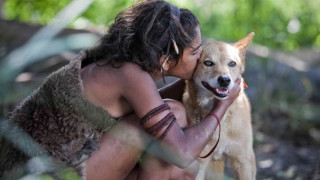
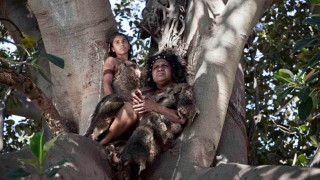
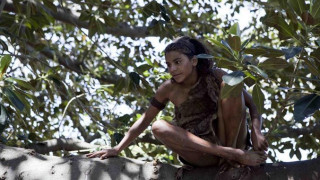
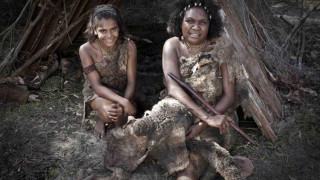
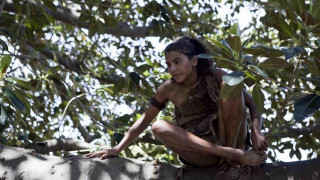
Waruwi is an Aboriginal girl looking after her Nana while the rest of her extended family is away from camp. It's just for a day but what a day it turns out to be.
The script for this episode, ‘1788: Waruwi’, was written by Wayne Blair in 2010. Wayne Blair is a Batjala, Mununjali, Wakka Wakka man.
The stories and characters in this series are fictional, though some storylines are inspired by moments from history. 1788 unfolds across two episodes, told through the eyes of two characters, Waruwi and Dan.
For the episodes '1788: Waruwi' and '1788: Dan', further context and support can be found in the 1788 Teacher Guide: Waruwi & Dan.
1780s Decade Overview
The 1780s marked a profound turning point on the continent now called Australia. For First Nations Peoples, whose ancestors had lived on and cared for Country for tens of thousands of years, with continuing cultures, laws, knowledges and connections to Country, this decade brought invasion, dispossession, disease and deep upheaval. For the invaders - British convicts, marines and officials - who arrived in 1788, including children, it was the beginning of a harsh and uncertain colonial occupation, built on land they did not understand and did not have permission to occupy.
Waruwi and Dan are fictional characters whose stories unfold during the same historical moment, yet from very different cultural perspectives and positions of power. By exploring both stories, we can gain a deeper understanding of the complexity of this period and consider its enduring impact on people's lives and experiences.
Before 1788: Between 500,000 and 750,000 First Nations peoples lived across the continent in diverse nations with their own languages, laws and knowledge systems, including the Gadigal people of the Eora Nation around Sydney Cove. British plans for settlement included instructions for “friendly communication”, yet this was not honoured, and invasion would soon disrupt long-standing relationships to Country without consent or treaty.
1787: On May 11 British ships carrying about 1,500 convicts, marines, officials and children departed. The invaders set out with little understanding of the country or its existing custodians, foreshadowing decisions that would deeply impact First Nations communities.
1788: The First Fleet arrived at Botany Bay between 18 and 20 January, before moving to Port Jackson and anchoring at Sydney Cove on 26 January under Governor Arthur Phillip. The British established a penal colony on Gadigal land without permission, marking the beginning of invasion.
1789: As British occupation expanded, access to Country, food sources and resources was increasingly disrupted, contributing to conflict and resistance. Gadigal and neighbouring groups responded in strategic ways, asserting sovereignty and protecting Country in what are now recognised as early Frontier War conflicts.
1789: A smallpox outbreak spread rapidly through the Sydney region after the arrival of the British. First Nations communities, with no immunity, experienced catastrophic loss of life, reshaping societies and intensifying the trauma and impact of invasion.
1788–1790: The British colony struggled with failed crops, food shortages and a lack of skills among many settlers, including children who were expected to work under strict discipline. These survival efforts took place on Country where First Nations Peoples had established and maintained sophisticated systems of law, knowledge and land management, which British colonisation failed to recognise.
First Nations Focus:
Country and custodianship
First Nations Peoples maintained deep, ongoing relationships with Country despite invasion and disruption. While access to land and resources was restricted, culture, law and identity were not erased and continue today.
Resistance and continuity
First Nations resistance in the 1780s was grounded in sovereignty and responsibility. Cultural practices continued through observation, protocol and adaptation. The fictional story of Waruwi can be used to explore a possible perspective of how children experienced invasion.
Truth‑telling and perspective
Understanding the 1780s requires acknowledging that most written records come from the colonisers’ viewpoint. Dan’s fictional story reveals the harshness of convict life within the colonial system. Waruwi’s fictional story centres the experiences of those whose voices were largely excluded from written history. Together, these perspectives support students to consider whose voices are represented in historical accounts and develop a deeper understanding of invasion, colonisation and dispossession.
Provocation Question
Whose voices do we hear in written records about 1788? Whose voices are missing, and how might this affect our understanding of what happened?
Clip 1: The Encounter
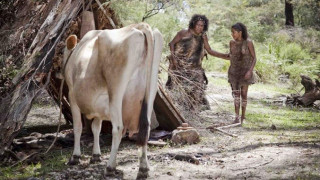
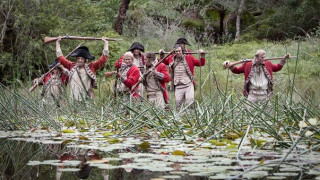
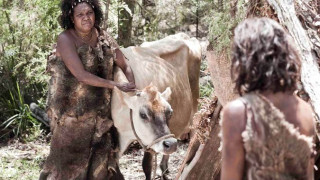
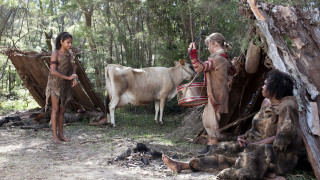
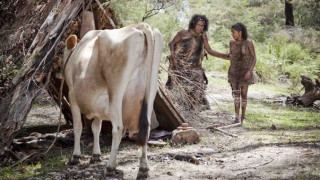
Waruwi encounters a cow for the first time and is unsure what to make of it. After seeing some Marines and a drummer boy, she returns home to Nana to tell her about the 'ghost people' and the cow.
Tuning In
Waruwi sees a cow for the first time and observes British Marines and a drummer boy. She returns to Nana and describes the strangers as “ghost people.”
As you watch, think about:
- What Waruwi notices that others might miss?
- How she describes the cow and the strangers?
- What her reaction tells us about curiosity, culture and observation?
As a class, use the See/Think/Wonder thinking routine to analyse the details and your own curiosities of this scene:
- I see… (cow, boots, red coats)
- I think… (they are strange, loud, unfamiliar)
- I wonder… (who they are, what they want, why they came)
Finding Out & Sorting Out
Investigate how early contact, cultural perspectives and historical sources help us understand this moment in 1788.
Choose one of the following tasks:
Option 1: Source Analysis
Examine a colonial painting or sketch that depicts first contact.
Discuss:
- Who created this image and why?
- What people, events or details are included?
- What perspectives or information might be missing?
Option 2: Comparing Representation
Compare how the invasion of the British is represented in this fictional episode from the eyes of Waruwi and in a colonial source such as a painting or sketch.
Consider:
- How is the arrival represented in Waruwi’s story?
- How is it represented in a colonial source?
- What does each source include or leave out?
Create a comparison chart, annotated image or short written response to share your findings.
Making Connections
Write a short reflection responding to this question: What does Waruwi's story encourage us to think about when considering First Nations perspectives on the arrival of the British?
In your response:
- Describe something Waruwi observes or notices in the story.
- Explain what the story reveals about the knowledge, skills or responsibilities shown by Waruwi and her community.
- Pose one thoughtful question about the events, perspectives or experiences represented in the episode.
Use evidence from the clip to support your ideas. You might refer to examples of observation, listening, environmental knowledge or decision-making shown throughout the story. Consider how the episode presents this historical moment and whose perspectives are included. If you need support, try a sentence starter such as:
"Waruwi notices..."
"This suggests that..."
"The story encourages viewers to think about..."
"One question I still have is..."
Clip 2: Little Drummer Boy
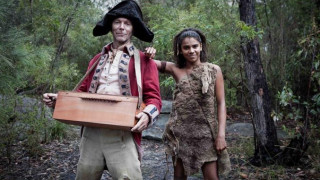
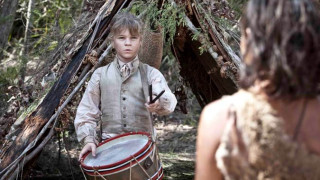
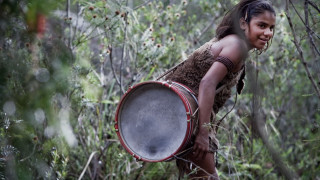
Waruwi takes Dan's boots while he is in the water, but does not find them to be very comfortable. Observing the camp of the invaders (‘ghost people’), Waruwi is fascinated by one of their musical instruments.
Tuning In
Waruwi takes Dan’s boots, explores the camp, and is fascinated by the unusual musical instrument. She returns the boots, showing curiosity and respect.
As a class, discuss:
- What motivates Waruwi to take the boots?
- What does she learn by observing the camp?
- How does she respond to the music?
In small groups, use the Connect / Extend / Challenge thinking routine to:
- Connect: What does this remind me of?
- Extend: What new ideas does this give me?
- Challenge: What questions or tensions does this raise?
Finding Out & Sorting Out
Within the historical context of 1788, explore Waruwi's decision to return the boots and observe the British invaders from a distance. What does this moment suggest about observation, communication and encounters between people from different cultures?
Choose one of the following group activities:
Option 1: Artefact Investigation
Use a source analysis grid to investigate objects represented in the episode and compare them to historical sources.
Consider:
- Who made these items?
- What were they used for?
- What might these objects communicate about the people who used them?
- What can we learn about cultural differences by examining these artefacts?
Share your findings and discuss how objects can shape first impressions and understanding between different groups of people.
Option 2: Tableau Challenge
Working in small groups, create a series of freeze frames that represent key moments from the episode.
Your freeze frames should show:
- A first observation of something unfamiliar
- A moment where characters are trying to understand one another
- A moment that highlights either connection, curiosity or uncertainty
Add a short narration or caption to explain what is happening in each freeze frame and identify the evidence from the episode that informed your choices. After presenting, discuss how the episode represents this encounter and how different people may have understood the events in different ways.
Making Connections
Working with a partner, create a Curiosity Journal page inspired by Waruwi's observations.
Choose one object from the clip and record and pretend you have never seen this object before:
- What do you notice about the object?
- What clues suggest how it might be used?
- What questions might someone have when seeing it for the first time?
- What does this object reveal about the people who brought it?
Present your journal page using sketches, labels, notes and questions. When you have finished, write a short reflection on the following question: How does Waruwi's careful observation help viewers think about encounters between different cultures?
Australian Curriculum Links
|
|
Year 3 |
Year 4 |
Year 5 |
Year 6 |
Knowledge and Understanding - History |
causes and effects of changes to the local community, and how people who may be from diverse backgrounds have contributed to these changes
|
the diversity of First Nations Australians, their social organisation and their continuous connection to Country/Place the causes of the establishment of the first British colony in Australia in 1788 the experiences of individuals and groups, including military and civilian officials, and convicts involved in the establishment of the first British colony
|
the economic, political and social causes of the establishment of British colonies in Australia after 1800 the impact of the development of British colonies in Australia on the lives of First Nations Australians, the colonists and convicts, and on the natural environment the role of a significant individual or group, including First Nations Australians and those who migrated to Australia, in the development of events in an Australian colony |
significant individuals, events and ideas that led to Australia’s Federation, the Constitution and democratic system of government changes in Australia's political system and to Australian citizenship after Federation and throughout the 20th century that impacted First Nations Australians, migrants, women and children the motivation of people migrating to Australia since Federation and throughout the 20th century, their stories and effects on Australian society, including migrants from the Asia region |
Knowledge and Understanding – Geography |
the representation of contemporary Australia as states and territories, and as the Countries/Places of First Nations Australians prior to colonisation, and the locations of Australia’s neighbouring regions and countries the ways First Nations Australians in different parts of Australia are interconnected with Country/Place
|
|
the influence of people, including First Nations Australians and people in other countries, on the characteristics of a place
|
|
Understanding – Civics and Citizenship |
|
diversity of cultural, religious and/or social groups to which they and others in the community belong, and their importance to identity |
|
|
Skills – Questioning and Researching |
develop questions to guide investigations about people, events, places and issues locate, collect and record information and data from a range of sources, including annotated timelines and maps |
develop questions to guide investigations about people, events, places and issues locate, collect and record information and data from a range of sources, including annotated timelines and maps |
develop questions to investigate people, events, developments, places and systems locate, collect and organise information and data from primary and secondary sources in a range of formats |
develop questions to investigate people, events, developments, places and systems locate, collect and organise information and data from primary and secondary sources in a range of formats |
Skills - Interpreting, analysing and evaluating |
analyse information and data, and identify perspectives |
analyse information and data, and identify perspectives |
|
|
Skills - Concluding and decision-making |
draw conclusions based on analysis of information propose actions or responses to an issue or challenge that consider possible effects of actions |
draw conclusions based on analysis of information propose actions or responses to an issue or challenge that consider possible effects of actions |
|
|
Skills - Communicating |
present descriptions and explanations, using ideas from sources and relevant subject-specific terms |
present descriptions and explanations, using ideas from sources and relevant subject-specific terms |
present descriptions and explanations, drawing ideas, findings and viewpoints from sources, and using relevant terms and conventions |
present descriptions and explanations, drawing ideas, findings and viewpoints from sources, and using relevant terms and conventions |
|
|
Year 3 |
Year 4 |
Year 5 |
Year 6 |
Language |
understand how to move beyond making bare assertions by taking account of differing ideas or opinions and authoritative sources |
|
||
Literacy |
recognise how texts can be created for similar purposes but different audiences use interaction skills to contribute to conversations and discussions to share information and ideas plan, create, edit and publish imaginative, informative and persuasive written and multimodal texts, using visual features, appropriate form and layout, with ideas grouped in simple paragraphs, mostly correct tense, topic-specific vocabulary and correct spelling of most high-frequency and phonetically regular words plan, create, rehearse and deliver short oral and/or multimodal presentations to inform, express opinions or tell stories, using a clear structure, details to elaborate ideas, topic-specific and precise vocabulary, visual features, and appropriate tone, pace, pitch and volume |
compare texts from different times with similar purposes and audiences to identify similarities and differences in their depictions of events listen for key points and information to carry out tasks and contribute to discussions, acknowledging another opinion, linking a response to the topic, and sharing and extending ideas and information plan, create, edit and publish written and multimodal imaginative, informative and persuasive texts, using visual features, relevant linked ideas, complex sentences, appropriate tense, synonyms and antonyms, correct spelling of multisyllabic words and simple punctuation
plan, create, rehearse and deliver structured oral and/or multimodal presentations to report on a topic, tell a story, recount events or present an argument using subjective and objective language, complex sentences, visual features, tone, pace, pitch and volume
|
describe the ways in which a text reflects the time and place in which it was created use appropriate interaction skills including paraphrasing and questioning to clarify meaning, make connections to own experience, and present and justify an opinion or idea plan, create, edit and publish written and multimodal texts whose purposes may be imaginative, informative and persuasive, developing ideas using visual features, text structure appropriate to the topic and purpose, text connectives, expanded noun groups, specialist and technical vocabulary, and punctuation including dialogue punctuation plan, create, rehearse and deliver spoken and multimodal presentations that include relevant, elaborated ideas, sequencing ideas and using complex sentences, specialist and technical vocabulary, pitch, tone, pace, volume, and visual and digital features |
examine texts including media texts that represent ideas and events, and identify how they reflect the context in which they were created use interaction skills and awareness of formality when paraphrasing, questioning, clarifying and interrogating ideas, developing and supporting arguments, and sharing and evaluating information, experiences and opinions plan, create, edit and publish written and multimodal texts whose purposes may be imaginative, informative and persuasive, using paragraphs, a variety of complex sentences, expanded verb groups, tense, topic-specific and vivid vocabulary, punctuation, spelling and visual features plan, create, rehearse and deliver spoken and multimodal presentations that include information, arguments and details that develop a theme or idea, organising ideas using precise topic-specific and technical vocabulary, pitch, tone, pace, volume, and visual and digital features |
Aboriginal and Torres Strait Islander Histories and Cultures
Country/Place
Students explore the deep connection First Nations Peoples have with Country through Waruwi's ability to interpret sounds, movement, animals and environmental cues that the newcomers do not understand. By comparing Waruwi's knowledge of Country with Dan's unfamiliarity and dependence on military structures, students gain insight into the ways Country shapes identity, responsibility and belonging.
Culture
Students examine First Nations cultural practices, protocols and knowledge systems through Waruwi's interactions with family, community and the environment. The lessons highlight the importance of observation, storytelling, reciprocity and respect, showing how cultural values are expressed through everyday actions and relationships, including Waruwi's responses to the newcomers and her gift of the puppy.
People
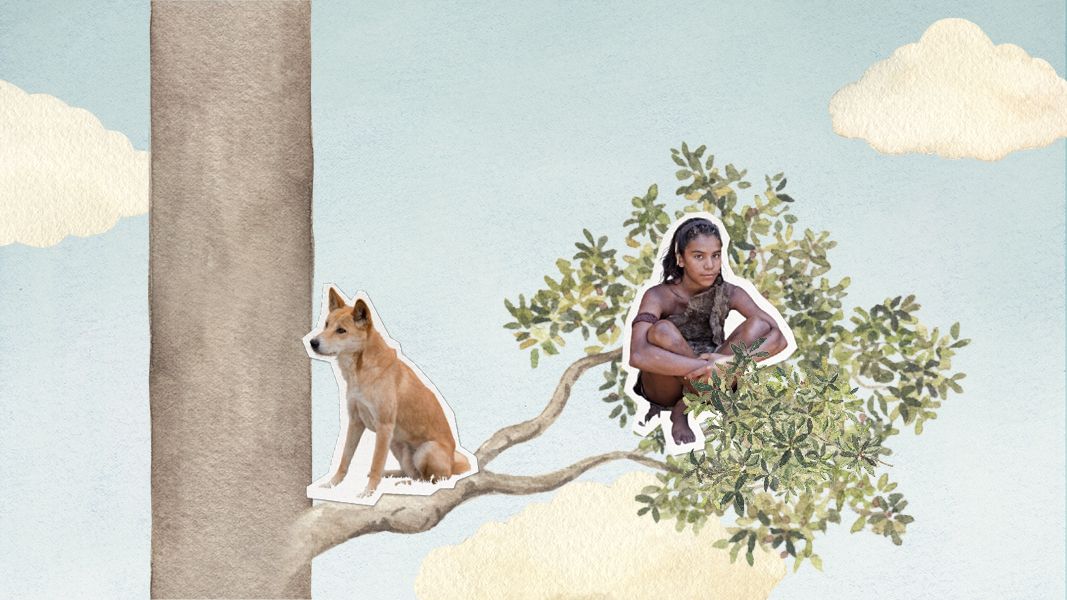
Students consider how identity is shaped by relationships with Country, culture, family and community. Through Waruwi's responsibilities to Nana, her care for her dingo and her role within her community, students explore First Nations perspectives on belonging, while comparing these with Dan's experience as a young convict subject to colonial authority and expectations.
Additional Resources