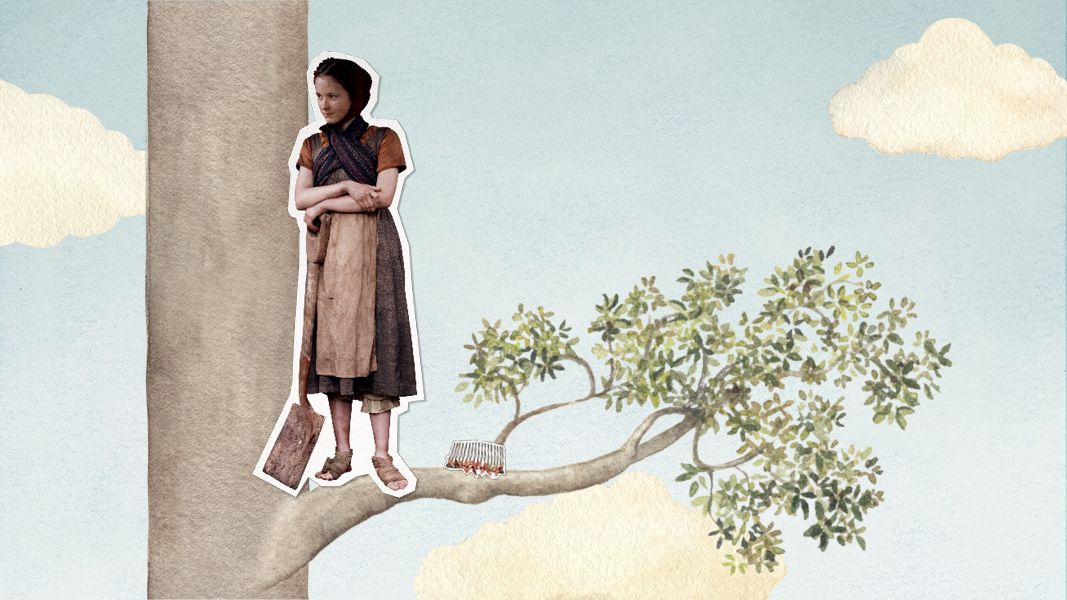
1808: Sarah
Sarah, although still a child, works as a servant for the cold and demanding Mrs Owen. As if being bossed around by the lady of the house isn't bad enough, Sarah has to deal with the woman's sly and sickly daughter, Alice.
1800s Decade Overview
The early 1800s were a period of consolidation, control and expanding colonial invasion in New South Wales. The colony was still heavily dependent on convict labour, with strict military oversight and limited civil institutions. Social hierarchies were rigid, and children’s lives were shaped by class, labour expectations and the rules of the households they served. First Nations communities continued to resist encroachment on Country, maintain cultural practices, and navigate increasingly intrusive colonial policies.
1800: Philip Gidley King became Governor of New South Wales, focusing on stabilising the colony, regulating food supplies and managing convict labour.
1801–1803: Matthew Flinders undertook coastal surveys and circumnavigated the continent, producing influential maps that supported further expansion.
1802: The first official census was conducted in New South Wales, recording population, labour and household structures.
1803: A short‑lived settlement was established at Port Phillip (near present‑day Melbourne), signalling early attempts to expand beyond Sydney.
1804: The Castle Hill Rebellion (also known as the Vinegar Hill uprising) occurred - a major convict revolt led largely by Irish political prisoners.
1804: The colony established a permanent settlement at Hobart, increasing pressure on First Nations' lands in Tasmania.
1805: Lachlan Macquarie was appointed (but not yet arrived) as incoming governor, signalling a shift toward reform and public works.
1806: Governor William Bligh arrived, attempting to curb the power of the NSW Corps and regulate trade and alcohol.
1808: The Rum Rebellion took place, the only successful military coup in Australian history, removing Governor Bligh and exposing deep tensions between the military, settlers and government authority.
c. 1800s: Convict transportation continued to rise; free settlers began arriving in greater numbers; household service, child labour and assigned convict work remained central to daily life.
First Nations focus - Impact and resistance: Throughout the 1800s, First Nations peoples faced increasing disruption as colonial settlements expanded, resources were controlled, and new laws restricted movement and cultural practices. Attempts to impose European norms, including early mission activities and child removal, created deep harm and were strongly resisted. Despite this, First Nations communities maintained cultural identity, kinship systems, languages and custodial responsibilities to Country, continuing to practise knowledge systems that had sustained them for millennia.
Provocation Question
What does Sarah’s story reveal about how life, labour and power were organised in the early 1800s?
Clip 1: Sarah's Life
Sarah is dropped off at her new place of employment, but makes a poor first impression on her new employer, Mrs Owen. While doing her chores, she meets Mrs Owen's sickly daughter Alice.
Tuning In
Starting a new job can be exciting, confusing or even frightening. As you watch, notice:
- How Sarah is treated by Mrs Owen and Alice
- What Sarah is expected to do in the household
- How power and kindness are shown (or withheld)
As a class, discuss:
- What makes someone feel welcome or unwelcome in a new place?
- How do rules and chores shape relationships in a household?
- What does Sarah learn about her place in this new home?
Finding Out & Sorting Out
Work together to explore how household roles and expectations shape behaviour. In small groups, brainstorm:
- What jobs Sarah is expected to do and how she’s treated
- What Alice’s behaviour reveals about power and status
- What rules are spoken and unspoken in the household
Create a Household Roles & Rules Map using images, arrows and short phrases to show:
- Who holds power and who follows rules
- How kindness and cruelty are expressed
- What consequences follow when rules are broken or challenged
Design a Fair House Rules Poster for the classroom that balances work, respect and kindness. Include three rules and one consequence.
Making Connections
Sarah is trying to find her place in a household where rules are strict and kindness is rare. Think about a time when you had to adjust to someone else’s rules.
Work in a group of four or five. Each person takes a role: Sarah, Mrs Owen, Alice, the neighbour or the facilitator.
Rehearse and perform a short household meeting. Sarah explains her experience, the others respond to what she says, and the group agrees on one fair change to the household rules.
Refer to evidence from the clip, show at least two different perspectives, and suggest one change that feels realistic and fair.
Clip 2: A Female Gaol
Sarah is punished after she introduces herself to some local Aboriginal people. After she accidentally breaks a plate while doing the dishes, Alice blackmails Sarah into taking her outside.
Tuning In
Being punished for something you don’t understand can feel unfair and confusing. As you watch, notice:
- How Sarah interacts with the local Aboriginal people
- How Alice manipulates the situation
- How Mrs Owen responds and what punishment is given
As a class, discuss:
- Why might adults fear contact with people they don’t understand?
- What makes a punishment fair or unfair?
- How does Sarah feel about being punished?
Finding Out & Sorting Out
Work together to explore how misunderstanding and fear shape behaviour. In small groups, brainstorm:
- What Sarah hoped to do when she introduced herself
- Why Alice acted the way she did
- What Mrs Owen’s punishment says about power and control
Choose one group activity:
- A ‘Day in Sarah’s Life’ Timeline using clip evidence and teacher/student notes. Include key moments, feelings and turning points.
- A Convict Assignment Chart: ‘Convict Labour & Household Roles’, using clip evidence and historical sources to list household roles filled by convicts and children. Include: name, role, status (convict/child servant), power level, consequences of disobedience.
- Compare Sarah’s punishment with historical records of convict discipline. What patterns emerge?
Optional extension activity: Write a short Empathy Letter from Sarah to a friend, explaining what happened and how she feels. Use first‑person voice and include one question she might ask.
Making Connections
Sarah’s story shows how fear and misunderstanding can lead to unfair punishment. Listening to someone’s story can help us understand their choices.
Work in pairs or small groups to plan and record a 3-4 minute podcast segment. Each person takes a role: host, Sarah speaking in first person, and producer.
Your podcast should include three parts. Start with a 30-45 second introduction that sets the scene. Then record a two minute interview, with three questions and short follow-up questions. Finish with a 30-45 second reflection explaining what changed for Sarah.
Ask clear questions that help the audience understand Sarah’s experience, use accurate details from the clip, and finish with a thoughtful reflection.
Clip 3: Seashells
After their outdoor adventure, Sarah and Alice have a moment of companionship but it is quickly ruined when Alice exerts her power over Sarah's position.
Tuning In
Friendship can be fragile when power and pride get in the way. As you watch, think about:
- How Sarah and Alice connect over the seashells
- What changes when Alice asserts her dominance
- How Sarah responds to being excluded
As a class, discuss:
- What makes a friendship feel safe and equal?
- How do pride and status affect relationships?
- What could Alice have done differently?
Finding Out & Sorting Out
Work together to explore how kindness, pride and repair shape relationships. In small groups, brainstorm:
- What motivated Alice’s actions
- What consequences followed
- What steps could repair the harm
Complete an Ethics Chart with four columns:
- Motive
- Action
- Immediate consequence
- Restorative steps
Extension
Draft a Restorative Response Plan (three steps):
- Acknowledge and Listen
- Repair and Restitution
- Restore and Reflect
Making Connections
Alice’s actions hurt Sarah, even after a moment of kindness. Think about a time when someone’s pride got in the way of friendship.
Comic strip or storyboard:
Work on your own or with a partner to create a 6‑panel comic that tells a short story about harm and repair.
Your panels should show these moments in order: an act of kindness, a rule being broken, how the community reacts, an apology or attempt to fix the harm, restitution and a repaired relationship.
Make sure your comic has a clear beginning, middle and end. Show how one action leads to another through cause and effect. Include at least one restorative action that helps rebuild the relationship.
Australian Curriculum Links
|
|
Year 3 |
Year 4 |
Year 5 |
Year 6 |
Knowledge and Understanding - History |
|
the experiences of individuals and groups, including military and civilian officials, and convicts involved in the establishment of the first British colony
|
|
|
Understanding – Civics and Citizenship |
who makes rules, why rules are important in the school and/or the local community, and the consequences of rules not being followed |
diversity of cultural, religious and/or social groups to which they and others in the community belong, and their importance to identity
|
how citizens (members of communities) with shared beliefs and values work together to achieve a civic goal
|
|
Skills – Questioning and Researching |
develop questions to guide investigations about people, events, places and issues locate, collect and record information and data from a range of sources, including annotated timelines and maps
|
develop questions to guide investigations about people, events, places and issues
locate, collect and record information and data from a range of sources, including annotated timelines and maps
|
develop questions to investigate people, events, developments, places and systems locate, collect and organise information and data from primary and secondary sources in a range of formats
|
develop questions to investigate people, events, developments, places and systems
locate, collect and organise information and data from primary and secondary sources in a range of formats
|
Skills - Interpreting, analysing and evaluating |
analyse information and data, and identify perspectives
|
analyse information and data, and identify perspectives
|
|
|
Skills - Concluding and decision-making |
draw conclusions based on analysis of information propose actions or responses to an issue or challenge that consider possible effects of actions
|
draw conclusions based on analysis of information
propose actions or responses to an issue or challenge that consider possible effects of actions
|
|
|
Skills - Communicating |
present descriptions and explanations, using ideas from sources and relevant subject-specific terms
|
present descriptions and explanations, using ideas from sources and relevant subject-specific terms
|
present descriptions and explanations, drawing ideas, findings and viewpoints from sources, and using relevant terms and conventions
|
present descriptions and explanations, drawing ideas, findings and viewpoints from sources, and using relevant terms and conventions
|
|
|
Year 3 |
Year 4 |
Year 5 |
Year 6 |
Language |
|
|
understand how to move beyond making bare assertions by taking account of differing ideas or opinions and authoritative sources
|
|
Literacy |
use interaction skills to contribute to conversations and discussions to share information and ideas
plan, create, edit and publish imaginative, informative and persuasive written and multimodal texts, using visual features, appropriate form and layout, with ideas grouped in simple paragraphs, mostly correct tense, topic-specific vocabulary and correct spelling of most high-frequency and phonetically regular words
plan, create, rehearse and deliver short oral and/or multimodal presentations to inform, express opinions or tell stories, using a clear structure, details to elaborate ideas, topic-specific and precise vocabulary, visual features, and appropriate tone, pace, pitch and volume
|
listen for key points and information to carry out tasks and contribute to discussions, acknowledging another opinion, linking a response to the topic, and sharing and extending ideas and information plan, create, edit and publish written and multimodal imaginative, informative and persuasive texts, using visual features, relevant linked ideas, complex sentences, appropriate tense, synonyms and antonyms, correct spelling of multisyllabic words and simple punctuation
plan, create, rehearse and deliver structured oral and/or multimodal presentations to report on a topic, tell a story, recount events or present an argument using subjective and objective language, complex sentences, visual features, tone, pace, pitch and volume
|
describe the ways in which a text reflects the time and place in which it was created
use appropriate interaction skills including paraphrasing and questioning to clarify meaning, make connections to own experience, and present and justify an opinion or idea
plan, create, edit and publish written and multimodal texts whose purposes may be imaginative, informative and persuasive, developing ideas using visual features, text structure appropriate to the topic and purpose, text connectives, expanded noun groups, specialist and technical vocabulary, and punctuation including dialogue punctuation
plan, create, rehearse and deliver spoken and multimodal presentations that include relevant, elaborated ideas, sequencing ideas and using complex sentences, specialist and technical vocabulary, pitch, tone, pace, volume, and visual and digital features
|
use interaction skills and awareness of formality when paraphrasing, questioning, clarifying and interrogating ideas, developing and supporting arguments, and sharing and evaluating information, experiences and opinions
plan, create, edit and publish written and multimodal texts whose purposes may be imaginative, informative and persuasive, using paragraphs, a variety of complex sentences, expanded verb groups, tense, topic-specific and vivid vocabulary, punctuation, spelling and visual features
plan, create, rehearse and deliver spoken and multimodal presentations that include information, arguments and details that develop a theme or idea, organising ideas using precise topic-specific and technical vocabulary, pitch, tone, pace, volume, and visual and digital features
|
Critical and Creative Thinking
Students analyse power, rules and relationships in Sarah’s world, evaluating different perspectives to develop reasoned responses to questions about fairness, punishment and belonging.
Ethical Understanding
Students explore ethical issues relating to power, justice, punishment, kindness and responsibility as they consider how Sarah is treated and whether the responses of others are fair.
Intercultural Understanding
Students develop intercultural understanding by examining Sarah’s interaction with local Aboriginal people and considering how fear, misunderstanding and unequal power can influence relationships between different groups.
Personal and Social Capability
Students develop empathy, self-awareness and relationship skills by reflecting on experiences of exclusion, friendship, conflict and repairing harm, and by considering how people can create more respectful and supportive communities.