Episode description: The family settles into their new life. As they get ready for Christmas, Pim and Klara discover a secret world hidden inside their house, they learn more about their mother and her memories.
Inner Courtyard
Watch: Episode 6: ‘Inner Courtyard’ on ABC iView or download to own from the ACTF Shop.
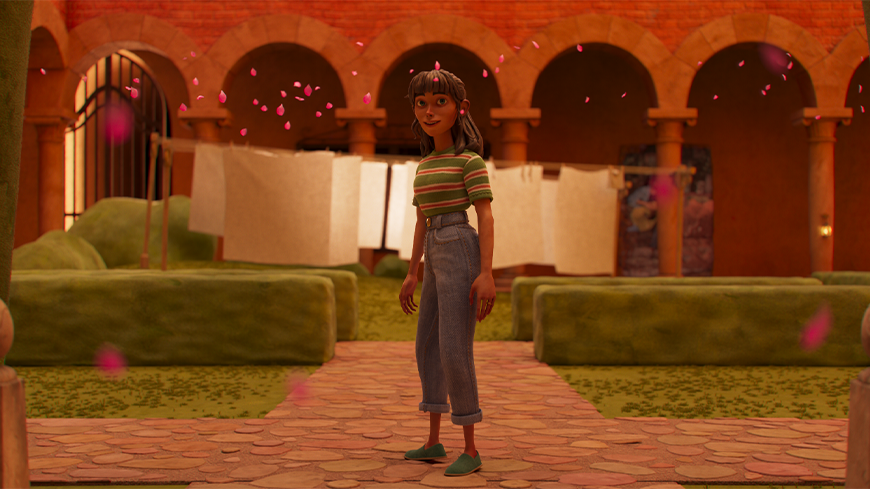
Learning intention: Understand how texts use images, sound, design and symbolism to explore ideas, and how these ideas can be interpreted in different ways.

Activity 1: Memory and place
Reflect
What stood out for you in this episode? Note down what new things you learn about the characters and their world. Discuss as a class.
Respond to the following questions in groups and then share with the rest of the class:
- How does Lucy react when Klara and Pim show her the hole in the ceiling? Are you surprised by her reaction?
- How does the garden feel different from the characters’ everyday world?
- What emotions do the characters express when they first enter the garden?
- Why do you think the garden is connected to Lucy’s memories rather than the children’s?
- What do Klara and Pim learn about Lucy during this visit?
- What do they learn about how memories shape who we are?
- Can memories be both beautiful and painful at the same time? How does the garden show this?
- What other stories do you know where characters discover a secret world? What do these stories have in common? Why is the secret world idea so enticing and such a great way to tell a story? Why do you think audiences are drawn to stories where ordinary spaces hide extraordinary worlds?
Use the worksheet below to organise your thoughts.

Activity 2: Childhood memories
Explore
The stories in Tales from Outer Suburbia draw on Shaun Tan’s childhood memories, giving them a dreamlike quality that is especially strong in this episode. Watch the scene below and then analyse the scene in pairs before sharing your discoveries with the class.
This scene analysis activity will help you understand how the creators tell the story. As you discuss the questions, pay attention to how the scene makes you feel and how visual and sound techniques create the emotional, dreamlike feeling of memory.
- What feelings are evoked/created in this clip?
- If you had to describe the mood in one or two words, what would you choose? Explain.
- The family’s everyday world is a sunny, ordinary suburb, while the inner courtyard feels very different. Look closely at the design of the garden, the pictures on the walls, and the colours. How do these elements make the courtyard feel like a different time or place?
- How do the characters’ responses contribute to the mood or feeling? Think about facial expressions, gestures and dialogue.
- Where does the camera place us as viewers, and how does that affect how we feel and how we respond to the characters’ feelings and emotions?
- How do music and sound contribute to the dreamlike mood? What about the dialogue? How does that add to the feeling?
- How do the colours help suggest memory and time passing?
- How does the scene suggest that memory is something you visit rather than something that stays fixed?
Use the worksheet to guide and record your response. Refer to your written notes when sharing your discoveries with the class.

Activity 3: Build your inner courtyard
Reflect
We experience the world through our senses and this is also a way we remember. Did you notice the importance of smell in evoking memories of the past in this episode? The sweet fragrance of the courtyard prompts Lucy’s visit to the memory place, and later, her father wants one last smell of the scent of his baby daughter’s head before they return to the present.
Create
Imagine your own inner courtyard. What memories would it hold and what emotions would it bring back? Describe your courtyard using the senses that bring your past most vividly to life. In your description, focus on two or three senses to capture the feeling of the past and its importance to you. You might consider:
- Sight: What does your inner courtyard look like? Think about colours, light, shapes, and movement.
- Sound: What does it sound like, rustling leaves, music, voices, or silence? How do these sounds capture the mood of your memory?
- Smell: What scents stand out, flowers, food, or something more elusive?
- Touch: How do different textures, objects, or surfaces feel?
- Taste: Though it may not always be relevant, taste can also evoke powerful memories.
You can choose to evoke your sense-filled memories through writing or through a combination of words and pictures.
Explore
When the family arrives in the inner courtyard, a circle of kaleidoscopic colours and shapes floats in the sky. By the end of the episode, Esme has drawn the same shape on the wall.
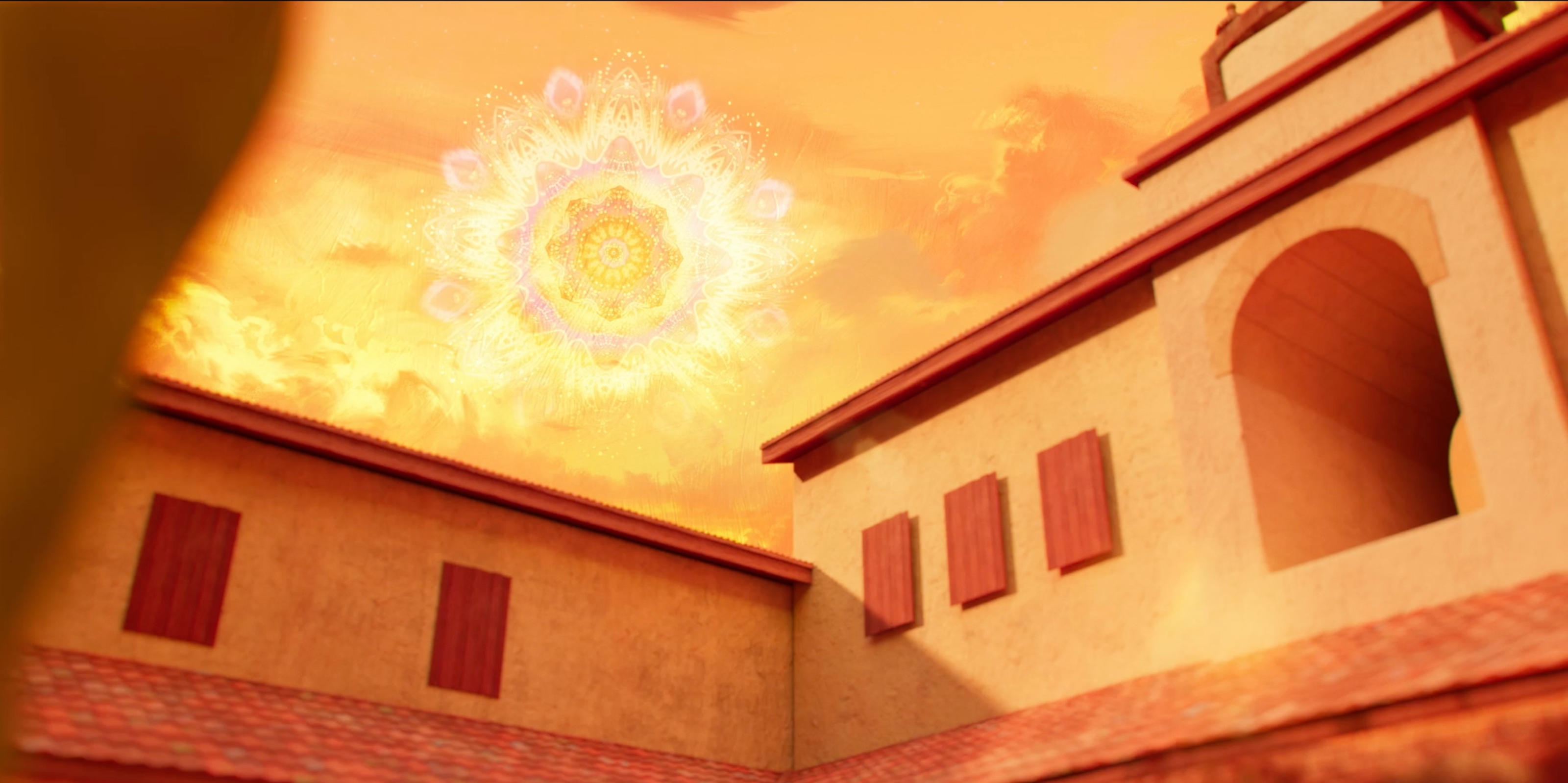
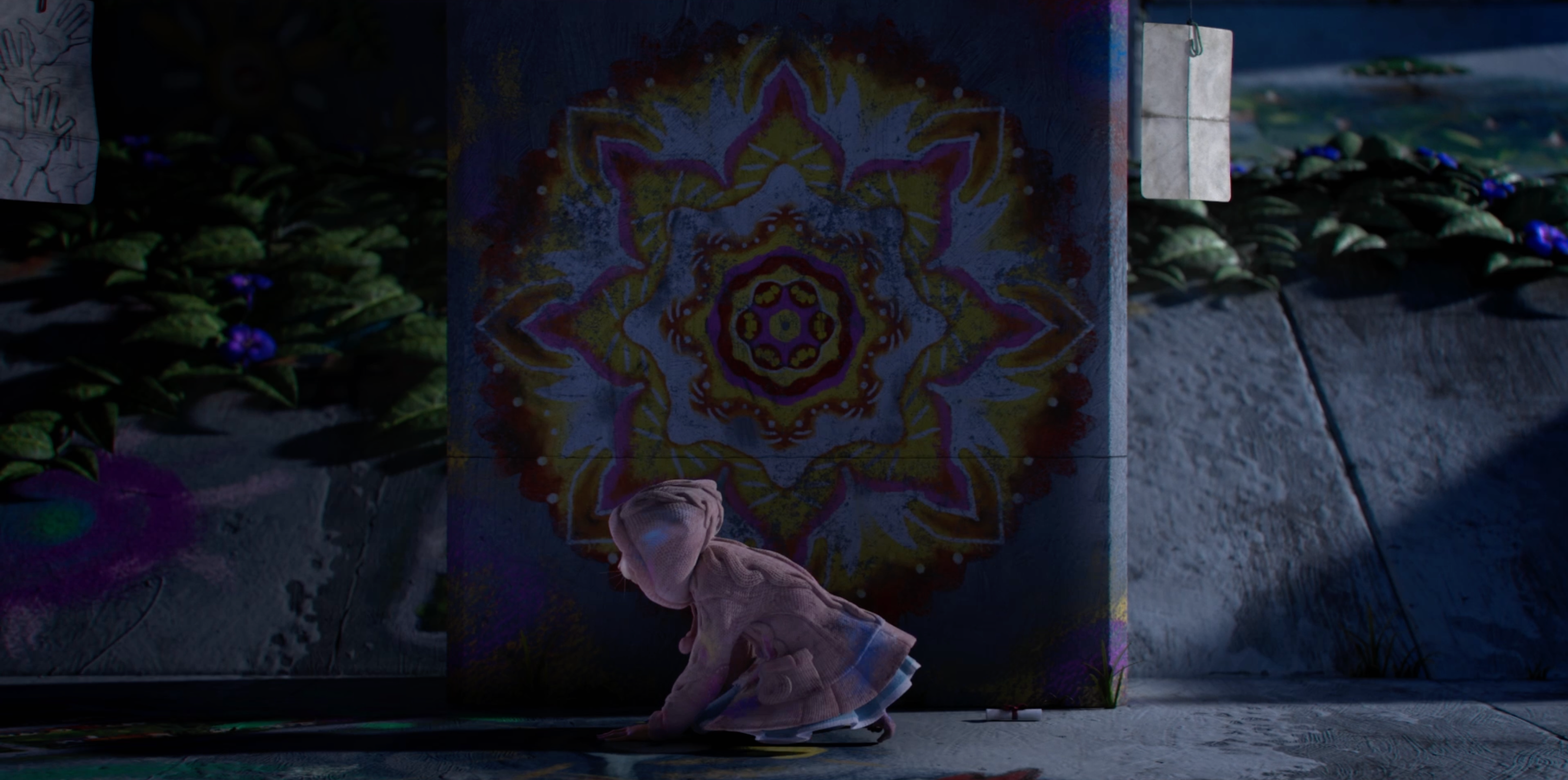
Take a moment to explore the connections the symbol might suggest:
- Do the repeating shapes and colours remind you of links between characters, objects or images you’ve already seen? Are there ideas, images or feelings that return in slightly different ways?
- What are some of the connections you can sense between characters, memories, or places, even when they seem separate?
- Draw the symbol in your notebook. Around your symbol, write or sketch anything it reminds you of in the story: characters, places, memories, objects. Look for patterns or colours that repeat and draw lines to show how they are connected.
- As you continue watching the series, add reappearing ideas and images to your symbol map.

Activity 4: When adults become kids
Create
In this episode, Lucy begins ageing backwards and Klara and Pim see what she was like at their age, before she gets even younger and ends up as a baby carried by her father. Imagine what it would be like if one of your parents or another special adult in your life suddenly became your age. Write a short story where you imagine that the two of you are playing together in an inner courtyard. As you write, think about:
- What would this adult be like as a young person? Would they be energetic, quiet, funny, brave or something else?
- What would the two of you do together? Would you play games, explore the courtyard or invent something imaginative?
- How would the courtyard change during your adventure? Would it become a magical place like the one in Tales from Outer Suburbia?
- What would surprise you about this kid‑version of the adult? Would they be different from how you know them now?
- What do you learn about them by meeting them as a young person? How does it change the way you see them?
Use your imagination and have fun exploring what happens when the everyday becomes a little unusual.
Reflect
Watch this episode again at home with your special adult. After you finish, read your story to them and ask if you imagined their kid‑self the way they really were. See what you got right, what you got hilariously wrong and what surprising stories they might share about their own childhood.

Activity 5: Page to Screen
Reflect
Episode 6: ‘Inner Courtyard’ is based on Shaun Tan’s story ‘No Other Country’ from the book Tales from Outer Suburbia. ‘No Other Country’ was inspired by the way people imagine places from their past, often remembering them as more perfect than they really were. In the story, a family escapes from the frustrations of suburban life into a hidden inner courtyard that becomes their special sanctuary.
As a class, read this section of the book and reflect on how outer suburbia is described using bleak language and imagery that includes dirty water, dead fruit trees, extreme heat, disappointment and failure. In contrast, the secret courtyard is shown through rich, detailed illustrations that feel calm, beautiful and protected.
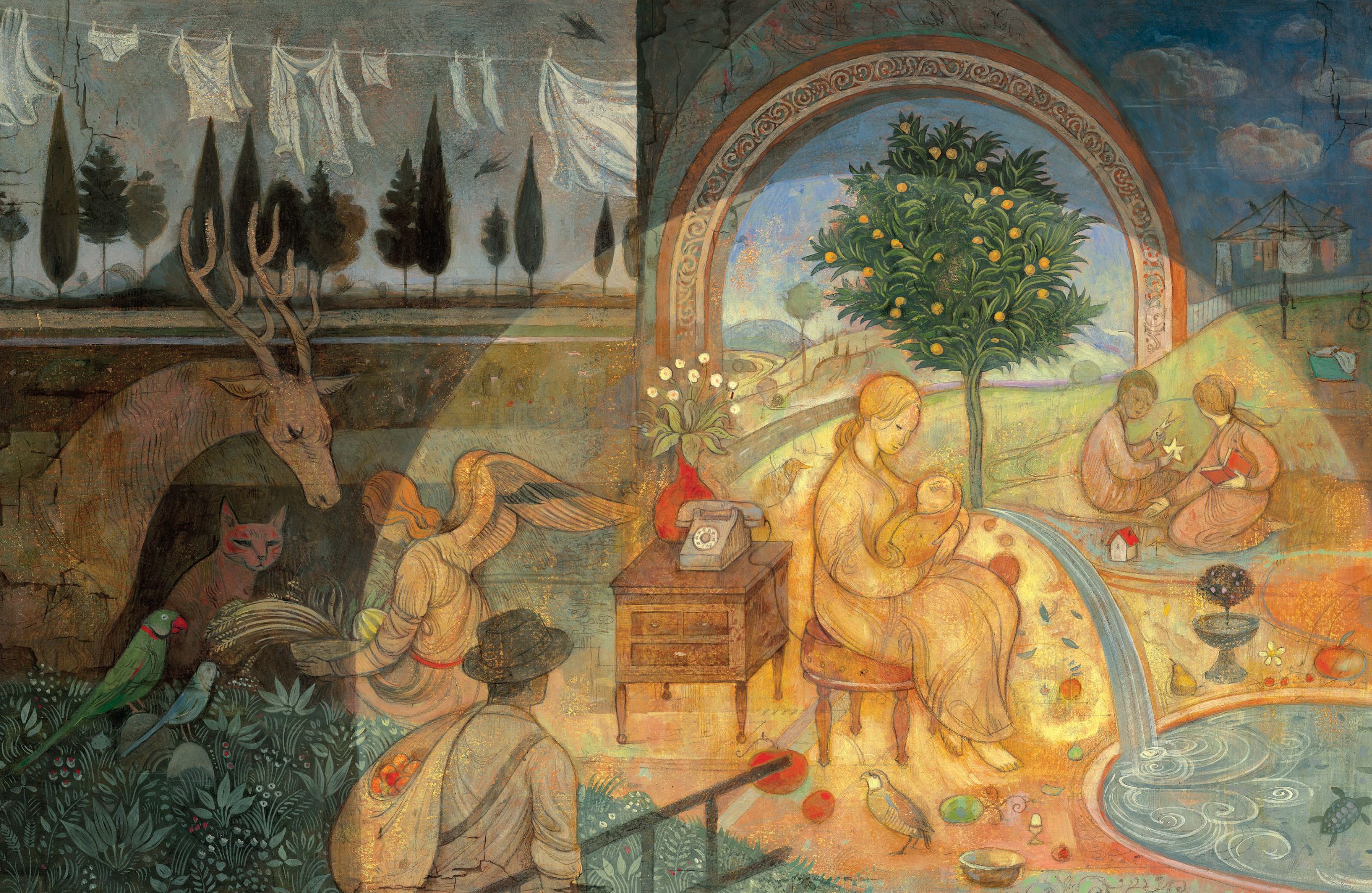
In pairs, explore the book illustration above and answer the following questions:
- What stands out to you in this illustration?
- What colours, shapes or details draw your eye first?
- What feelings does this image create?
In the story, Shaun Tan writes:"The newly planted fruit trees died in the sandy soil of a too-bright backyard and were left like grave-markers under the slack laundry lines, a small cemetery of disappointment.
- Tales from Outer Suburbia, page 56-57
With this sentence in mind how does the illustration communicate the idea of escape? How does the courtyard feel like a different country compared to the backyard? What specific visual details suggest the courtyard belongs to another place or time?
Explore
In the episode ‘Inner Courtyard’, the idea of an outside ordinary world and a secret inner world is translated from page to screen. Discuss in groups:
- How does the episode show the contrast between the ordinary world and the imagined or hidden world?
- What techniques does the episode use that are different from the story? For example, think about sound, music, camera angles, pacing.
- How does the episode make the imagined world feel special or separate?
Like the original story ‘No Other Country’, the ‘Inner Courtyard’ episode is an allegory. An allegory is a story that works on two levels: a literal level (what happens in the story) and a symbolic level (what the story represents). Discuss with a partner and then write individual responses to these questions:
- What does the secret world in the episode represent to you?
- How do the different characters respond to this world and what do you think they learn?
- What did you learn about all the characters through seeing them connect with this world?
- How did the episode make you feel about memory, belonging and family?
- How has this visit to a secret world added to your understanding of the wider story being told in the series as a whole?
Explore
Write a short paragraph interpreting the episode as an allegory, citing visual details from the episode to support your argument. There are no wrong interpretations, an allegory is meant to be open to personal meaning. Use evidence from the episode to justify your ideas, not to guess what the creators intended. Plan your writing:
- Choose a focus: Pick one character or one aspect of the secret world that stood out to you. Observe closely: Look for visual clues that communicate meaning, e.g., colours, shapes, lighting, movement, objects, music.
- Ask yourself guiding questions:
- What does this secret world make you think or feel?
- How do the characters interact with it, and what might that suggest about them or about life more generally?
- How is this world different from the ordinary world, and why might the creators have shown this contrast?
- Make a connection: Think about how the secret world could symbolise something larger - it could be about memory, imagination, family, belonging, or another idea that makes sense to you.
Write your paragraph:
- Start by describing the part of the episode you focused on.
- Explain what you think it represents, using at least one visual detail to support your idea.
- Conclude by linking your idea to the episode as a whole.

Activity 6: Behind the scenes
Reflect
Imagine you are part of the art and production design team for this episode. Your job is to design the inner courtyard so it feels different from the ordinary outer suburban world around it. Look closely at the concept artwork below to help you with this task.
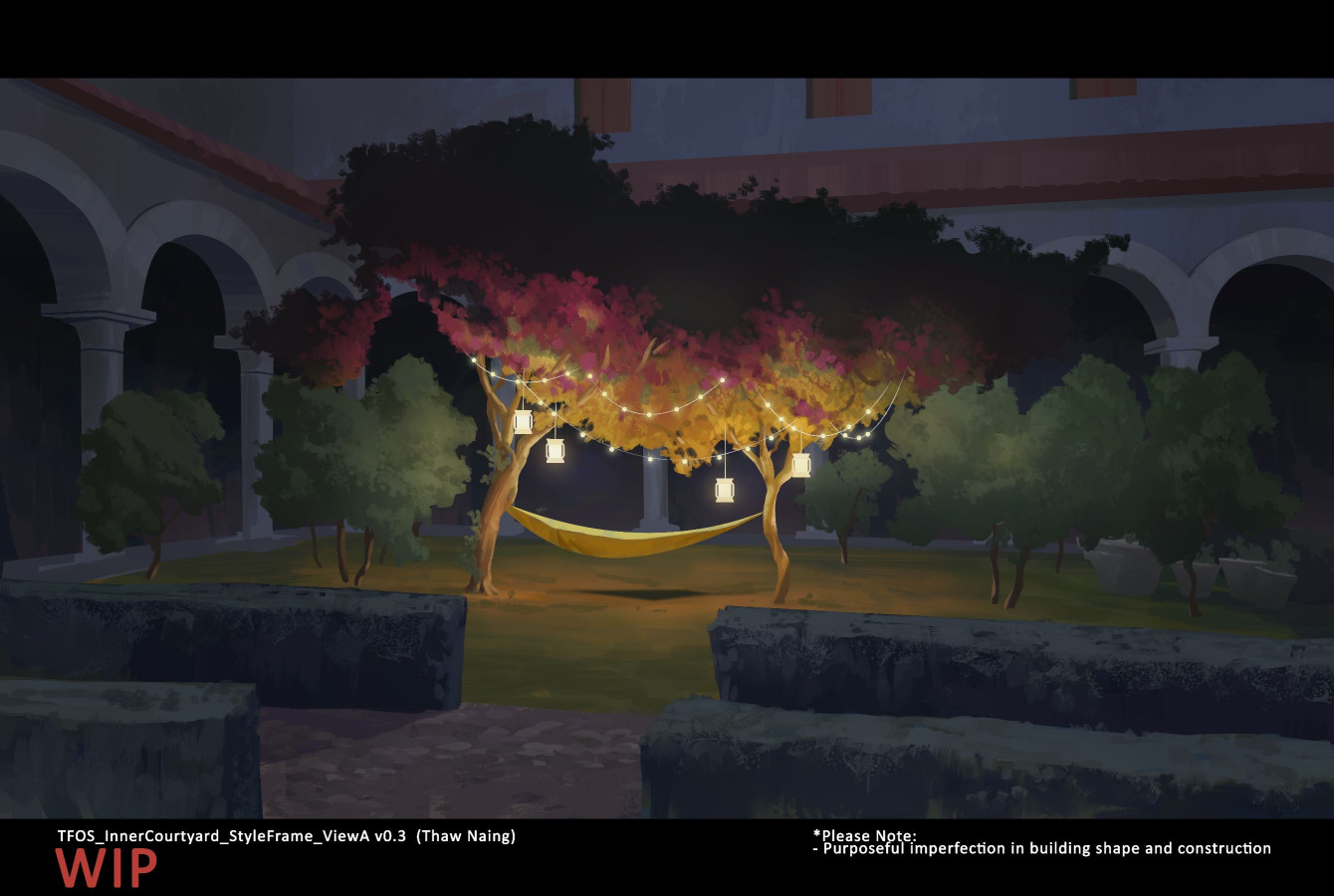
Inner courtyard concept art. Artist: Thaw Naing.
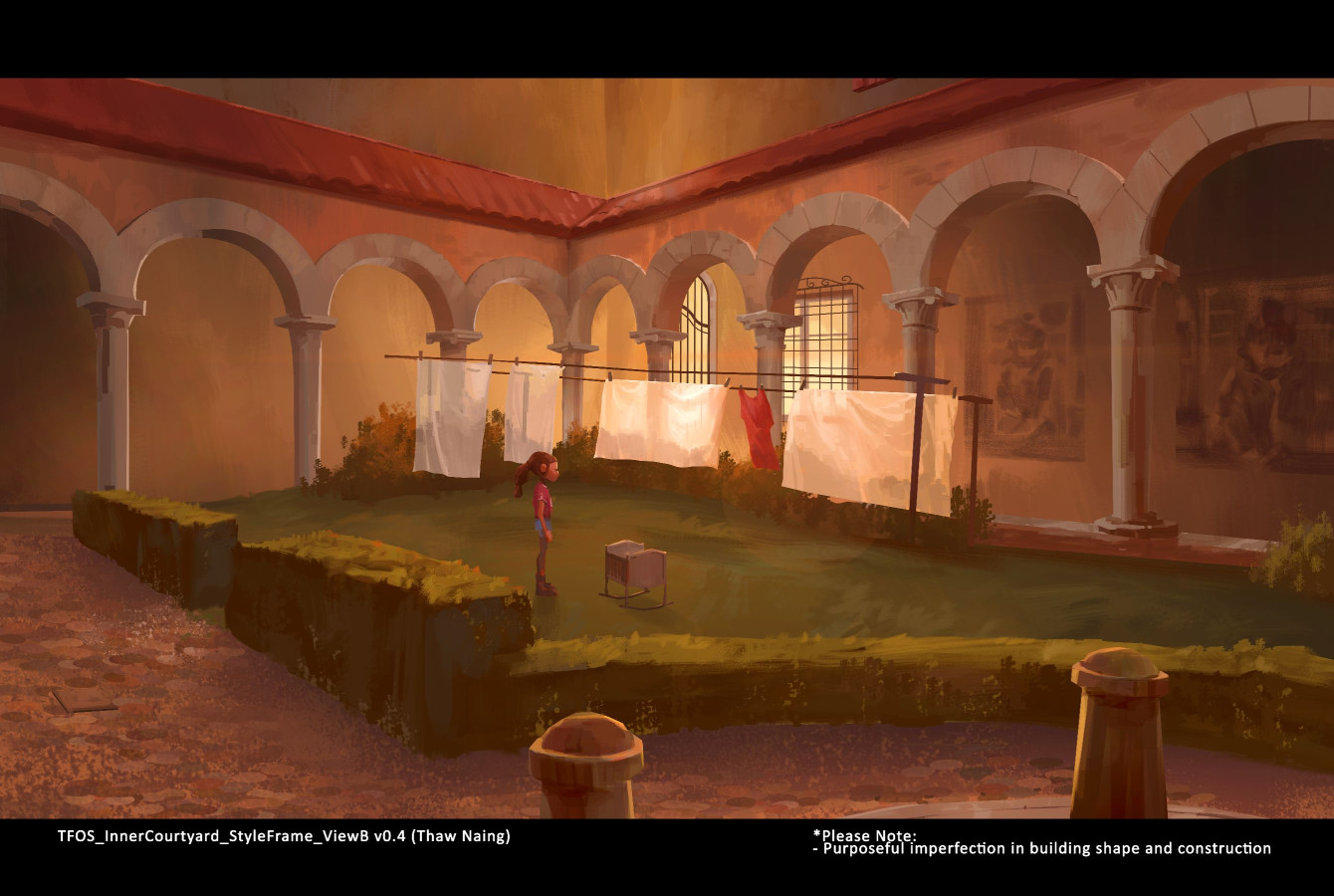
Inner courtyard concept art. Artist: Thaw Naing.
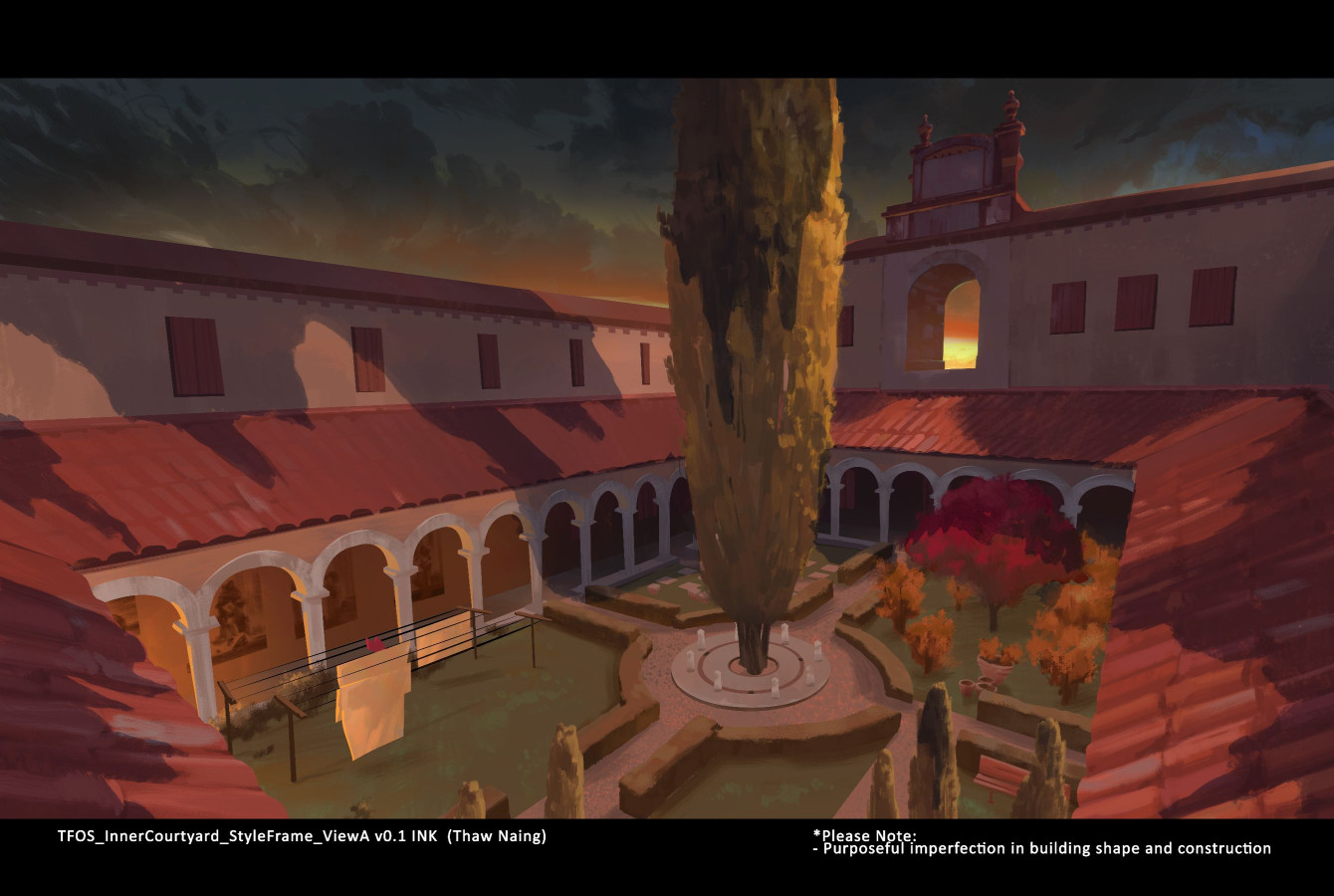
Inner courtyard concept art. Artist: Thaw Naing.
1
/ 3
Begin by looking closely at the artwork above. In pairs, discuss what the courtyard needs to feel like in this story.
- How can the courtyard feel separate from the ordinary suburban world outside?
- How might colour, texture, light and detail hint at memory, imagination or another place altogether?
- How could the design make the courtyard feel protected, timeless or secret instead of everyday or realistic?
Explore
Continue working in pairs as you step into the shoes of the art team.
- Make a list of design problems the artists would need to solve. For example, how to show that the courtyard is imagined or how to keep it from looking like an ordinary backyard.
- Make a list of what would be fun or interesting about designing this world. Think about unusual shapes, plants, patterns or lighting that could make the courtyard feel magical.
- Choose one production image and add annotations that explain the design choices. For example, warm colours to suggest memory or curved walls to make the setting feel safe and hidden.
Create
Using your ideas, work together to design your own version of the courtyard. Sketch a small part of this world, such as a hidden corner, a doorway or a special object found inside the courtyard. Add colour notes, texture ideas or tiny labels that explain how your choices make the place feel imagined, safe or a little enchanted.
