Episode description: Lucy is looking forward to the arrival of a boarder to help ease the family’s finances, but an unexpected encounter with the water buffalo only adds to her worries. When the family’s tiny new visitor finally arrives, he is full of surprises. He doesn’t stay long but leaves behind something beautiful that gives Lucy, Klara and Pim a new perspective on their lives together.
Eric
Watch: Episode 5: 'Eric' on ABC iView or download to own from the ACTF Shop.
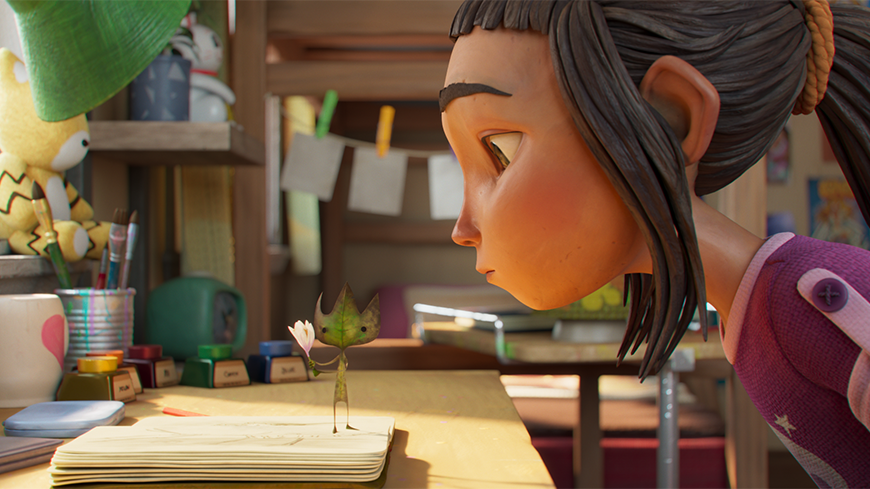
Learning intention: Analyse how character, empathy and point of view are communicated through storytelling and animation.

Activity 1: Playful and surprising
Reflect
After watching the episode, take a moment to think about what made you smile or laugh and what surprised you. Share your thoughts with a partner.
In small groups, use two different coloured sticky notes to capture your ideas. Use one colour for funny or playful moments and the other for surprising moments, writing one idea on each note.
As a class, bring your sticky notes to the board under the headings Funny and Surprising, reading your idea aloud as you add it. Work together to group similar ideas, talk about why they connect and give each cluster a simple label such as visual humour, size contrast or unexpected behaviour.
Explore
Think about how the episode uses funny and surprising moments to make the story more imaginative and enjoyable for the audience. Write a short paragraph where you refer to one funny moment and one surprising moment from the episode. Go beyond describing what happens by explaining why each moment is funny or surprising. Finish by explaining how these moments help bring the story to life and make it more imaginative and enjoyable to watch.
Explore
Think about the two storylines in this episode: the huge, mischievous water buffalo and the tiny leaf man. How does the episode use both something very big and something very tiny to make us laugh? Write a short paragraph explaining how the contrast between the two characters creates humour. Use specific examples from the episode in your answer.

Activity 2: Understanding differences
Reflect
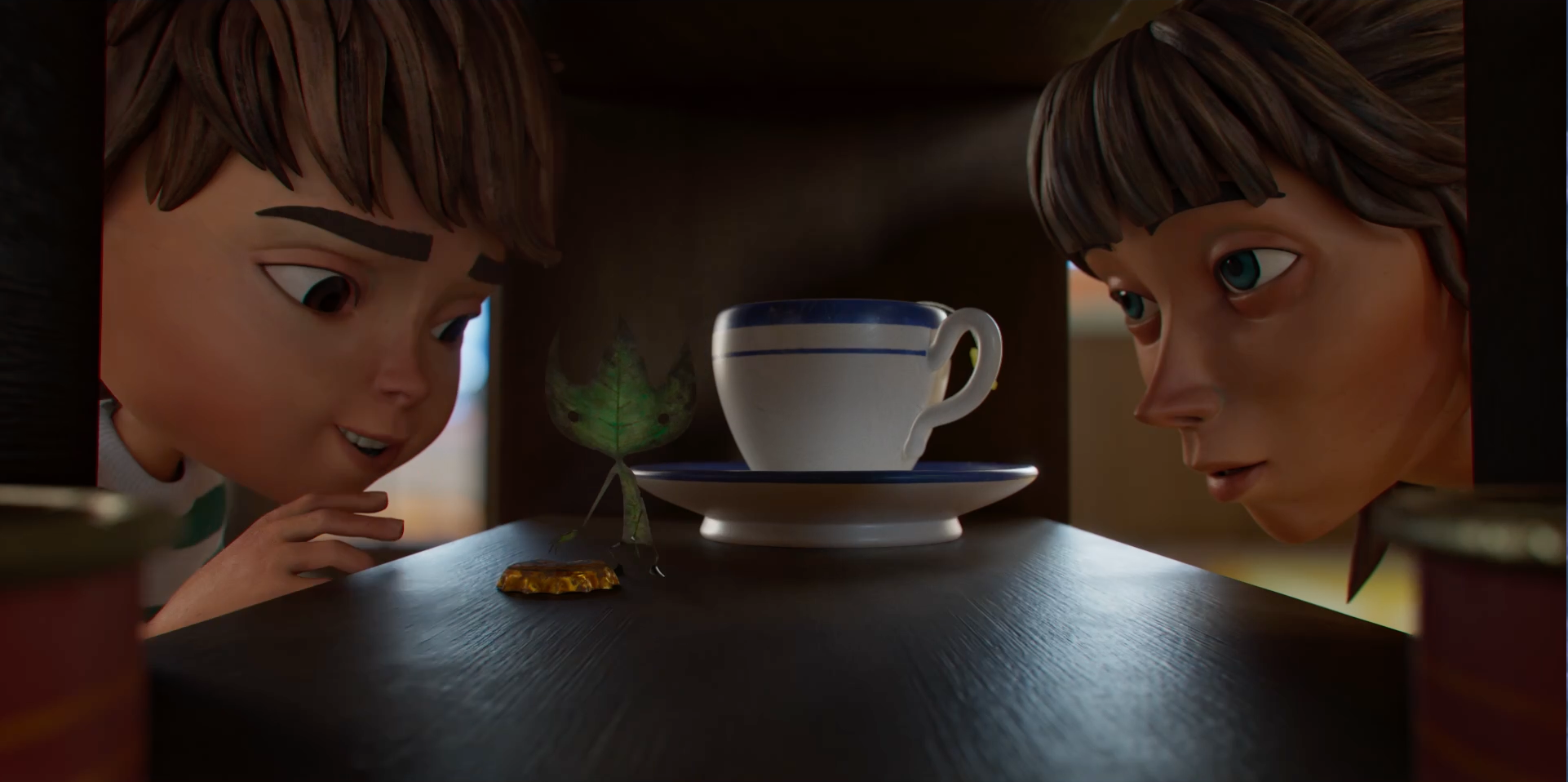
Eric’s arrival prompts a moment of shared surprise for both characters and viewers. Rather than the human lodger the family was expecting, they open the door to a tiny leaf man, who has also arrived a day early! The shots used in this scene emphasise Eric’s small size, reinforcing the unexpectedness of his arrival and Lucy’s uncertainty about how to make him feel welcome.
Take some time to think about Eric as a character. Write a brief description that explains how Eric is different from others, the challenges he faces while staying with the family, and what makes him special. Try to show your understanding of Eric through clear, thoughtful details rather than just listing what happens.
Explore
One of the ways the character of Eric helps viewers think about difference is through the ways the family members respond to their unusual lodger. In groups, create character profiles for Lucy, Pim and Klara based on their responses to Eric’s arrival and his differences.
| Lucy |
|
| Pim |
|
| Klara |
|
Share your profiles with the class and discuss these big questions:
- What do the characters’ responses to Eric reveal about how people notice and respond to difference?
- How does this help us think about empathy and inclusion?
- How does Eric’s artwork communicate something special and new to the family?
- How does it help the family understand him in a way words cannot?
- What does it reveal about who he is?
- How did you feel when you saw Eric’s tiny, magical artwork?
Look at you, rustling up a hidden clue. Nice work!
Eric is hidden in every episode of the whole series. He pops up in unexpected corners of scenes, tucked into both background moments and quick visual gags. It’s a quiet challenge from the creators for viewers who love paying attention.

Activity 3: A world for Eric
Explore
Take time to look closely and explore this concept artwork created for this episode. As a class or in small groups, discuss:
- What small objects do you notice in the artwork?
- Which details seem easy to overlook at first glance?
- Why might these small things matter to a character like Eric?
- Can you think of everyday objects that mean nothing special to you, but might feel important or comforting to someone else?
Record your thinking. Try to focus on scale, texture and how ordinary objects can take on new meaning.
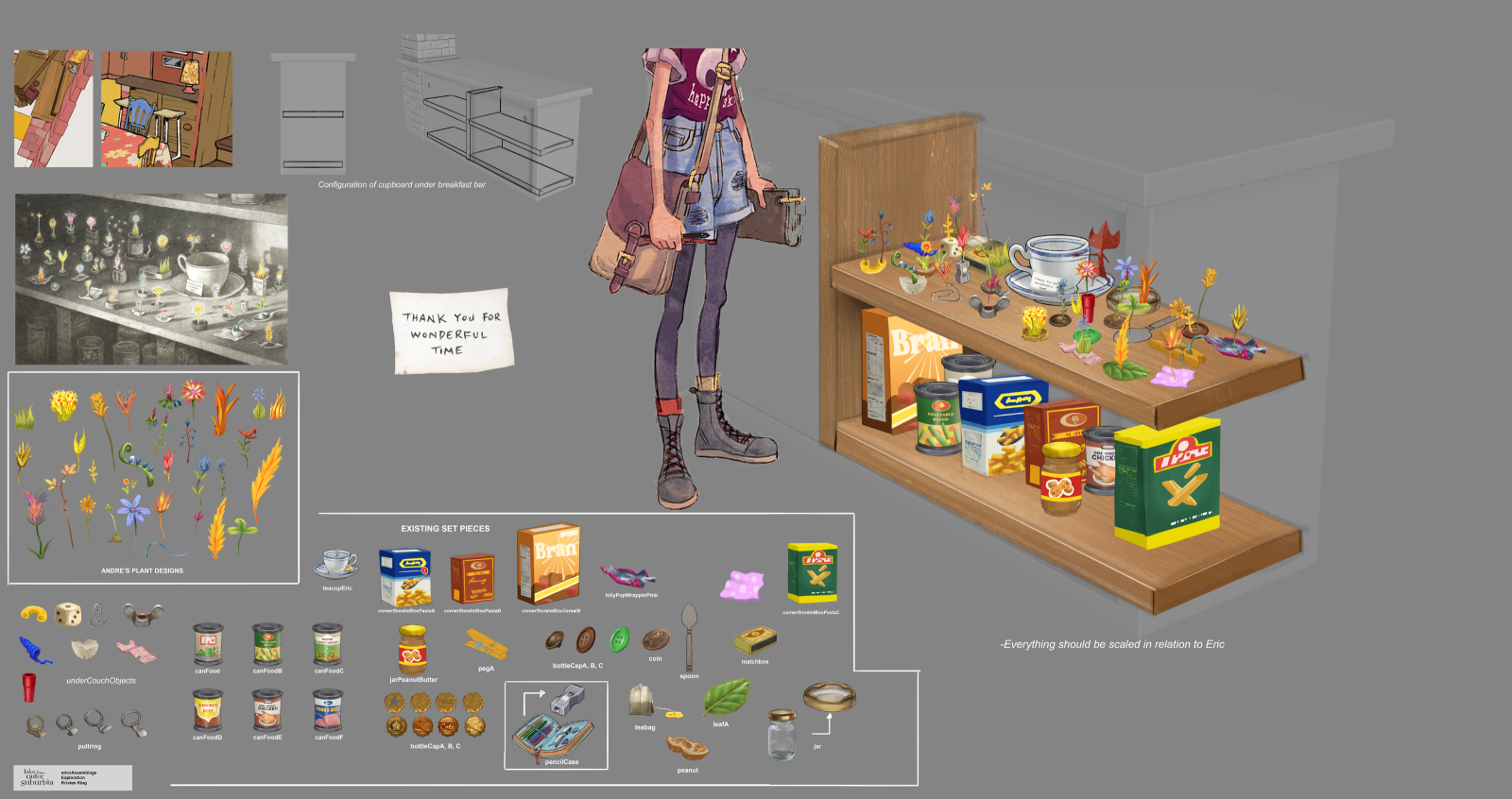
Eric's assemblage exploration. Artist: Kristen King.
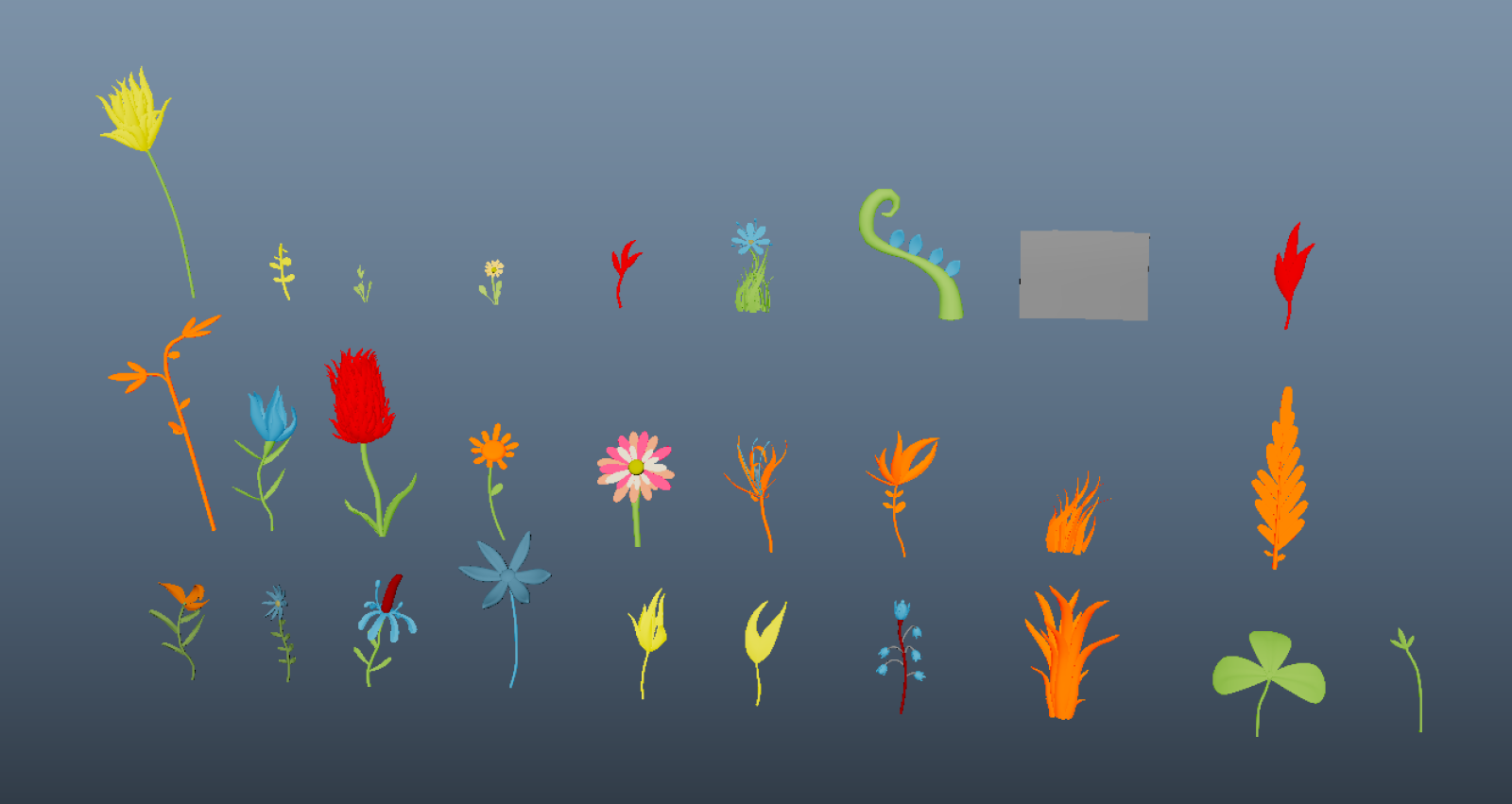
Eric's assemblage modelling. Artist: Leo Nguyen.
1
/ 2
Create
In pairs, think about how Pim helps Eric feel at home by finding objects that fit his size. These objects are ordinary but chosen with care. Together, plan a small space where Eric could feel safe, welcome and curious. Ask yourselves:
- What kind of place would Eric feel comfortable exploring?
- What small, everyday objects could become furniture, tools or treasures at Eric’s scale?
- How can you arrange these objects to tell a story about who Eric is and how he lives?
Gather your objects and sketch your ideas before building. Once you are happy with your sketch, build the space for Eric inside an old box. Once all your boxes are complete, share your section of the village with the rest of the class and explain why you included particular elements in your design. Then stack and connect all the boxes to create one shared village for Eric and his family to explore. As you build the village, notice how each box is different yet part of a whole and how the smallest details help create a rich, imaginative world.
Reflect
Individually, write a short reflection responding to these prompts:
- Which small details in your world for Eric felt most important, and why?
- How did focusing on overlooked objects change how you think about everyday spaces?
- How does this activity connect to the way Pim shows kindness, care and belonging?
Use examples from the episode and your own creation to support your ideas.
Create
Imagine the world through Eric’s eyes. Eric is very tiny, so everything looks huge and surprising to him! Write a letter from Eric to his family back home. In the letter, you should include something he’s found challenging, something surprising or confusing, and something fun or beautiful. Illustrate your letter with pictures showing what Eric sees and how enormous the world looks from his perspective.

Activity 4: Animating the imagination
Reflect
While 3D puppet-style animation is used to tell the main story in Tales from Outer Suburbia, 2D animation is often used to show what’s happening inside a character’s imagination. 2D is where the animation looks flatter and drawn, in contrast with the textured 3D puppet-style animation used to tell the main story.
As a class, discuss and list the moments so far where 2D animation has been used in the series. As you build your list, consider:
- whose imagination we are seeing
- what is happening in the story at that moment
- why the creators have chosen 2D animation instead of 3D
Watch the short scene below where Eric’s tiny flip-book animation brings Klara’s imagination to life.
In small groups, discuss the following questions:
- How does this clip make you feel?
- What different 2D animation styles do you see? Describe them.
- What does this sequence add to the story?
- How does it help express Klara’s feelings or inner thoughts?
Explore
Using the worksheet below choose words that best describe the look and feel of this 2D animation sequence. Think about colour and texture, movement and energy, and the mood or emotions created.
Using your chosen words, write a short paragraph explaining how Klara’s imagined world is brought to life through 2D animation. Focus on how the animation style helps the audience understand her feelings and imagination.
Create
Print out the ready‑made flipbook of Klara walking. Cut along the lines, stack the pieces in order, then staple them together. As you flip through the pages, notice how each picture shifts just a little. When the pages move quickly, Klara appears to be walking.
Now, create your own tiny flip‑book world using the corner of a notebook or a stack of sticky notes. Draw a series of small movements, each one changing just a little. When you flip the pages fast, your drawings will spring to life as if touched by a bit of magic.

Activity 5: Page to screen
Reflect
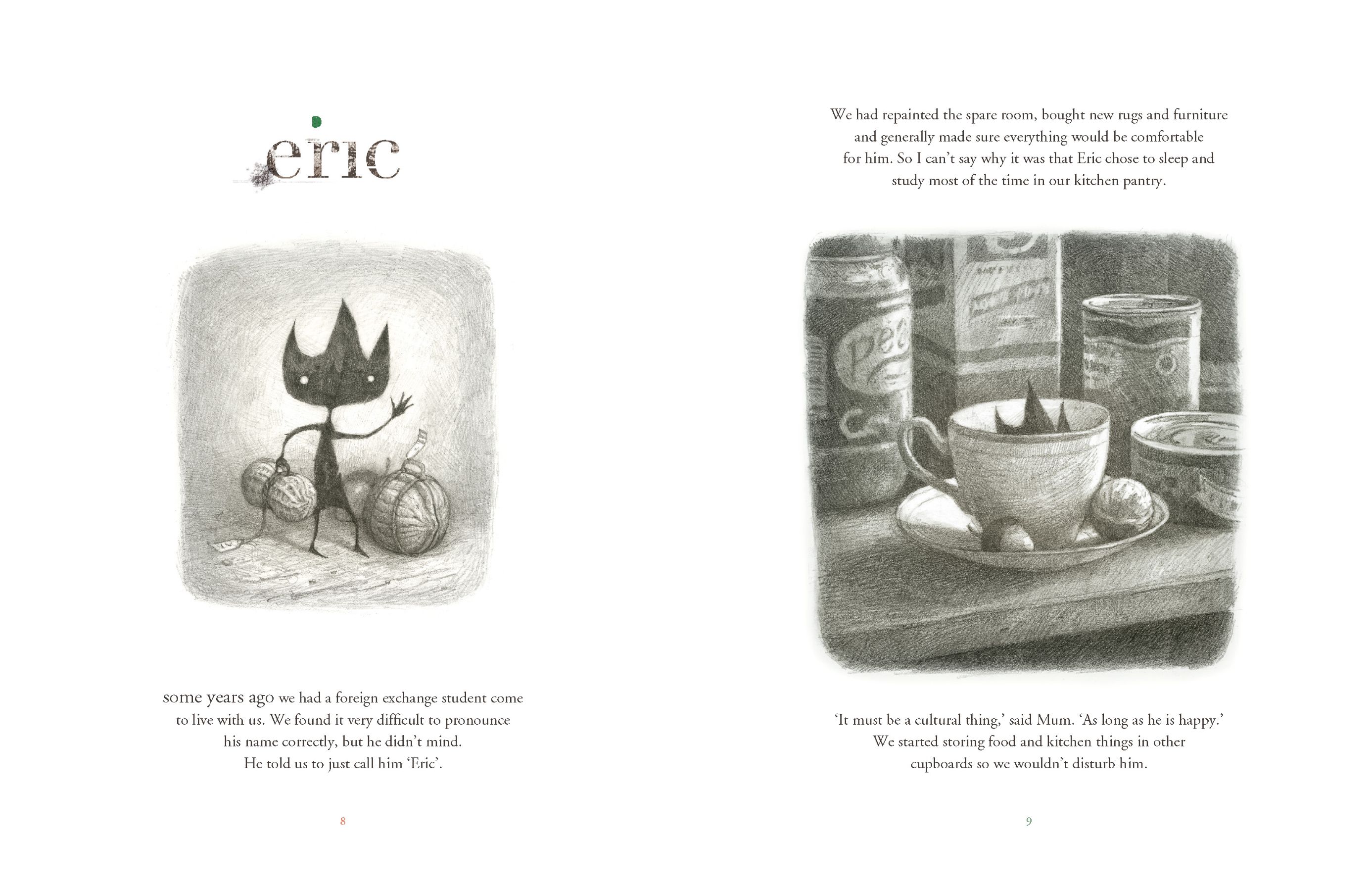
In Shaun Tan’s story, 'Eric' in the book Tales from Outer Suburbia, Eric is a foreign exchange student who comes to stay with a family. The story is told in the first person by a family member, and most illustrations show Eric from the family’s point of view. Eric appears tiny in a world that is not made for his size.
Read the story, look closely at the pages from the book and discuss:
- Where is Eric placed in the pictures?
- How big does he look compared to the people and objects around him?
- What do you think Eric might be feeling in these moments?
- What does this perspective suggest about how the family sees Eric?
You may like to watch Shaun read Eric:
Create
The episode uses similar ideas as the book but shows Eric through the eyes of Klara, Pim and Lucy, giving us more than one point of view. Watch the scene below when Eric arrives.
Notice how some shots let you slip into a character’s shoes and see the world the way they do. These are called point of view shots. Watch the clip again, pause at each moment and ask whose eyes you are looking through. As a class, sketch each shot as a simple storyboard frame and label it with the character who owns that view.
Then look at your storyboard beside the book illustrations. Talk about any new or surprising points of view in the screen version and how these choices help you step a little closer to understanding how Eric might be feeling.
Create
Choose one key moment from the episode and retell this moment from a different point of view. It can be from the point of view of one of the characters or of an outsider. Choose one of the following formats:
- a short paragraph
- a comic strip or storyboard
- an internal monologue (thoughts the character doesn’t say aloud)
In your retelling, include what this character notices, how they feel about Eric’s difference and a different understanding of what is happening in this moment.

Activity 6: Behind the scenes
Reflect
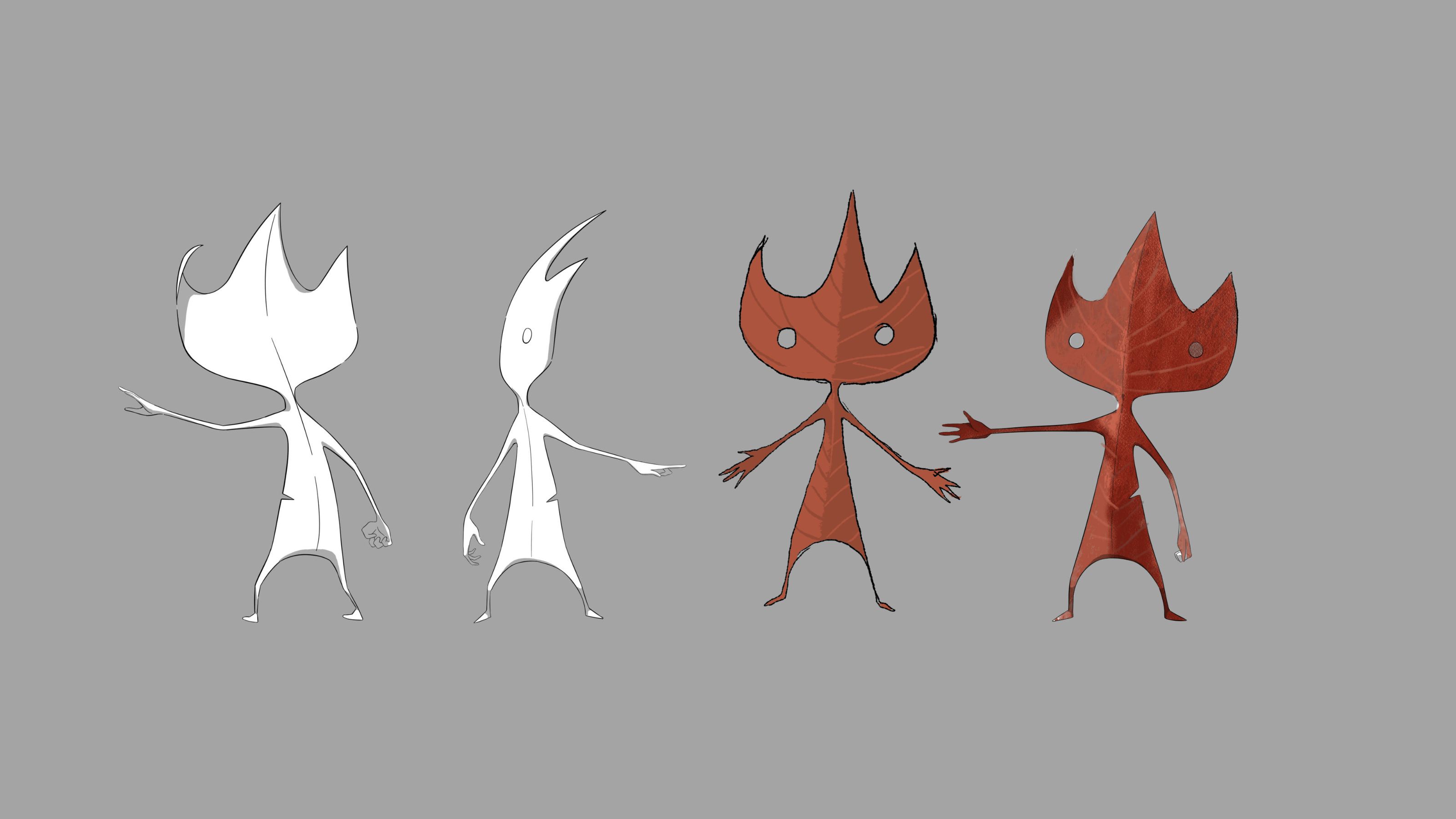
Eric is a tiny 2D leaf character wandering through a mostly 3D world. His paper‑thin look makes him feel a little magical, as if he has been placed into a world where he doesn’t quite belong. Review the character design artwork by Thomas Campi below and as a class, explore these questions:
- What challenges might this have created for the people making the show?
- What creative opportunities might this have given them?
Explore
Imagine you have joined the creative team designing Eric for this episode. You get to decide how this little leaf‑person thinks, moves and fits into a world that feels bigger and more real than he is. Think about:
- how Eric should move, float, wobble or glide.
- how big or small he should appear next to the 3D characters.
- how he can belong in a 3D world while still looking like a drawn 2D character.
Individually or in pairs:
- Make a list of tricky problems the designers would need to solve.
- Make a list of what would be fun, exciting or full of possibility when creating Eric.
Create
Imagine Eric has a family of leaf‑folk who each have their own shape, texture and way of moving. Create Eric’s family by sketching one or more relatives. Think about:
- What type of leaf each family member might be.
- How their leaf shape could change their personality or movement.
- How they would look standing beside Eric in the 3D world.
Add small notes to your sketch to explain your ideas and the role each family member plays in Eric’s world.
Learn to draw Eric
Learn the process of drawing Eric with Shaun Tan as your guide.
