Episode description: With Klara enthralled by an intriguing neighbour and Lucy starting a new job, Pim needs someone to play with. He builds a dinosaur friend out of junk, stunned when it comes to life. When their fun gets out of hand, Klara joins Pim’s imaginative world to create a magical junk mother to put things right.
Make a Friend
Watch: Episode 4: ‘Make a Friend’ on ABC iView or download to own from the ACTF Shop.
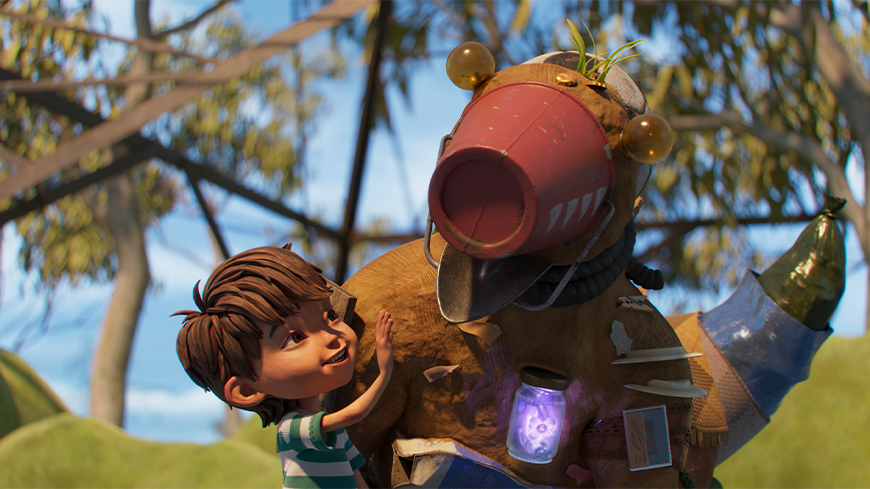
Learning intention: Understand how creators use imagination, symbolism and animation style to communicate ideas.

Activity 1: Story strands
Reflect
In this episode, Pim’s vibrant imagination creates fun and slapstick comedy, while Klara continues to explore the mystery of the sleeping girl across the road. Answer these questions to think more deeply about these two interwoven narrative strands. In pairs, discuss the following questions:
- Which story stood out to you more: Pim’s or Klara’s? Why?
- How did the episode make you feel at different moments?
As a class, discuss the following questions:
- Why do you think the creators chose to mix humour and mystery in the same episode?
- How does this choice make the episode more interesting to watch?
- The two stories are connected by the image of the purple flowers. What do the purple flowers mean to you? What do you think the purple flowers might represent? What makes you think that?
- What questions were left unanswered at the end of the episode? Write down 2–3.
- How does leaving questions open make the episode more exciting or memorable for viewers? How does this encourage the audience to use their imagination or think about what might happen next?

Activity 2: Animation style
Explore
The creators of Tales from Outer Suburbia describe the series as ‘digitally handcrafted’. While it is animated using computers, it is carefully designed to look like stop‑motion animation. This effect is created in several ways:
- characters move like puppets rather than smoothly gliding
- water, plants and trees have a textured, handmade look
- thicker and chunkier objects. For example, over sized table legs, big stitches on clothing and fabrics
- bumpy and uneven surfaces, big dust flecks, brush marks and even finger prints to mimic claymation.
- slight imperfections evoke the feel of 1980s animation, giving the series a charming, old‑fashioned style that feels warmer than slick, modern CGI
Watch the scene below and pay close attention to the art and craft of the animation.
After watching the scene, use the worksheet below to describe the animation style and explain the impact it has on you as a viewer.
Explore
Watch the interview with director Noel Cleary, where he shares insights into the animation process. As you watch, think about all the creative choices made along the way. Watch here:

Activity 3: Design your own friend
Create
Design your own special friend or pet character.
- What special friend character would you like to imagine?
- What will your imaginary friend look like?
- How will your friend move and behave?
- What will make your character special to you?
- What steps will you follow as you make your friend? (For example, Pim begins with a drawing, a big hole and a box.)
- What ingredients will you use?
- What is your friend’s heart made out of? Why have you chosen this idea?
Create concept artwork like the one below and ensure you label your design.
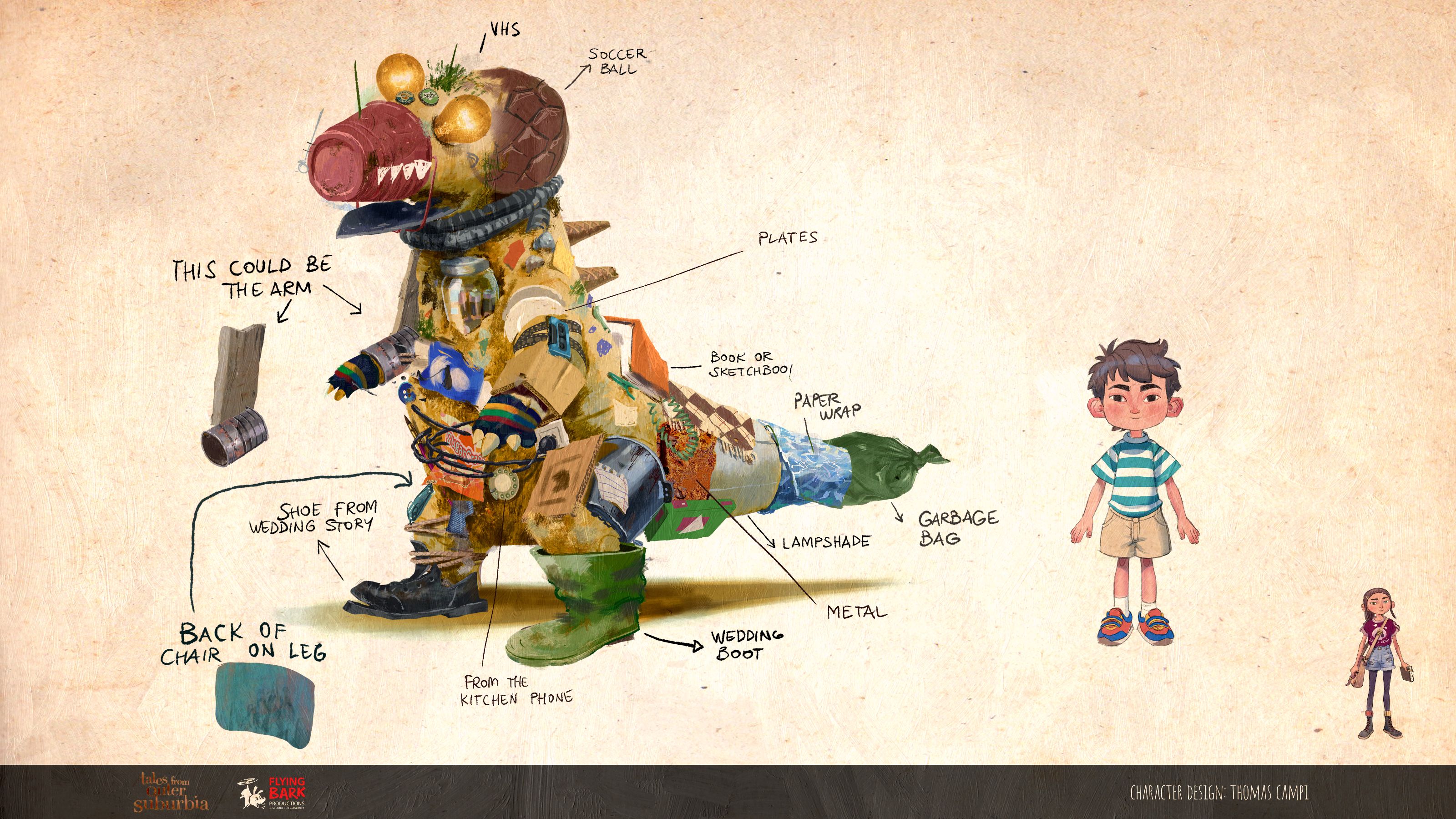
Use the worksheet below to help guide your thinking as you design your character.
Create
After you have designed your friend or pet character, choose one of the following activities to bring it to life.
- Storyboard your character. Draw 4 - 6 panels showing your character doing something fun and unexpected. Think about how your friend moves, acts, and surprises people.
- Make your friend in 3D. Use paper, clay, or other materials to create your friend. Give it a name and label its special features.
- Creative response. Write a short story, or write and draw a comic strip about your friend character.

Activity 4: Page to screen
Explore
Make your own pet’ of Tales from Outer Suburbia (2008) was originally a piece for an animal charity about rehoming abandoned pets (as my family tended to do a lot growing up - unwanted cats and a deformed budgie). Roadside rubbish days were also big events for scavenging kids. This piece inspired the Tales TV episode ‘Make a friend’ with a similar backyard alchemy used to solve domestic problems.
- Shaun Tan, Source: shauncytan
This episode is inspired by Shaun Tan’s story 'Make your Own Pet' in the book Tales from Outer Suburbia. Explore this story as a class. The story is a step-by-step guide and the end result is a cuddly marmalade cat who seems much better behaved than Pim’s dino friend.
Look closely at Shaun Tan’s story on your own. Pay attention to the materials and textures he uses, the way the text and images work together and how each step guides you to imagine or create a pet. Jot down quick notes or add annotated sketches in your workbook.
As a class, share what you noticed about Shaun Tan’s story and the techniques he uses. Together, list the elements of Tan’s original pet‑making process that also appear in the episode.
Compare Pim’s dinosaur character with Shaun Tan’s marmalade cat:
- How does each character behave? What do those behaviours tell us about the story, or the kind of fun or mystery the creators wanted to explore?
- Why do you think the animators chose a dinosaur rather than a calm cat?
- In what ways is Pim’s dinosaur different from Shaun Tan’s marmalade cat? Why might the creators have made those choices?
Comparing Pim’s dinosaur character with Shaun Tan’s original marmalade cat highlights some key differences between screen stories and stories in books:
- How does slowing down to study the pictures and text in a picture book shape your experience of the story and its characters?
- How do movement, sound and setting in a screen story lead to, or require, a different kind of character design?
- Both the book story and the episode are funny, but in different ways. What is funny about each version? How does thinking about this help you understand some of the differences between a picture book story and an episode of a television series? After sharing your ideas in small groups or as a class, write your own reflection. Include specific examples from both the book and the episode to support your ideas.

Activity 5: Behind the scenes
The soundtrack captures the essence of what I was trying to explore in the illustrations - the magic hidden in everyday suburban life. It’s wonderful to see how the same story can be told in different forms: first as a book, then a television series, and now through music.
- Shaun Tan, Source: Flying Bark
The soundscape of Tales from Outer Suburbia is made up of many different elements: dialogue, sound effects and music. In this episode, the music helps build the contrast between Klara’s visit to the Sleeping Girl’s house and Pim’s zany adventures with his dino pet. Composers Ned Beckley and Josh Hogan have created different themes for characters and spaces that play an important role in bringing the world to life.
Explore
As a class, listen to the tracks Make your own pet and Don’t step on the cut grass.
Now watch how those compositions are woven into the rest of the soundtrack.
Discuss how the music contributes to the story and the characters. Use these prompts to guide your observations:
- What kind of mood or feeling does each piece of music create?
- How does the music match the actions, characters, or settings on screen?
- Are there sounds or instruments that stand out? How do they make you feel or focus your attention?
- How does music help tell the story in ways that images and dialogue alone cannot?
- Why do you think the composers chose different themes for different characters or locations?
- How would the episode feel different if it had no music or a different style of music?
- How does music help the audience understand the contrast between the comedy of the Dino pet storyline and the mystery of the Sleeping Girl?
Explore
Imagine you are composing a short piece of music for the character you designed. What instruments or sounds would you use to match their personality or mood?
