Episode description: It is very hot, and while Lucy tries to fix the air conditioner, Klara and Pim explore the neighbourhood. As the family settles into their new lives, everyday moments blend with unexpected encounters, continuing to surprise viewers and deepen the sense of a neighbourhood where the familiar and the strange coexist.
Broken Toys
Watch: Episode 2: ‘Broken Toys’ on ABC iView or download to own from the ACTF Shop.
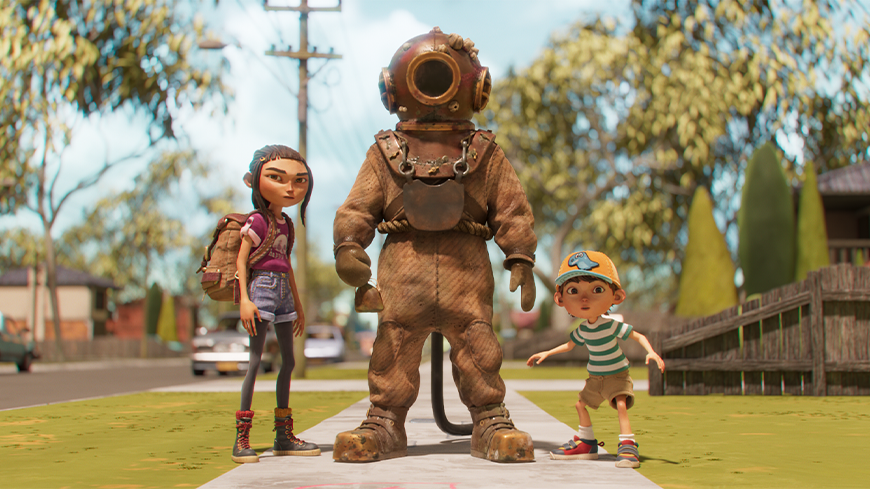
Learning intention: Analyse how perspective, film techniques, and setting are used to create curiosity, build empathy and tell stories.

Activity 1: First impressions
Reflect
Take a moment to think about your first impressions of this episode. Then share your response with the rest of the class:
- What stood out?
- What surprised you?
- What new things did you learn about the family and the neighbourhood?
When asked, what are you hoping the audience will feel when they watch this series? Shaun Tan replied,
Well, it may be an odd thing to say, but I hope audiences will be puzzled. Not confused or bewildered, but also not entirely understanding what, how or why things are happening in the story the way they do. I’ve never read a single good poem, listened to a great song or watched a terrific film that I can say I’ve fully understood. I love them because the meaning remains a little elusive.
- Shaun Tan, Source: Flying Bark
Why do you think Shaun Tan wants viewers to have this response?
Working individually, write down three things that mystified or intrigued you when watching this episode. Share your ideas with a partner and compare what each of you found puzzling. Why do you think Shaun Tan wants viewers to have this response?

Activity 2: Curious encounters
Reflect
Watch the short scene. Reflect on the final overhead shot of the diver lying on the grass and Pim kneeling next to him still on screen, take a moment to think about your first reaction to the appearance of the diver.
Reflect
Write 3 words or short phrases to describe how you know the diver is out of place and doesn’t belong. Share with the class to build a list of descriptive words.
We see this encounter through Pim’s eyes. Write 3 words or short phrases that describe his reaction. Share with others.
Rewatch the clip and discuss as a class how sound, camera and setting make this moment so powerful. You may like to play through the scene once to look at the impact of sound, again for use of different shots and a third time to look at setting where you focus on colour, shape and landscape.
Explore
Working together in small groups, focus on the whole story told about the diver in this episode.
- The diver does not talk during the episode, so how does Pim know that the diver is lost and needs help? Look at body language and animation style.
- Who else helps the diver find the place where he belongs? Explain how they help.
- Who doesn't help the diver? Why not?
- Do you think this adventure gives Pim and Klara a greater sense of belonging in their new neighbourhood? Explain.
- What about Mrs Katayama? How have the children helped her? Do you think they have also given her a sense of belonging and connection?
Use the worksheet below to plan and organise your discussion in response to these questions, and then share with the rest of the class.
Well spotted, explorer of small things, you found another fun fact.
Mrs Katayama’s porch includes Japanese farming tools added by Storyboard Supervisor, Hiromi Kakinuma as a small nod to her cultural background. They are ordinary everyday items, but Pim mistakes them for spooky objects, which sets up the misunderstanding at the heart of the episode.

Activity 3: Creating 1980s suburbia
Explore
Shaun Tan grew up in the 1980s in a new suburb on what was then the outskirts of Perth. This time and place have fuelled his imagination and his ability to see everyday life as a place where unexpected things happen. He remembers:
There was that sense that you were in this castaway universe. A lot of boredom but then, occasionally, you would encounter strange things.
- Shaun Tan, Source: ABC News
When the production team decided to set Tales from Outer Suburbia in the early 1980s to link up with Shaun’s memories, they did a lot of research so that both inside and outside settings captured this time period. Creating the look of the world of a television series is called ‘production design’. Take a look at some of the concept art work that shows off 1980s outer suburbia.
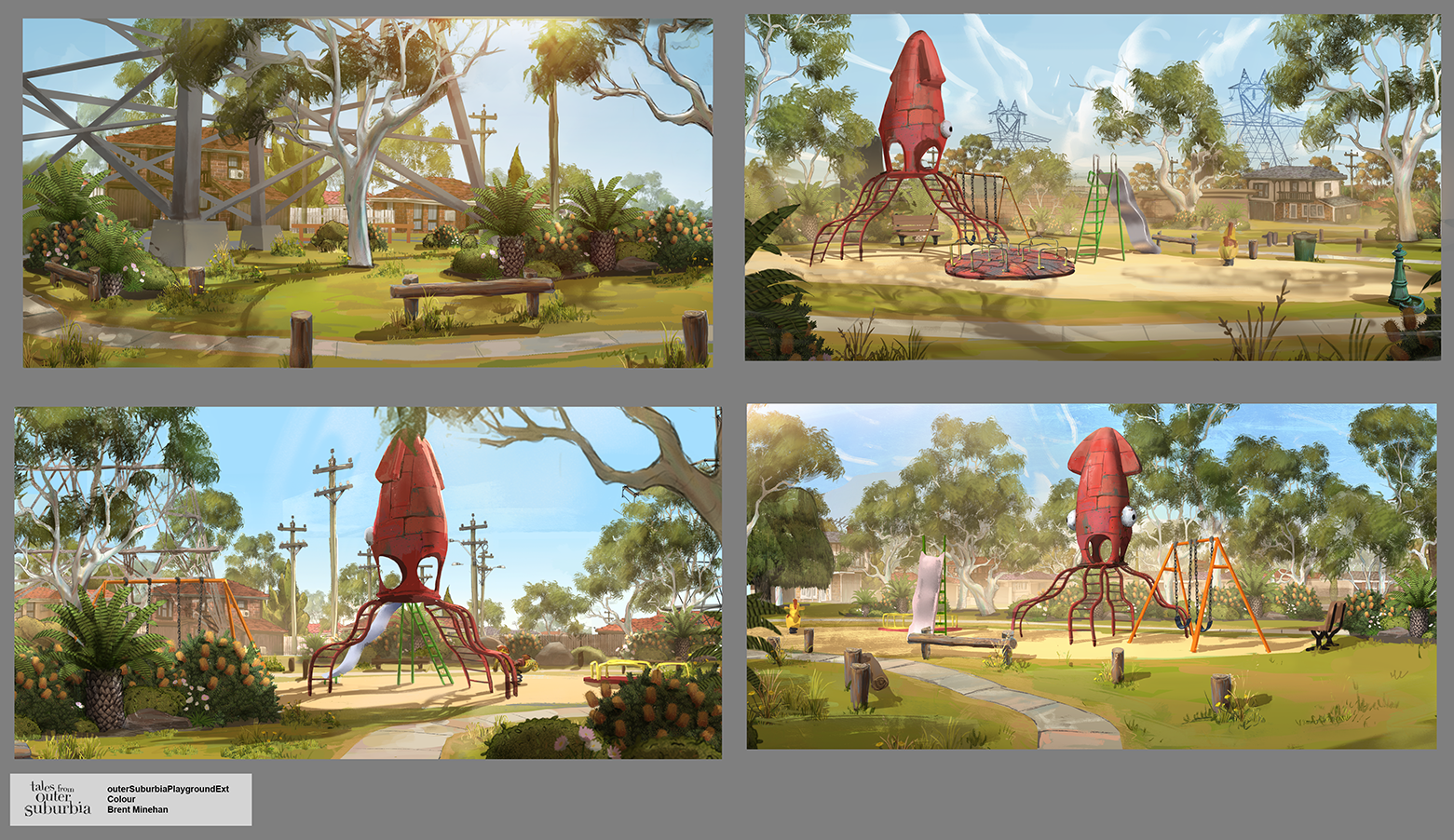
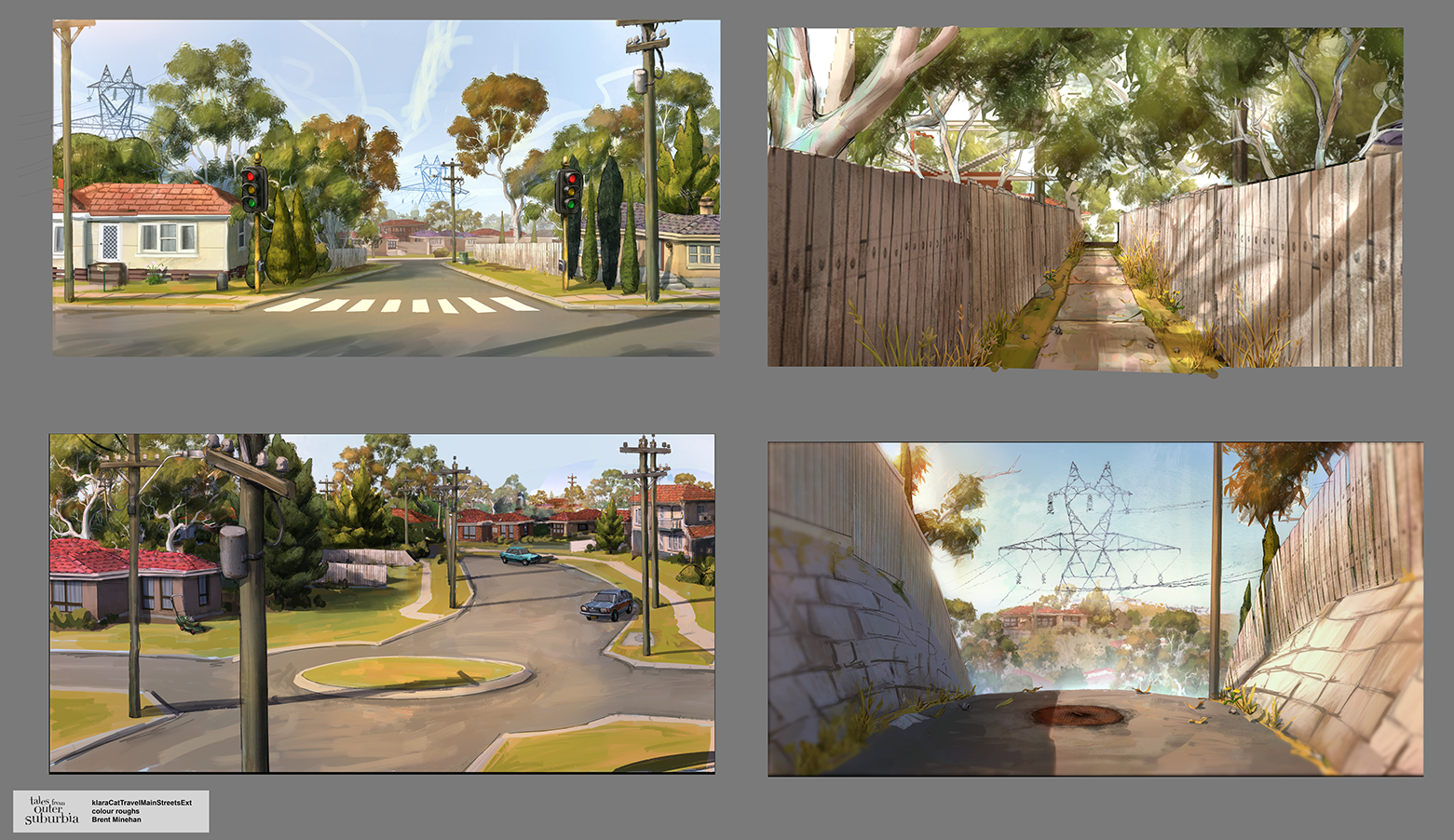
In groups:
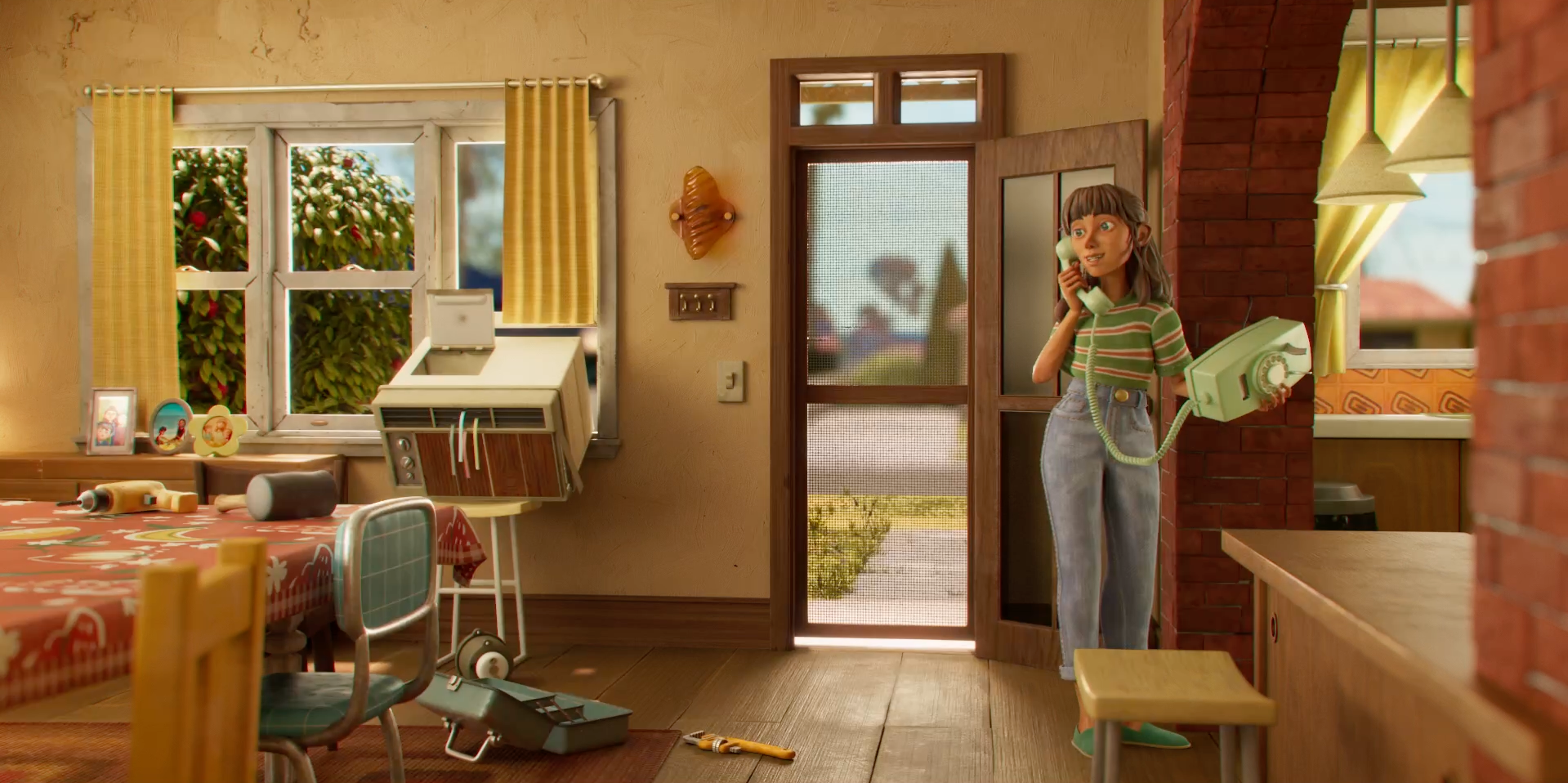
- Make a list of things you have noticed inside Klara and Pim’s house and outside in the neighbourhood that help show the time this show is set. It will be fun to see what different viewers have noticed.
- Technology has changed a lot since the 1980s. Looking at your list, notice which household items would be different now, or maybe not even be used any more.
- What about the outside world? How does your neighbourhood compare with the one we see in Tales from Outer Suburbia? What do you recognise and what seems strange or different? Can you tell which differences are about the time period when the show is set?
- How would it change the show, if it was set in the twenty-first century? What would the family do differently? How differently might Klara and Pim spend their time? How different would the world outside the house look and feel, and how might those changes shape Klara and Pim’s adventures?
Create
Create your own Tales from Outer Suburbia setting, reimagined for right now rather than the 1980s. Draw on today’s world such as smartphones, changing neighbourhoods, climate concerns, rideshare cars, or the way people connect and disconnect.
- Sketch one inside or outside setting from Tales from Outer Suburbia as if it were set today. Don’t worry about too much detail
- When updating the setting, keep some things the same. People often live with older furniture, houses, or objects from the past.
- Label what you have changed and share your production design sketch with your group.
Explore
Interview someone who remembers the 1980s. Maybe they even grew up at this time.
- What are three big differences between everyday life in the 1980s and how people live today?
- What are three things they had in their home in the 1980s that people don’t use now, or that are very different today?
- Where were they living at the time? Did where they lived (suburb, town, city, country) shape what daily life was like?
- After your discussion, you might like to watch an episode of Tales from Outer Suburbia with your interviewee and find out what they recognise.

Activity 4: Page to screen
Reflect
The story 'Broken Toys' from the book, Tales from Outer Suburbia, inspired Pim and Klara’s meeting with the diver in this episode. As a class, read through this section of the book and then review these specific excerpts.
The story begins:
I know you think you saw him first, but I’m pretty sure it was me – he was over there by the underpass, feeling his way along the graffiti-covered wall and, I said, ‘Look there’s something you don’t see every day.
- Tales from Outer Suburbia, page 21
How does the narrator’s voice in the story make you curious about who is speaking, who they are speaking to, and who ‘he’ might be?
The story continues:
Well, we’d certainly seen crazy people before – ‘shell-shocked by life’ as you once put it. But something pretty strange must have happened to this guy to make him decide to wander about in a spacesuit on a dead-quiet public holiday. We hid behind a postbox to get a better look. Up close it was even more perplexing, the spacesuit was covered in barnacles and sea-stuff, and dripping wet in spite of the fierce summer heat.
- Tales from Outer Suburbia, page 21
How does this compare with the way the diver is introduced in the episode? Explain how in both the story and the episode, the first glimpse of the diver feels mysterious and intriguing. Describe the different techniques used in each version to create this impression.
Explore
Look at Shaun Tan’s picture of the diver from Tales from Outer Suburbia.
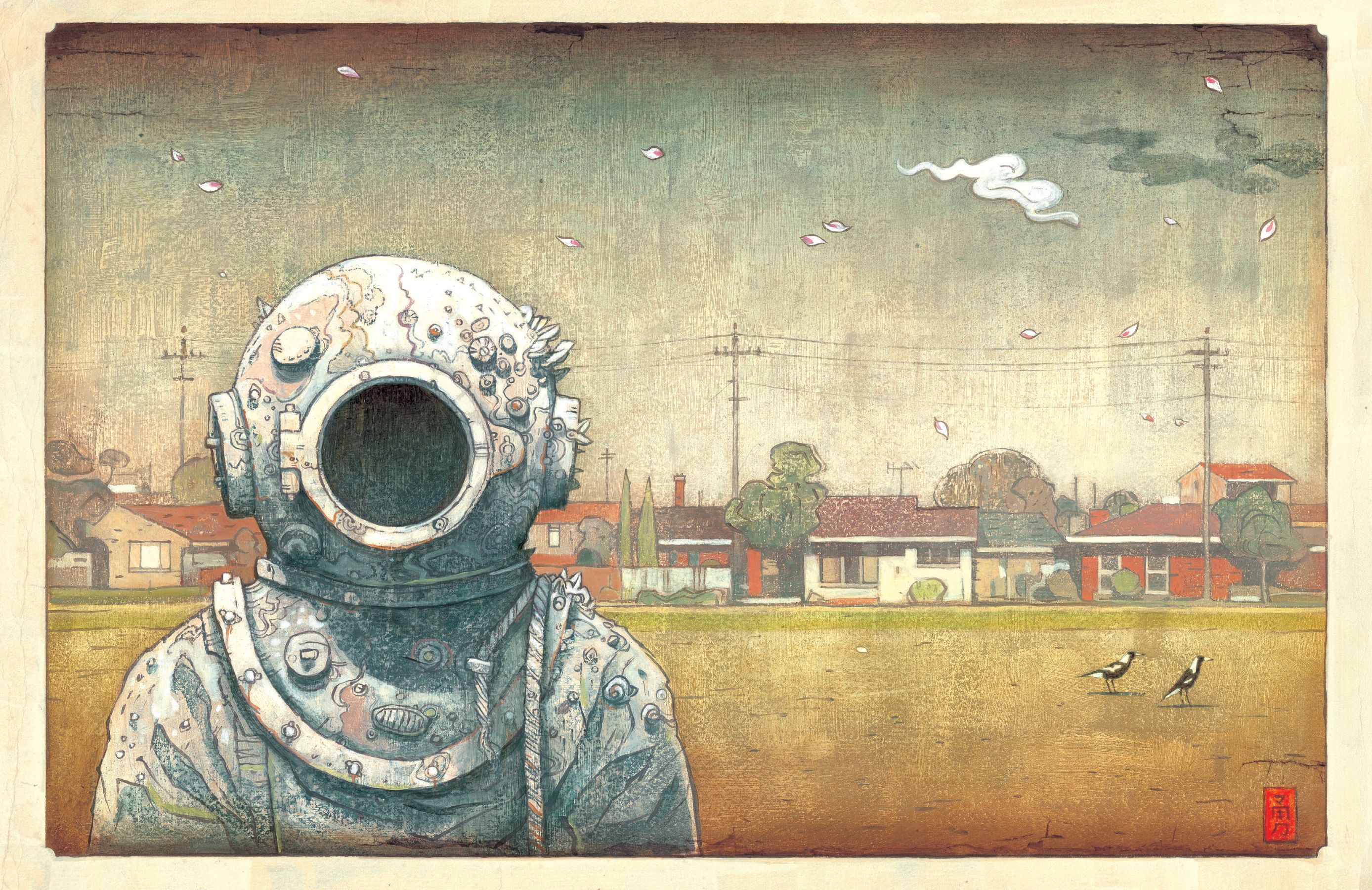
With a partner, discuss your first impressions. What stands out to you? If you had to describe this picture to someone, what words would you use?
Focus on composition (how the elements are placed in a picture). Notice:
- Foreground, middle ground, background: What is placed where, and how does this affect what you notice first?
- Lines, shapes, textures or patterns: How do they guide your eye around the picture?
- Use of space: Are areas crowded or empty and how does this affect how the picture feels?
- Colour, light, and shade: How do these elements interact with the placement of objects or characters?
Describe the effect of these creative choices. How does Shaun Tan use this contrast between the strangeness of the diver and the ordinariness of the setting to make you notice the weirdness or magic in everyday life?
Create
Using what you noticed in Shaun Tan’s illustration, create your own picture, drawing or digital image of a familiar place (like your home, street, or school). Include one or more unusual or surprising elements to make the scene feel imaginative or strange. Try out some of the composition techniques you explored (foreground/middle/background, lines, space, colour, light/shade) to guide the viewer’s attention. Write 2–3 sentences explaining how your composition makes the ordinary feel unusual and the choices you made to guide the viewer’s eye or create curiosity.
Explore
Explore the reference images and concept art created for this episode. Compare Shaun Tan's illustration of the Diver from the book with those below: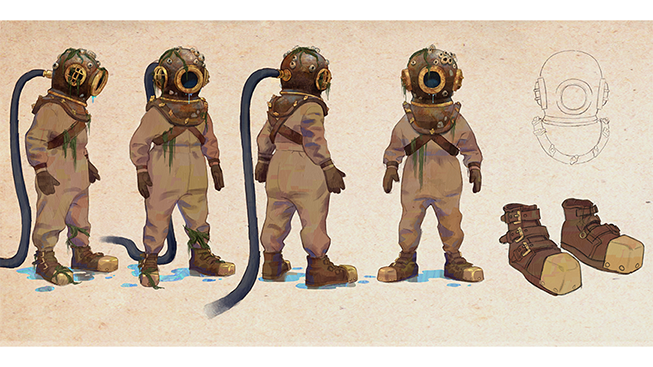
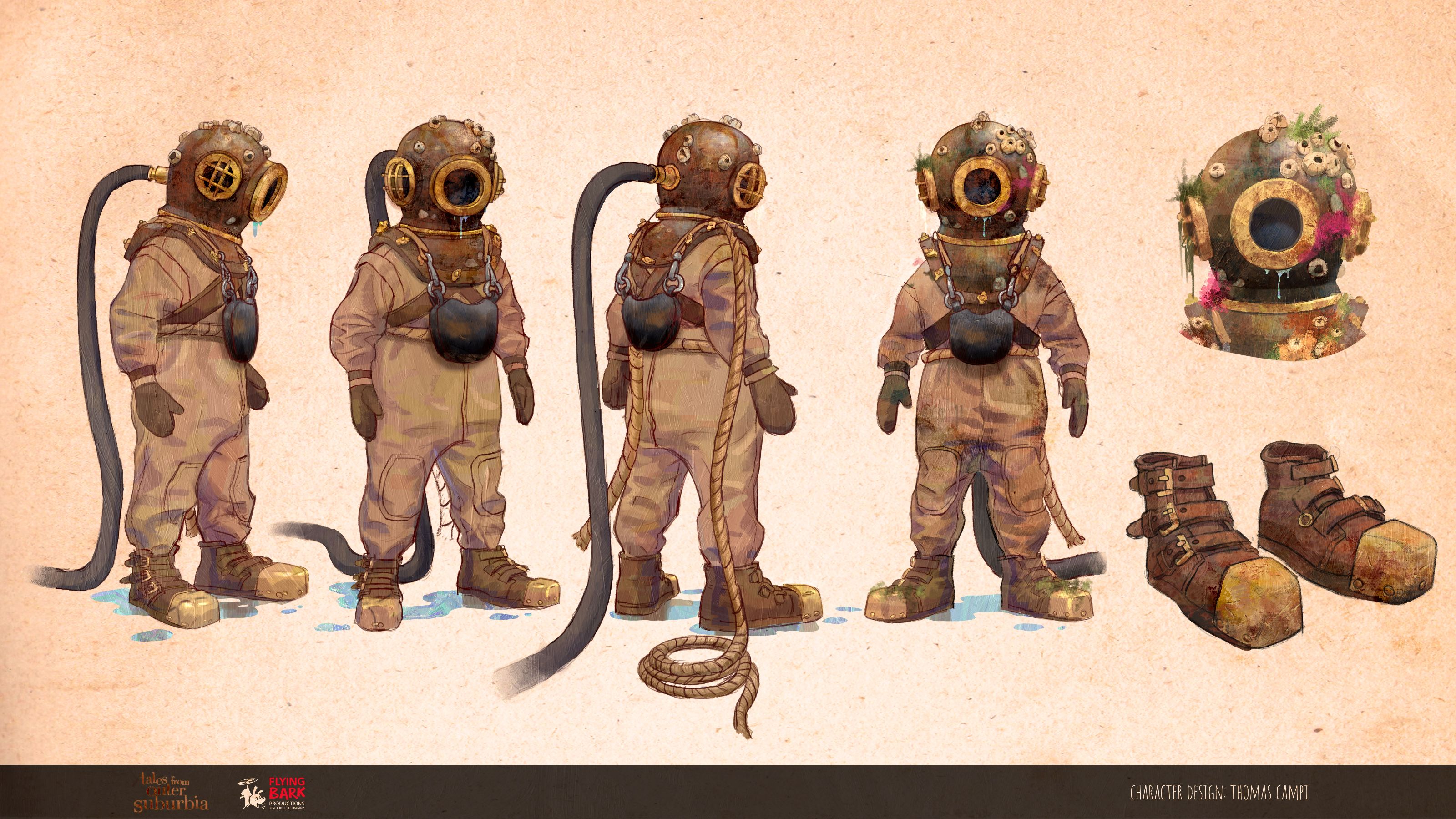
Diver character designs. Artist: Thomas Campi.

Activity 5: Behind the scenes
Reflect
Watch Noel Cleary, Series Director, discuss the production design of the cars in the series.
While the design team from Tales from Outer Suburbia created many fantastical characters and settings, they also had to design a realistic 1980s suburban world. This included everyday objects such as typewriters, air conditioners, and radio headsets.
How do these objects and settings help the audience understand when the story takes place?
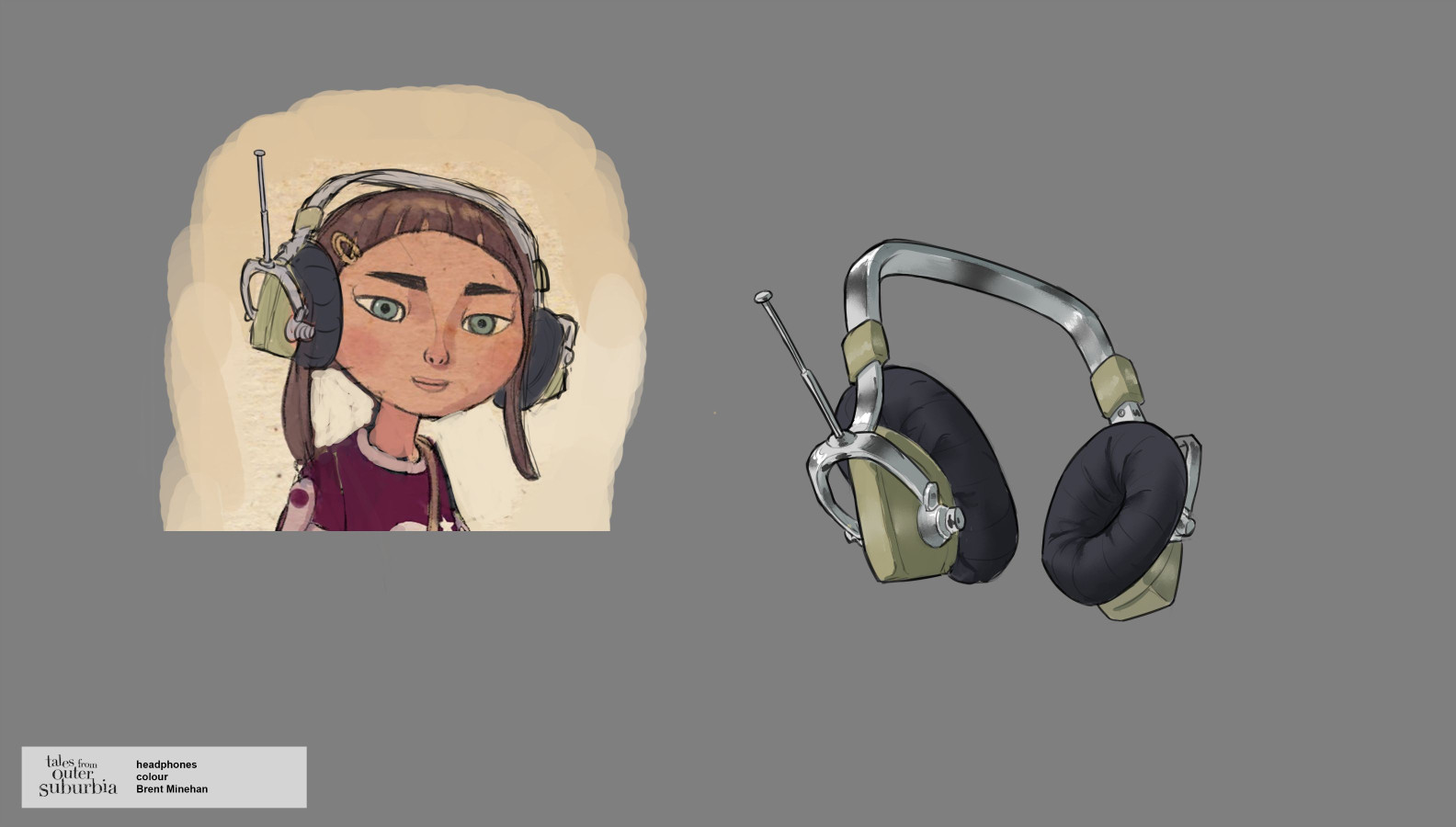
Klara headphones concept art. Designer: Thomas Camppi. Prop artist: Brent Mineham.
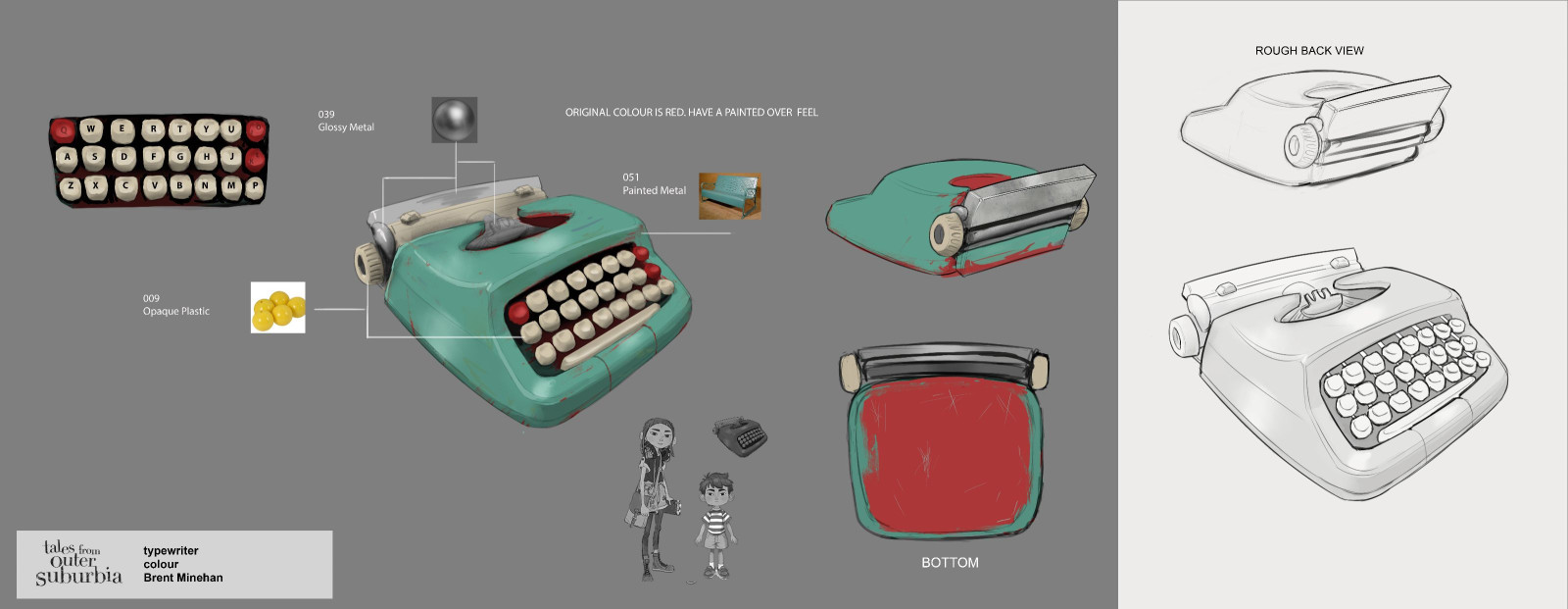
Typewriter concept art. Artist: Brent Mineham.
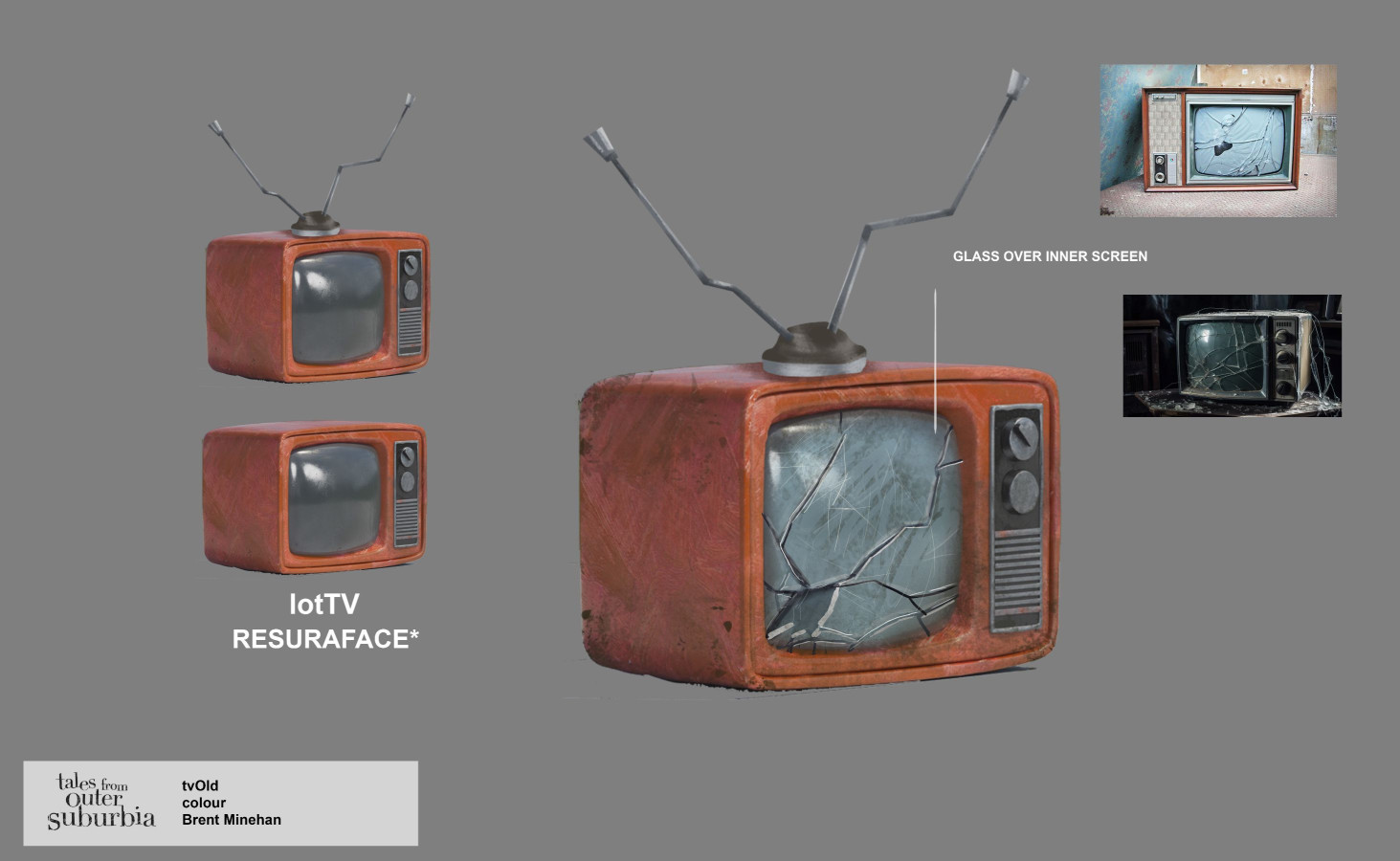
Television concept art. Artist: Brent Mineham.
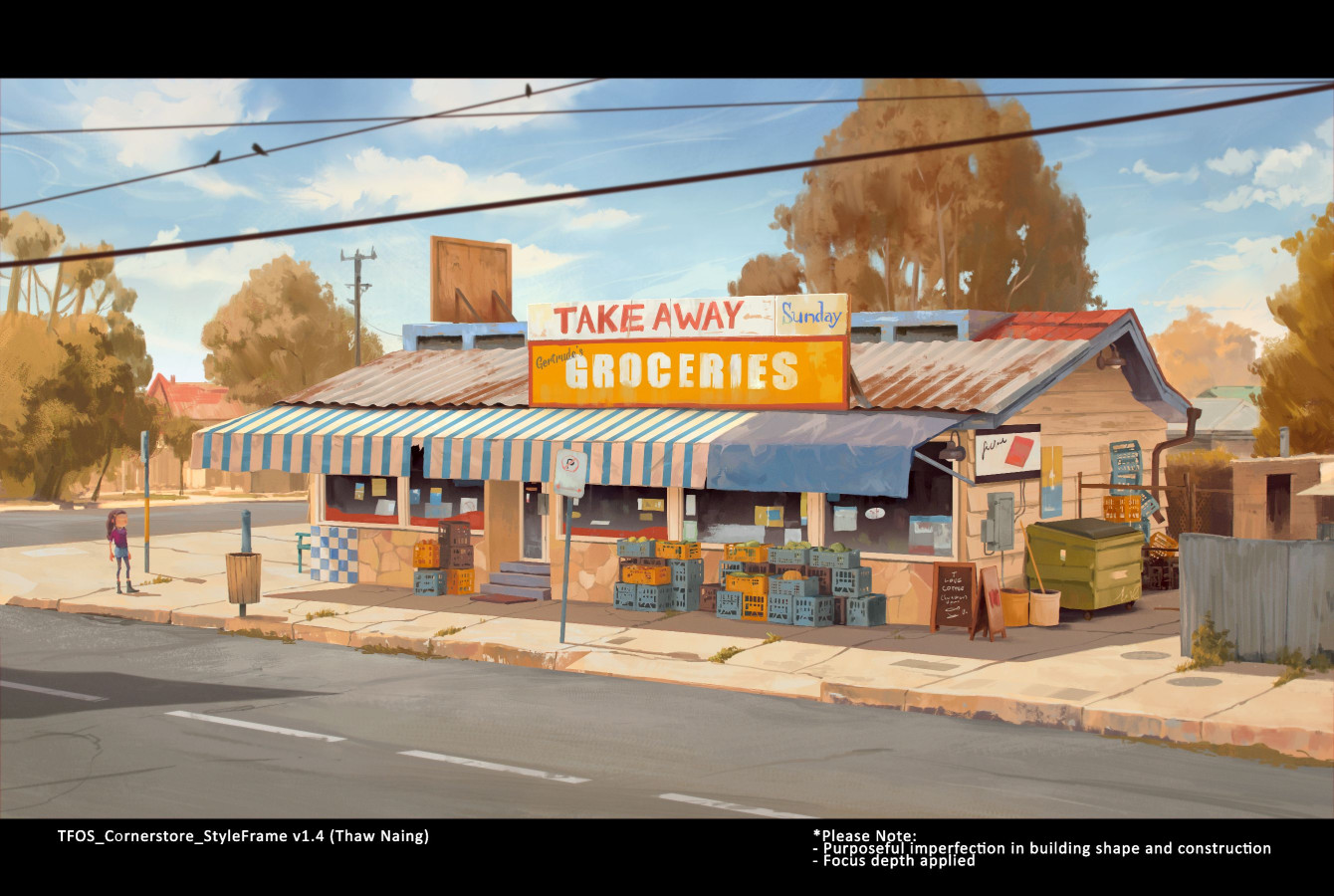
Corner store concept art. Artist: Thaw Naing.
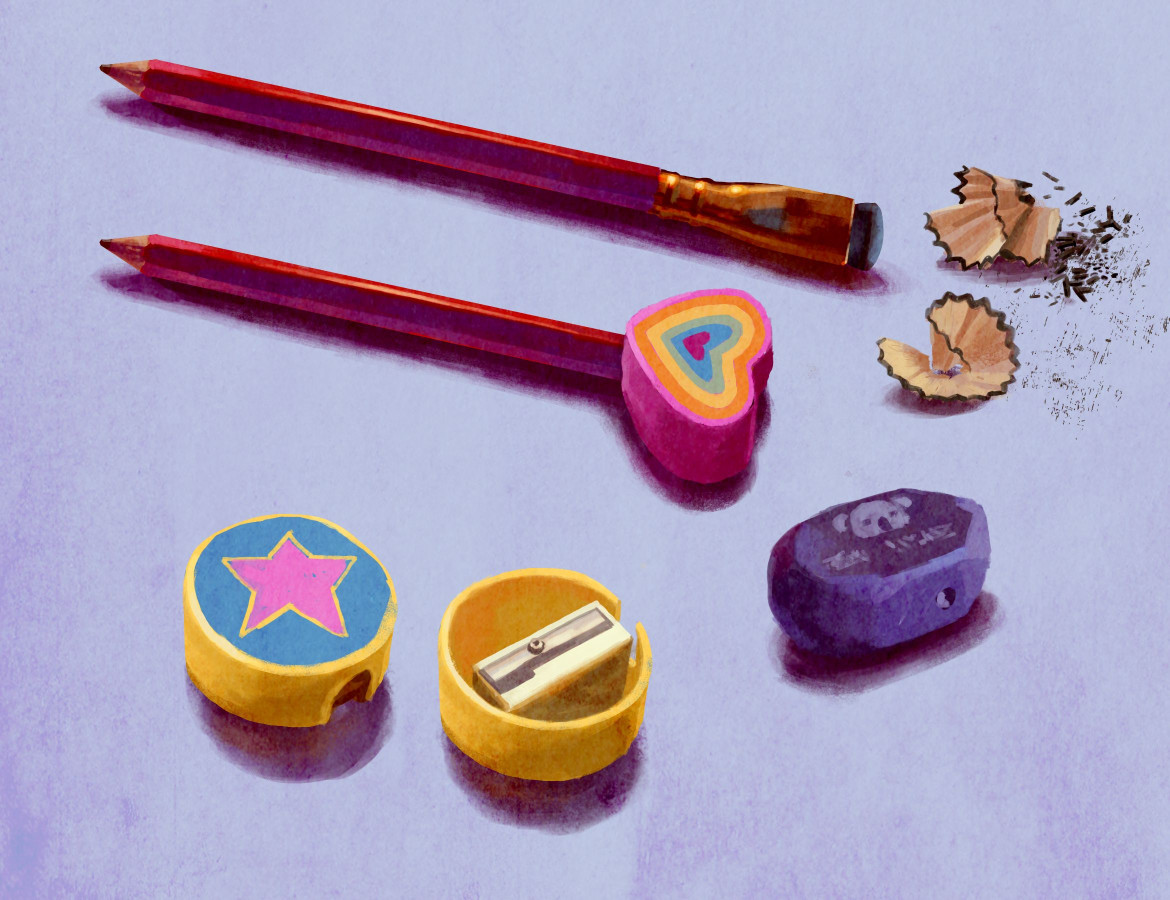
Art supplies concept art. Artist: Brent Mineham.
1
/ 5
Create
As a small group, imagine you are designing a television series 40 years into the future. Discuss the following questions:
- What technologies, furniture,and everyday objects would give people clues about how the characters live?
- What items do you use every day that might look old or strange in the future?
- What objects might be missing because people no longer use them?
Work together to create a design portfolio that shows a range of objects and settings which clearly communicate what life is like for the characters in the series.
Explore
Explore the concept art created for the television series below. These artworks show important places in the world of Outer Suburbia, from the Water Buffalo’s quiet vacant lot to the art gallery in the city. Concept art helps the production team imagine how each setting should look and feel before any animation begins.
As you flip through the artworks, think about how each location shapes the mood of the world and what the colours and textures suggest about the story. Look closely at the small details the artists chose and how these help build a believable place. Notice which locations feel familiar and which feel unusual, and think about why the creators might have designed them this way.
