Episode description: Pim is intimidated by the neighbourhood bullies and Klara is hurt by an overheard conversation between Cat and Esme. Their grandparents continue to help them deal with painful feelings and build resilience by showing them how strong they can be so long as they have each other.
Badlands
Watch: Episode 8: ‘Badlands’ on ABC iView or download to own from the ACTF Shop.
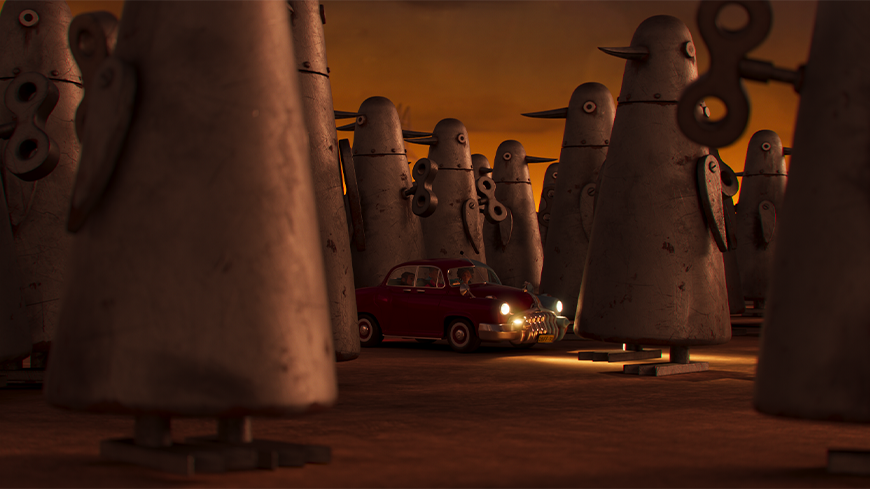
Learning intention: Explore how characters, relationships and surreal imagery transform ordinary experiences into imaginative stories.

Activity 1: Image sharing
Reflect
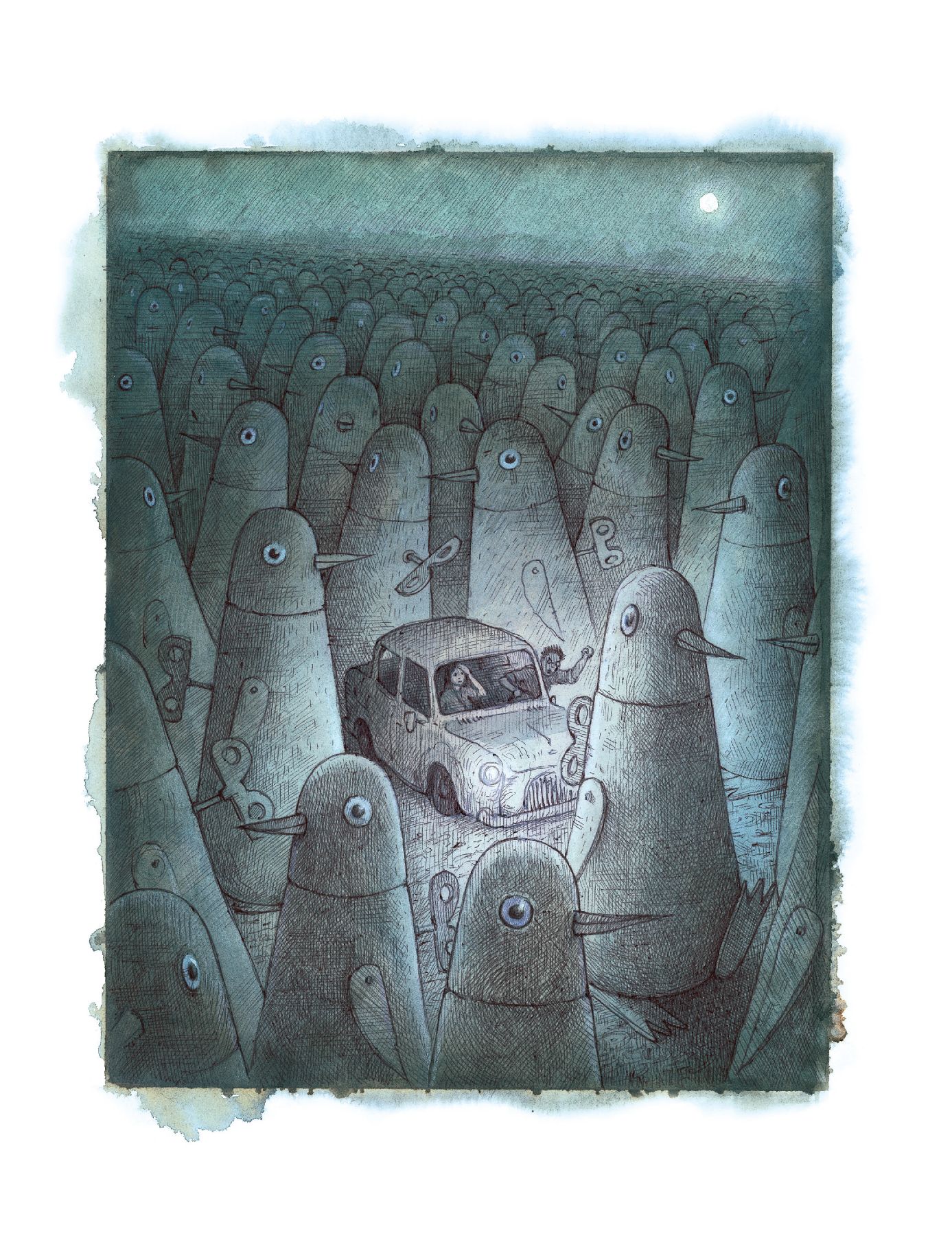
Shaun Tan’s style has been described as surreal, which means that it mixes things from the real world with unexpected and strange images and ideas. This means that his artworks and stories are a bit like dreams. ‘Badlands’ is inspired by ‘Grandpa’s story’ in Shaun Tan's book Tales from Outer Suburbia, and surreal images from the book, such as the one below, make a much more dramatic impression than the words the grandfather character uses to tell the story.
Think about two or three surreal images or events from the episode that have stayed with you. Share your choices with a partner and talk about:
- why these images or events stayed in your mind
- what feelings they created
- what they might be suggesting about the story, even if it isn’t clearly explained
Then, as a class, share your responses and discuss:
- What is happening on the surface in these moments?
- What emotions or ideas seem to sit underneath?
- What does each surreal image or event add to the story?

Activity 2: Grandma and Grandpa
Explore
As the Tales from Outer Suburbia story continues to unfold, we learn much more about Klara and Pim’s grandparents. Think about the central role they play in Klara and Pim’s lives. Watch the scene below and then create character profiles for Grandma and Grandpa.
Create your character profiles, by responding to these questions:
- What do we learn about them from how they look?
- What do these characters’ actions, behaviour and dialogue tell us about them?
- What do we learn about these characters’ individual tastes from the decor of their home?
- How has each of these characters affected events in the story so far?
- What does the show’s production design (of the grandparents’ house and car) reveal about their relationship?
- When together, how do these characters affect the mood of a scene?
- How do they help each other and the children get through difficult situations, like the trip to the Badlands?
Use the worksheet below to record your ideas.
Reflect
Share your character profiles with the class and discuss:
- How do the grandparents, both individually and as a couple, affect how the show feels for the audience? What emotions do they create in different scenes? How do their actions, appearance and surroundings contribute to this?
- How would the story be different without the grandparents, and what does this reveal about their role in shaping events and the mood of the story? Use specific scenes from the show to explain your answer.

Activity 3: What fear can teach us
Reflect
In the Badlands, the characters come face to face with their biggest fears. By stepping into these frightening moments, they start to understand themselves in new ways and discover what really matters to them.
Grandma tells Pim that “strange and scary things are better. They teach us things…like who we are and what we really want.” Grandpa adds that they also show us “what we really need.”
Use this moment to pause for a personal reflection on what their words might mean for you and think about:
- what Grandma and Grandpa are trying to say about scary experiences teaching us about ourselves and the things we need.
- how the characters in the story change after facing their fears.
- why facing fears might help people understand what they truly want or need.
- a time when something felt scary for you, but you learned something important from it.
Create
‘Badlands’ shows that our fears are very personal, so rather than sharing anything private, approach this idea of facing your fears creatively by imagining your own ‘Badlands’ experience. Think about a fear you might face in an imagined scenario. Then show what happens when you confront it and what you might learn about yourself. Choose one of the following ways to respond:
- write a short story
- draw a storyboard for a scene in an television episode
- create a comic strip
How wonderful, you discovered a secret treasure!
Klara, Pim and Grandpa’s favourite objects appear again in Episodes 9 and 10. Keep a look out for these returning treasures, because viewers who spot them will start to see how the story echoes itself and how meaning grows from one episode to the next.

Activity 4: Feeling brave
Reflect
In this episode, Klara and Pim’s grandparents help them feel safe and supported when things feel scary. Think about someone in your life who helps you feel brave, confident and cared for when things get tough.
Think about how you could communicate what is special about this person using both writing and drawing. Which special qualities would you show through words, and which through pictures?
To help you reflect, read what author and illustrator Shaun Tan says about the way words and pictures work together:
When working I often like to think of words and images as opposite points on a battery… It requires the reader’s imagination to complete the circuit.
- Shaun Tan, Source: shauntan.net
Shaun Tan’s idea is that pictures and words don’t need to say the same thing. Instead, each one can tell part of the story, and the reader uses their imagination to join the two together.
Create
Create a profile of the special person you chose using both writing and drawing. Your writing and your drawing should each add something different. Think about how they can work together to show why this person matters to you. As you create your profile, consider:
- What do your words say that your picture doesn’t? (Maybe their personality, something kind they’ve done, or how they make you feel.)
- What does your picture show that your words don’t? (Maybe a moment you shared, their expressions, or something symbolic.)
- What will you choose to tell your reader clearly through your words?
- What will you show through your drawing?
- What will you leave for your reader to imagine?
Use Shaun Tan’s idea of leaving space for the reader. Think about what you’ll tell, what you’ll show and what you’ll simply suggest.

Activity 5: Page to screen
Explore
Shaun Tan often takes memories, feelings, and ordinary experiences and stretches them into strange, imaginative worlds. For example, when writing 'Grandpa’s Story', he was prompted by a friend’s wedding to think about how close relationships, like marriage, can be brave and even dangerous. To this idea he added a memory of his parents squabbling after getting lost on a scavenger hunt. These ordinary experiences became the starting points for his story and the episode it inspired. Both versions of the story leave a lot of space for us to think and imagine.
Read 'Grandpa's Story' from the book Tales from Outer Suburbia as a class and discuss your first impressions.
Create
Design your own surreal dreamscape, inspired by Shaun Tan. Think about leaving everything familiar behind and venturing into a world shaped by memory and imagination. Your dreamscape does not need to make perfect sense. Focus on creating feelings and questions in your viewer or reader, and give them space to imagine their own response.
In your design, you can:
- transform ordinary places or objects in unusual ways
- mix feelings and memories into shapes, colours or landscapes
- include characters, creatures, or objects that act in surprising ways
- think about how the world feels, not just how it looks
You could show your dreamscape by:
- drawing a series of illustrations that tell the story from your perspective.
- writing a short story describing the world you find yourself in.
- storyboarding an animated story, thinking about shot types, composition and the placement of the dreamer in the frame.
- creating a mini-animation using a flipbook app for 2D drawn animation, or a stop-motion app for 2D cut-outs or 3D clay animation.
- making a surreal digital artwork using a drawing app.
Activity 6: Behind the scenes
Reflect
Thanks to the efforts of many talented artists, designers and animators, the characters in Tales from Outer Suburbia are visually engaging, but how they sound is just as important. In an animation, the voice actors play a huge role in bringing the characters to life. Try listening to a couple of scenes from ‘Badlands’ without the visuals and notice what is communicated about the characters through dialogue.
Meet the voice actors who bring Grandma and Grandpa to life. In this video, you get a chance to peer behind the curtain and see what these actors look like in real life, but you also get to hear how they view their characters and the series.
As a class, discuss the following questions:
- How is the job of a voice actor different from an on-screen actor’s job?
- Why do you think voice is so important in bringing characters to life in animated stories?
- What skills do you think a good voice actor needs?
- What challenges might a voice actor face when recording alone instead of with other actors?
Explore
Working individually, choose a character from Tales from Outer Suburbia and answer the following questions in your notebook:
- How would you describe the character's voice - pitch, speed, mood, accent, volume?
- How does the character’s voice help us understand their personality or emotions?
- Would the story feel different if the character had a completely different voice? Why?
Try repeating one of your chosen character’s lines as close to the original as possible. Now deliver the line using a different rhythm, volume, intonation (rise and fall of your voice) or stressing different words. Which version works best and why?
Come back together as a class and share what you noticed about your character’s voice and how it shapes the story. Try out some of your lines for the class and see if your classmates think you could have a career in voice acting. Reflect on how small changes in voice can completely change a character or the mood of a scene.
