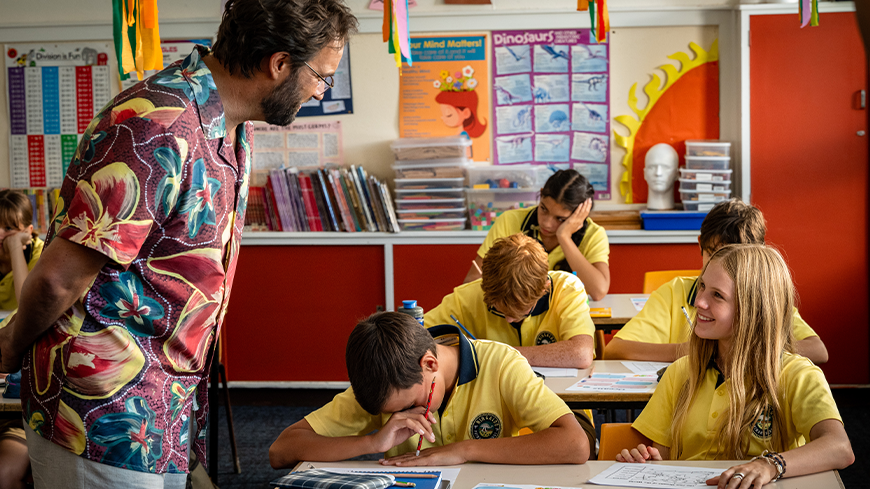
Teachers Guide
Welcome
Welcome to the Whale Shark Jack Teacher Guide. Whale Shark Jack is a contemporary Australian eco-adventure that follows twelve-year-old Sarah as she navigates grief, friendship and belonging after moving to Exmouth on Western Australia’s Nyinggulu (Ningaloo) Coast. When Sarah reconnects with Jack, a whale shark she has known since he was a pup, she embarks on a journey that deepens her understanding of family, community and the natural world.
Accessing the film
You can watch the film on Stan.
Schools can purchase a downloadable copy from the ACTF Shop.
About the resource
This resource is designed for Years 5-8 students and supports learning across English, Media, Science and relevant General Capabilities. Through a range of viewing, discussion, inquiry and creative learning experiences, students explore the narrative, characters, themes and filmmaking techniques of Whale Shark Jack while making connections with their own lives and their experiences of the natural world.
Each section of the resource incorporates Explore, Reflect and Create opportunities, encouraging students to investigate ideas, respond thoughtfully to the film and apply their learning in meaningful ways. Selected film clips support close analysis and discussion, enabling students to engage critically and creatively with both the film’s content and its craft.
The resource culminates in an extended creative project that enables students to synthesise their understanding of the film and its key themes, and to apply their learning in an original response. Students can also engage with behind-the-scenes production materials and interviews to build greater understanding of the filmmaking process and the decisions involved in bringing the film to life.
A dedicated section focuses on the science explored in Whale Shark Jack, giving students the chance to deepen their understanding of the marine environments and scientific concepts featured in the film, and to connect these ideas with broader questions about the natural world.

About Whale Shark Jack
Explore this section to learn more about the film Whale Shark Jack and its characters and watch interviews with Kathryn Lefroy and Hazel Walgar.
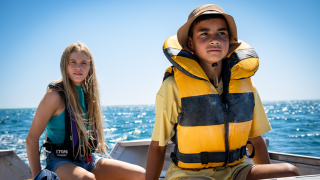
Before watching
Students explore the Nyinggulu Coast's rich culture, ocean significance, and deep connections to First Nations peoples prior to viewing Whale Shark Jack.

After watching
Students reflect on their impressions of Whale Shark Jack, exploring key moments, vocabulary, and unanswered questions to deepen their understanding.

Narrative and character
Students are guided to explore character and narrative in Whale Shark Jack, focusing on Sarah’s journey and relationships.

Film language
Students explore how filmmakers use visual and auditory elements to represent the ocean in Whale Shark Jack and shape audience perception.

Ideas and themes
Students explore the themes in Whale Shark Jack of relationships, grief, and healing, highlighting its deep connections to nature and culture.
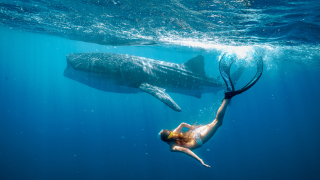
Whale sharks and marine science
Discover fascinating insights about whale sharks and their importance in marine science.
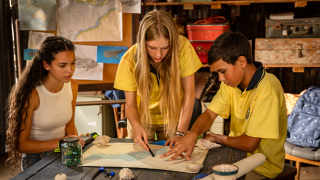
Creative story project
Students explore creative ways to extend the world of Whale Shark Jack, inviting new perspectives and stories that enrich its narrative.
Key themes
Whale Shark Jack explores themes of grief, resilience, friendship, family, identity, belonging and environmental stewardship. Set against the unique landscape and marine environment of the Nyinggulu (Ningaloo) Coast, the film provides opportunities for students to engage with First Nations perspectives and knowledges, consider human relationships with the natural world and reflect on the importance of caring for Country and community.
Curriculum links
|
|
Year 5 |
Year 6 |
Year 7 |
Year 8 |
Language |
|
|
|
|
Languagefor interacting with others |
understand that language is selected for social contexts and that it helps to signal social roles and relationships |
|
understand how language expresses and creates personal and social identities
|
recognise how language shapes relationships and roles
|
|
|
|
recognise language used to evaluate texts including visual and multimodal texts, and how evaluations of a text can be substantiated by reference to the text and other sources |
|
|
Text structure and organisation |
describe how spoken, written and multimodal texts use language features and are typically organised into characteristic stages and phases, depending on purposes in texts |
explain how texts across the curriculum are typically organised into characteristic stages and phases depending on purposes, recognising how authors often adapt text structures and language features |
identify and describe how texts are structured differently depending on their purpose and how language features vary in texts |
explain how texts are structured depending on their purpose and how language features vary, recognising that some texts are hybrids that combine different genres or elements of different genres |
Language for expressing and developing ideas |
explain how the sequence of images in print, digital and film texts has an effect on meaning |
|
|
investigate how visual texts use intertextual references to enhance and layer meaning |
Literature |
|
|
|
|
Literature and contexts |
identify aspects of literary texts that represent details or information about historical, social and cultural contexts in literature by First Nations Australian, and wide-ranging Australian and world authors |
identify responses to characters and events in literary texts, drawn from historical, social or cultural contexts, by First Nations Australian, and wide-ranging Australian and world authors |
identify and explore ideas, points of view, characters, events and/or issues in literary texts, drawn from historical, social and/or cultural contexts, by First Nations Australian, and wide-ranging Australian and world authors
|
explain the ways that ideas and points of view may represent the values of individuals and groups in literary texts, drawn from historical, social and cultural contexts, by First Nations Australian, and wide-ranging Australian and world authors |
Engaging with and responding to literature |
·
present an opinion on a literary text using specific terms about literary devices, text structures and language features, and reflect on the viewpoints of others |
identify similarities and differences in literary texts on similar topics, themes or plots |
form an opinion about characters, settings and events in texts, identifying areas of agreement and difference with others’ opinions and justifying a response |
share opinions about the language features, literary devices and text structures that contribute to the styles of literary texts
_____________________ explain how language and/or images in textsposition readers to respond and form viewpoints |
|
explain the ways that literary devices and language features such as dialogue, and images are used to create character, and to influence emotions and opinions in different types of texts |
||||
|
discuss the aesthetic and social value of literary texts using relevant and appropriate metalanguage |
||||
|
|
||||
Examining literature |
|
|
identify and explain the ways that characters, settings and events combine to create meaning in narratives |
|
Creating literature |
create and edit literary texts, experimenting with figurative language, storylines, characters and settings from texts students have experienced |
create and edit literary texts that adapt plot structure, characters, settings and/or ideas from texts students have experienced, and experiment with literary devices |
create and edit literary texts that experiment with language features and literary devices encountered in texts |
create and edit literary texts that experiment with language features and literary devices for particular purposes and effects |
Literacy |
|
|
|
|
Texts in context |
|
|
|
identify how texts reflect contexts
|
Interacting with others |
use appropriate interaction skills including paraphrasing and questioning to clarify meaning, make connections to own experience, and present and justify an opinion or idea |
use interaction skills and awareness of formality when paraphrasing, questioning, clarifying and interrogating ideas, developing and supporting arguments, and sharing and evaluating information, experiences and opinions |
use interaction skills when discussing and presenting ideas and information including evaluations of the features of spoken texts
|
use interaction skills for identified purposes and situations, including when supporting or challenging the stated or implied meanings of spoken texts in presentations or discussion
|
Analysing, interpreting and evaluating |
explain characteristic features used in imaginative, informative and persuasive texts to meet the purpose of the text |
analyse how text structures and language features work together to meet the purpose of a text, and engage and influence audiences |
explain the effect of current technology on reading, creating and responding to texts including media texts |
analyse and evaluate the ways that language features vary according to the purpose and audience of the text, and the ways that sources and quotations are used in a text
|
|
analyse the ways in which language features shape meaning and vary according to audience and purpose |
analyse how authors organise ideas to develop and shape meaning |
|||
Creating texts |
AC9E5LY06 plan, create, edit and publish written and multimodal texts whose purposes may be imaginative, informative and persuasive, developing ideas using visual features, text structure appropriate to the topic and purpose, text connectives, expanded noun groups, specialist and technical vocabulary, and punctuation including dialogue punctuation |
plan, create, edit and publish written and multimodal texts whose purposes may be imaginative, informative and persuasive, using paragraphs, a variety of complex sentences, expanded verb groups, tense, topic-specific and vivid vocabulary, punctuation, spelling and visual features |
plan, create, edit and publish written and multimodal texts, selecting subject matter, and using text structures, language features, literary devices and visual features as appropriate to convey information, ideas and opinions in ways that may be imaginative, reflective, informative, persuasive and/or analytical |
plan, create, edit and publish written and multimodal texts, organising and expanding ideas, and selecting text structures, language features, literary devices and visual features for purposes and audiences in ways that may be imaginative, reflective, informative, persuasive and/or analytical |
|
|
Years 5 and 6 |
Years 7 and 8 |
Exploring and responding |
Explore ways that media languages and media technologies are used in media arts works and practices across cultures, times, places and/or other contexts |
Investigate the ways that media arts concepts are used in media arts works and practices across cultures, times, places and/or other contexts
|
|
explore ways First Nations Australians use media arts to continue and revitalise cultures |
investigate the diversity of First Nations Australians’ media arts works and practices, considering culturally responsive approaches to Indigenous Cultural and Intellectual Property rights |
|
Developing practice and skills |
develop media production skills to communicate ideas, perspectives and/or meaning through manipulation of media languages, including images, sounds, texts and/or interactive elements, and media technologies |
develop media production skills throughout the production process to construct representations using media languages and media technologies |
|
reflect on their own and others’ media arts works and practices to inform choices they make during the production process |
||
Creating and making |
use media languages, media technologies and production processes to construct media arts works that communicate ideas, perspectives and/or meaning for specific audiences |
design and structure media arts works to communicate ideas, perspectives and meaning for an intended audience |
|
|
Year 5 |
Year 6 |
Year 7 |
Year 8 |
Science Understanding |
|
|
|
|
Biological sciences |
examine how particular structural features and behaviours of living things enable their survival in specific habitats |
investigate the physical conditions of a habitat and analyse how the growth and survival of living things is affected by changing physical conditions
|
|
|
Science as a human endeavour |
|
|
|
|
Use and influence of science |
investigate how scientific knowledge is used by individuals and communities to identify problems, consider responses and make decisions
|
investigate how scientific knowledge is used by individuals and communities to identify problems, consider responses and make decisions
|
examine how proposed scientific responses to contemporary issues may impact on society and explore ethical, environmental, social and economic considerations |
examine how proposed scientific responses to contemporary issues may impact on society and explore ethical, environmental, social and economic considerations |
|
explore the role of science communication in informing individual viewpoints and community policies and regulations
|
explore the role of science communication in informing individual viewpoints and community policies and regulations
|
Generating |
Years 5 and 6 |
Years 7 and 8 |
Create possibilities |
create possibilities by changing, combining, or elaborating on new and known ideas in a variety of creative ways |
create possibilities by adapting, combining or elaborating on new and known ideas, and proposing a range of different or creative combinations |
|
|
Years 5 and 6 |
Years 7 and 8 |
Reflect on the relationship between cultures and identities |
examine how beliefs, values and cultural practices convey meaning and influence people’s sense of identity and belonging
|
|
Consider responses to intercultural contexts |
|
analyse how cultural representations in a range of intercultural contexts influence self-awareness of culturally appropriate behaviour
|
Social awareness |
Years 5 and 6 |
Years 7 and 8 |
Empathy |
explain how the ability to appreciate others’ needs, emotions, cultures and backgrounds assists in the development of social awareness |
acknowledge the emotions, needs, cultures and backgrounds of different groups and compare with their own
|
Relational awareness |
identify and describe a variety of relationships and the roles and responsibilities of people within them
|
analyse indicators of healthy and challenging relationships, and how to manage the differences
|
Social management |
Years 5 and 6 |
Years 7 and 8 |
Collaboration |
coordinate contributions of group members, suggesting improvements to ways of working and collaborative outputs
|
appreciate diverse perspectives in a range of collaborative contexts, and demonstrate negotiation skills to improve ways of working and outputs
|
Acknowledgements
This resource was written by Dr Susan Bye. We are grateful for Susan’s expertise in bringing the world of Whale Shark Jack into the classroom with insight, creativity and a deep understanding of how young people learn.
Special thanks to Miranda Edmonds, Director and Producer of Whale Shark Jack, for her generous support throughout the development of this resource, including providing access to pre-production materials and cast and crew interviews. We also thank Kathryn Lefroy, screenwriter, and Hazel Walgar, Associate Producer and First Nations Consultant, for sharing their valuable insights through a series of interviews. Thanks also to Violet Jahnel Brosig from Blue Media Exmouth for filming Hazel’s interview.
We are grateful to the Western Australian Museum Boola Bardip for their collaboration and expert contribution to the whale shark and marine science content featured throughout this resource.