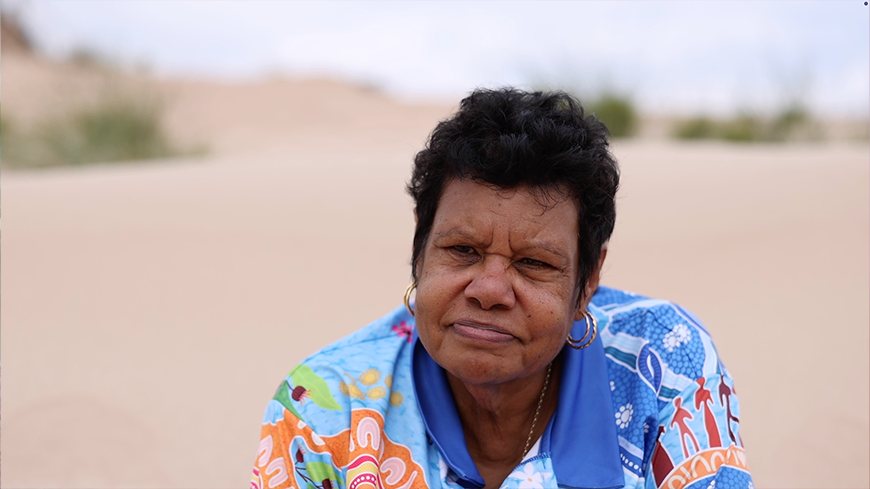
Interview with Hazel Walgar
In this interview, Associate Producer, First Nations Consultant and Baiyungu woman Hazel Walgar shares her role in shaping Whale Shark Jack, from embedding Baiyungu language and culture to ensuring the story's connection to Country was authentic and meaningful. The questions and activities on this page encourage students to explore Hazel's insights, reflect on the importance of First Nations perspectives in storytelling and consider the impact stories can have on people, place and community.
Hazel Walgar: Background and involvement
After watching the clip, reflect on what you learned and answer the questions below.
- What was Hazel's role in creating Whale Shark Jack?
- Which crew members did Hazel work closely with?
- According to Hazel, why do whale sharks connect so strongly with people?
- Why do you think these connections are important to share in stories and in real life? Use examples from your own experiences to explain your thinking.
Hazel Walgar: Culture, story and characters
After watching the clip, think about the role language plays in keeping culture alive and sharing stories with others. Then answer the questions below.
- How did Hazel help the filmmakers include Baiyungu language in Whale Shark Jack?
- How did Hazel feel knowing that Baiyungu language would be heard by audiences around the world?
- Why was it important for the filmmakers to work with Hazel when including Baiyungu language in the film?
- How can language help people feel connected to their culture, community or identity? Reflect on your own life and share an example.
Hazel Walgar: Music and impact
After watching Hazel discuss the Healing Song, reflect on the role of music in storytelling, healing and connection, then answer the questions below.
- What does Hazel say the Healing Song is used for, and how can it help people?
- What impact did Hazel see the Healing Song have on audiences who watched the film?
- Hazel explains that the Healing Song is only used once or twice in a person's lifetime. How does this connect to the themes of grief, loss and healing explored in the film?
- Hazel shares that the Healing Song can help people find strength during difficult times. What helps you feel strong, supported or hopeful when you are facing challenges?
- Music can help people connect with their culture, family, memories and emotions. Can you think of a song, story or tradition that is meaningful to you? What makes it special?