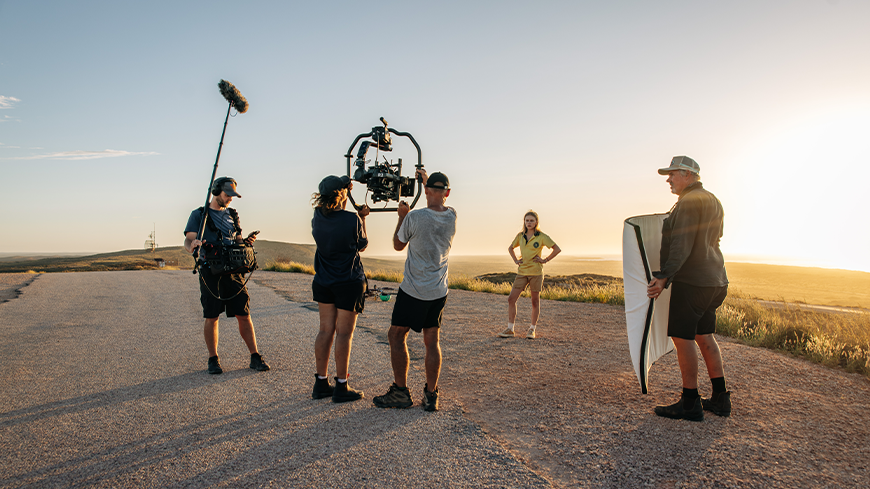
Film language
Learning intention: Explore how filmmakers use film language to represent people, places and relationships and shape audience responses.
The activities in this sequence can be explored at different levels of depth. Teachers may select activities and extension activities to suit their students and the time available.
Filmmakers make deliberate choices about what we see and hear, and how images and sounds are brought together. These choices shape how we experience characters, places and relationships and influence the ideas and feelings we take from a film. In these activities, you will explore how film language is used in Whale Shark Jack to communicate meaning and shape your response as a viewer.
Activity 1: Representing the ocean
Explore
Filmmakers use images, sound and characterisation to construct representations that influence how audiences interpret people, places and ideas.
In this activity, you'll examine how these choices communicate the ocean as a living world.
Watch the first underwater scene in Whale Shark Jack to begin exploring how the ocean is represented.
As you watch, think about what you see and what you hear, such as:
- colour and light
- the underwater environment (marine life, movement, space and atmosphere)
- different camera shots
- music and sounds
- Jack’s introduction
- After watching the clip, write down everything you noticed about the representation of the ocean world. Share your notes with a partner.
- As a class, share your discoveries under the following headings: Colour and light; the underwater environment; camera shots; sound; Jack’s introduction.
- After reflecting on your shared ideas, discuss:
How do the filmmakers use colour, light, camera shots and sound to present the ocean as a living world in this scene?
Reflect
By exploring the different visual and aural elements of this scene, you have begun to analyse film language and consider how the filmmakers have used choices to shape the way viewers experience the ocean.
Building on your discoveries, discuss:
- Which filmmaking choice had the biggest impact on the way you experienced the ocean? Why?
- Could the filmmakers have represented the ocean differently? How?
- How would the scene feel different if the music changed?
- How would our understanding of the ocean change if it were filmed only from above?
Create
Write a descriptive paragraph that captures the ocean world presented in this scene.
Use your observations to describe:
- what the ocean looks and feels like
- the movement and life within the underwater environment
- the atmosphere created by colour, light and sound
- the way Jack is introduced into this world
Your paragraph should help a reader imagine the ocean as it is represented in the film.
Activity 2: Camera and shot choice
Filmmakers use camera choices and editing to shape what viewers see and how they understand a scene. These choices influence what viewers notice, whose perspective they experience and how they understand characters and relationships.
Reflect
A point-of-view shot shows the audience what a character sees. Filmmakers usually show the character looking first, then cut to the thing they are looking at. This allows the audience to see the world from that character’s perspective.
Look at these two shots (below) from the opening underwater scene.
- Did you notice that Jack actually ‘finds’ Sarah before she sees him?
- Why do you think the filmmakers choose to show this moment from Jack's perspective?
- What does this camera choice help us understand about Jack and Sarah's relationship?
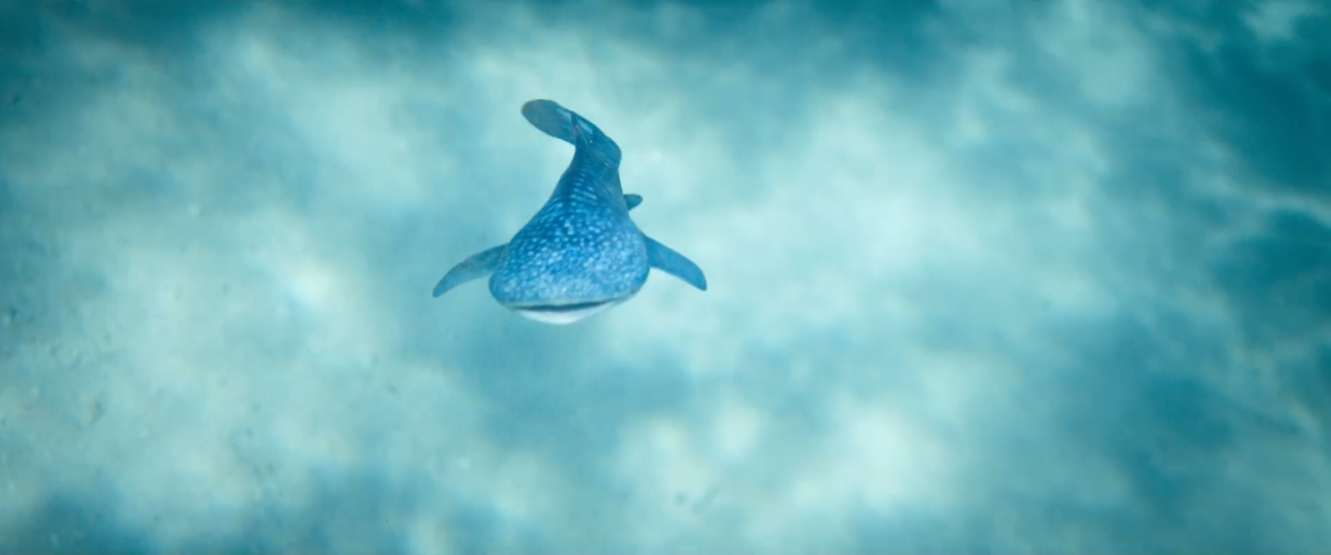
Jack looks up at Sarah
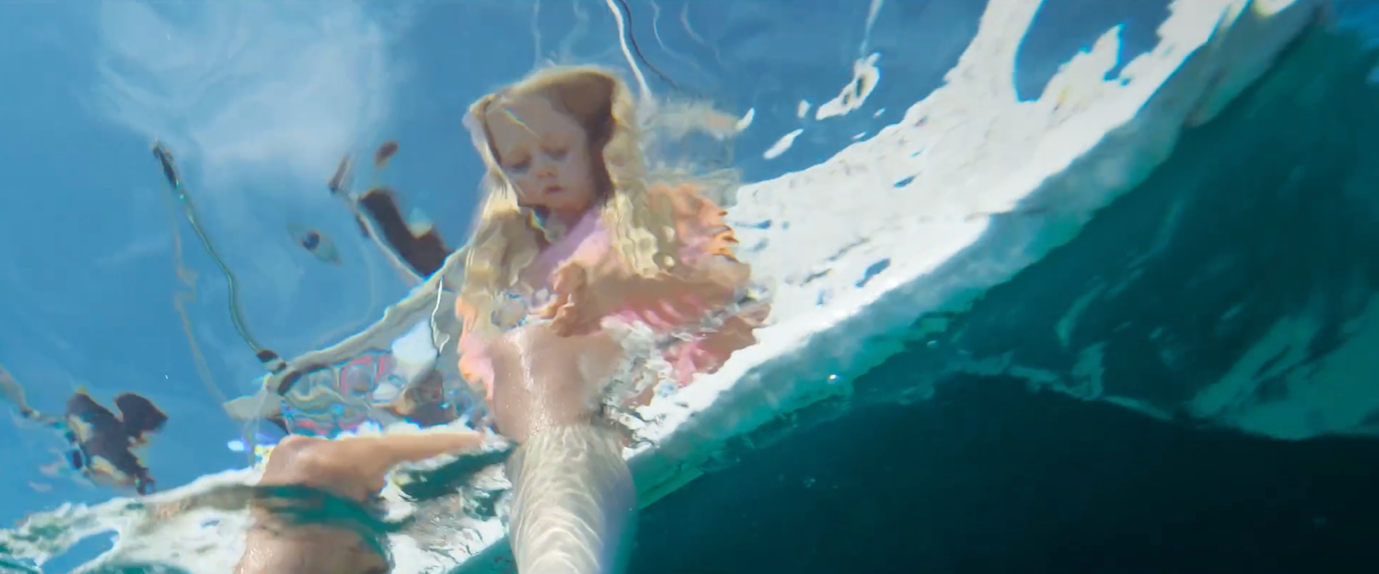
Jack's point of view
Explore
The filmmakers use different camera choices to show the relationship between Sarah and Jack.
Watch the underwater scene where twelve-year-old Sarah and Jack swim together.
In your workbook, record:
- three moments where the camera choice stands out
- what each of these choices show us
- how each influences the viewer’s understanding of the connection between Sarah and Jack
Share your observations with a partner, and then with the rest of the class.
As a class, discuss:
-
how the filmmakers use camera choices to represent the relationship between Sarah and Jack. Consider how the shots show their differences, similarities and connection.
Explore
Watch this behind-the-scenes video about the filming of the storm scenes in Whale Shark Jack.
Think, pair, share:
- Describe the impact of the storm scene have on you when you first watched the film.
- Why do you think it was important to show the power of the ocean as well as its beauty in the film?
- What made the storm scene feel believable or effective?
- Did knowing how the scene was made change the way you see it? Why?
Create
Create a storyboard to review what you have learned about cinematography!
Filmmakers carefully plan and arrange shots to communicate ideas. They decide what the audience sees, whose perspective we experience and how shots work together to create meaning.
Rewatch one of the underwater scenes we have explored, noting the different shots used.
Create a storyboard showing 5–6 key shots from the sequence.
For each shot, include:
- what the camera shows
- how the shot helps tell the story or communicate an idea
- why the filmmaker might have chosen this shot
Note: head to About Whale Shark Jack section to see storyboards created for the film.
Create
Now apply these ideas by designing your own underwater scene. Choose what you want the audience to understand or feel, and plan the shots you would use to communicate this.
Activity 3: Representing place
Reflect
Narratives often move between different settings, and filmmakers use visual choices to establish each new place.
After the storm, Whale Shark Jack jumps forward three months as Sarah begins a new life in Exmouth.
The first shot of this new setting is an establishing shot. An establishing shot introduces a location and helps the audience understand where the story is taking place.
- Compare the film's opening shot of the ocean with the establishing shot of Exmouth.
- Record your first impressions. Think about what the filmmakers have chosen to show and how the camera presents each place.
- Share your impressions with a partner and then with your class.

Opening shot of Whale Shark Jack
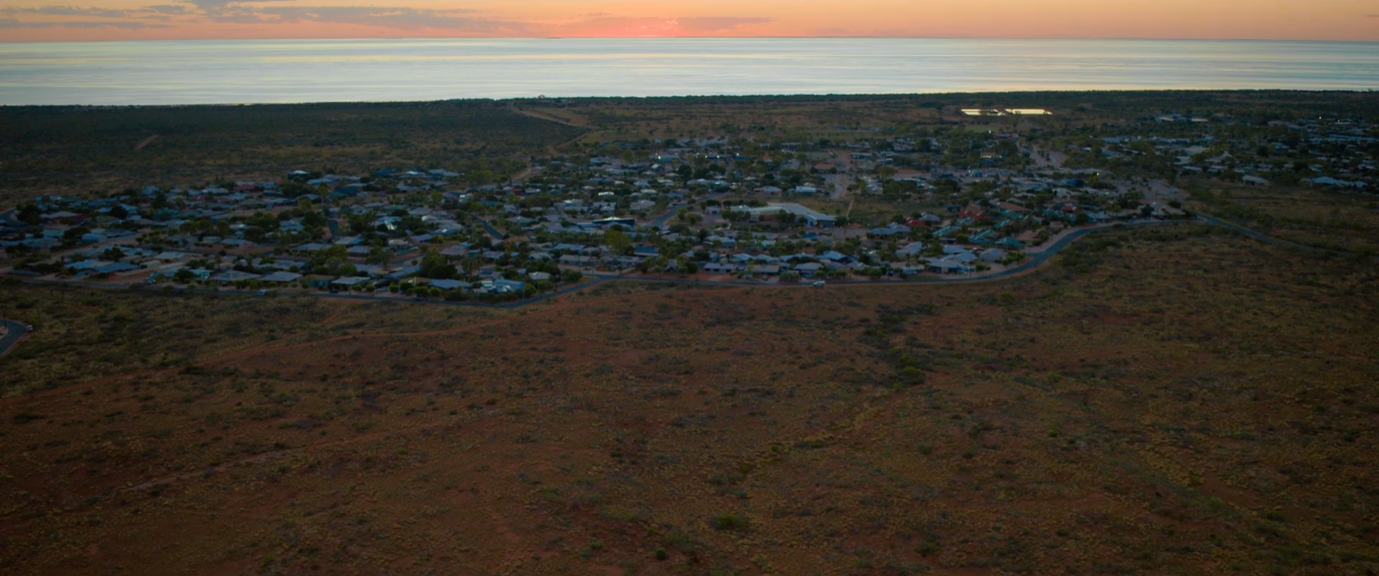
Establishing shot of Exmouth
As a class, discuss:
- what you noticed about the way each place is introduced
- the first impression each establishing shot creates
- how the contrast between these two landscapes shapes the way viewers experience the change in Sarah’s world
Explore
The establishing shot of Exmouth gives us our first impression of Sarah’s new surroundings.
Watch the introduction to Exmouth and, as the scene moves inside the house, notice how the filmmakers use setting, camera, sound and performance to show Sarah and Nita’s experience of this new place.
First viewing
As you watch, record your first impressions:
- What do you notice about this new environment?
- What feelings or ideas does the scene create?
- What moments stand out to you?
Share your observations with the class.
Second viewing
Watch the scene again. This time, focus on the filmmaking choices that shape the way we experience Sarah and Nita’s new life in Exmouth.
In pairs, discuss and record your observations under these headings.
Camera and framing
Filmmakers make choices about what the camera shows and where people are placed within the image. This is called framing.
- What do you notice about what is included within each shot?
- Where are Sarah and Nita placed within the frame?
- Do the shots make them appear connected, isolated or restricted? How?
- What effect do these camera choices create?
Setting
- How is the house shown? What details stand out?
- How does this place compare with life at sea on the boat?
- What does this environment suggest about Sarah and Nita’s experience?
Sound
- What do you notice about the use of sound in this scene?
- How does the absence of music affect the way we experience the scene?
- What does the pace and style of the dialogue communicate?
Characters
- What do Sarah and Nita’s actions, expressions and body language reveal about how they are feeling?
- What is being communicated about their experience of Exmouth?
Share your observations as a class and discuss:
- What filmmaking choices stand out?
- What do your observations reveal about the way the filmmakers represent Sarah and Nita’s experience?
Reflect
By the conclusion of Whale Shark Jack, Sarah and Nita have found a home in Exmouth while also reconnecting with their ocean.
Choose a scene that captures this idea. Explain how the filmmakers show that Sarah and Nita can belong in Exmouth while still feeling connected to the ocean.
Think about:
- setting
- characters and relationships
- camera and framing
- sound and music
- editing
Write a short paragraph explaining what you noticed. Swap your response with two or three other students and discuss the similarities and differences in your ideas.
Create
Imagine you are creating a short film set in a place that matters to a character.
Write a filmmaker’s concept statement explaining how you would represent this place. Use your understanding of film language to explain your creative choices about:
- what viewers would see - setting, colour, costumes, props and light
- how the camera would show the place - shots, framing and editing choices
- what sounds they would hear - music, natural sounds and silence
- what you want the place to communicate – the ideas, feelings or experiences you want viewers to understand
Note: A concept statement explains the creative choices you plan to make and the effect you want them to have on the audience.