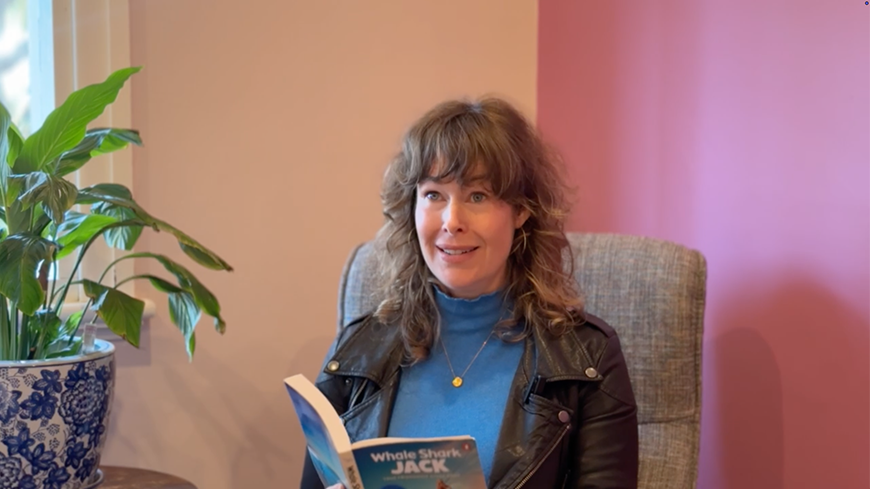
Interview with Kathryn Lefroy
In this interview, Whale Shark Jack writer Kathryn Lefroy reflects on the creative decisions behind the film, from shaping the story and characters to developing themes and bringing the screenplay to life. The questions and activities on this page invite students to explore Kathryn's insights, consider the choices writers make and deepen their understanding of the screenwriting process.
Kathryn Lefroy: Writer of Whale Shark Jack
After watching the clip, take a moment to reflect on what you have seen and respond to the questions below.
- What role did Kathryn Lefroy have in creating Whale Shark Jack?
- List two things you learnt about Kathryn as a writer.
- If you could ask Kathryn one question about her work, what would it be and why?
Kathryn Lefroy: Research and influences
After watching the clip, consider how writers draw on research, experiences and inspiration to develop their ideas. Respond to the questions below.
- What sources of research or inspiration did Kathryn use when writing Whale Shark Jack?
- How did this research help shape the story?
- Think about a topic you are interested in. What research would you need to do before writing a story about it?
Kathryn Lefroy: Themes in Whale Shark Jack
Reflect on the themes discussed in the clip and how they are explored throughout the story. Use the questions below to guide your thinking.
- What are some of the key themes explored in Whale Shark Jack?
- How are these themes communicated through the characters or events in the story?
- Which theme do you connect with most? Explain why it feels important or relevant to you.
Kathryn Lefroy: Story and script development
Think about the creative process Kathryn describes, from initial ideas through to completed drafts. Then respond to the following questions.
- What steps did Kathryn describe in developing the story and script?
- Why is revision an important part of the writing process?
- Describe a time when improving or revising your work helped create a better result.
Kathryn Lefroy: From script to book
Consider the opportunities and challenges involved in telling the same story in different formats. Respond to the questions below.
- What changes were involved in adapting the story from a script into a book?
- What are some differences between writing for the screen and writing a book?
- If you were adapting a story into a different format, what would be the most exciting challenge?
Kathryn Lefroy: A writer's reflection
Reflect on Kathryn's experiences creating Whale Shark Jack and the impact she hopes the story will have on audiences. Then answer the following questions.
- What does Kathryn home audiences learn from watching Whale Shark Jack?
- What parts of the process did she find most rewarding or challenging?
- What is something you have learnt from completing a creative project?
Kathryn Lefroy: Advice for young writers
Listen carefully to the advice Kathryn shares for aspiring writers. After watching the clip, respond to the questions below.
- What advice does Kathryn give to young writers?
- Which piece of advice do you think is most important?
- Set yourself one writing goal inspired by Kathryn's advice. What will you do next to achieve it?