Mission 4: Design a knee high spy
Learning intention: We are learning to understand that everyone has strengths and things they are still learning, and how these help us work together.
I can:
- identify strengths and weaknesses of characters
- explain how different strengths help a team
- create a character with strengths and a weakness
- understand that a weakness is something we are still learning
- recognise that everyone has different strengths
Watch
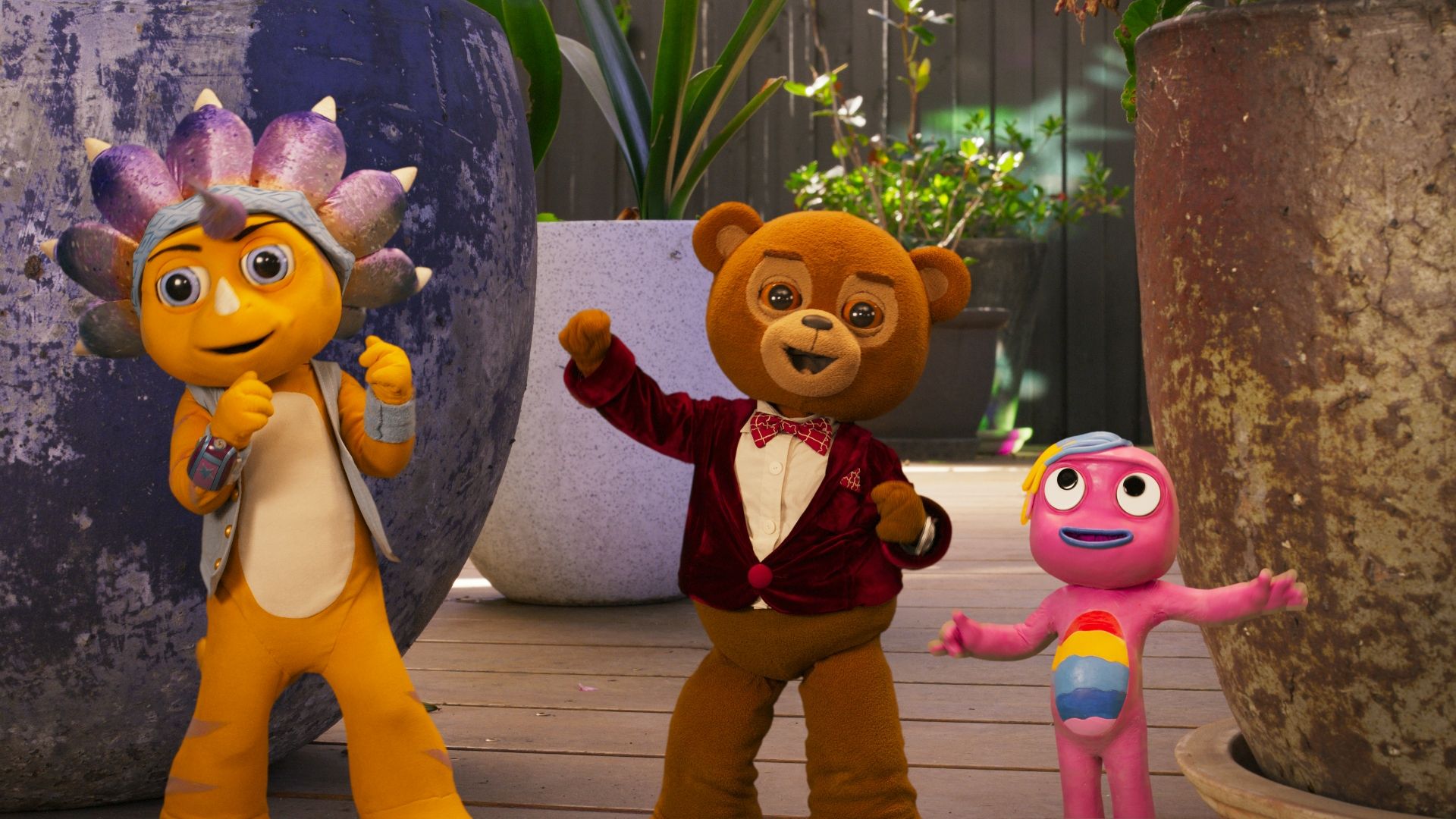
Watch the scene below from Episode 8: ‘Mission Pink Prank!’ where Jeremy Buttons is a great puzzle solver! But he needs to face his fear of heights to save the day for Scarlett, who he cares about so much. The Knee high spies all use their strengths to solve the mission!
Reflect
Show the class the below character profiles for Jeremy Buttons, Deena, Squash and Moss.
As a class, discuss the strengths and weaknesses of each character. Prompt students with questions such as:
- How do the characters use their strengths to help the team?
- Why is it important that everyone has different strengths?
After the discussion, ask students to work with a partner and think of other strengths and weaknesses a character might have. For example, brave, fast runner, shy, forgetful.
Invite a few students to share their ideas with the class. Emphasise that everyone has strengths and things they are still learning, and that both are important.
Explore
Model how to create a character profile using a classroom toy.
[insert blank character profile worksheet]
On the worksheet:
- Draw the toy.
- Think aloud as you choose two strengths. For example, super speed, musically gifted, great friend.
- Choose one weakness. For example, scared of the dark, impatient, messy)
Explain your thinking as you model so students understand how to choose realistic and balanced traits.
Create
Step 1: Mission Briefing
Gather students and speak in a dramatic “mission control” voice:
“Jeremy Buttons was brave even when he felt scared. The Knee High Spies solved the mission because everyone used their strengths. Now it’s your turn to create a hero who has strengths and something they are still working on.”
Explain:
“Good characters are balanced. They are not perfect — just like real people.”
Step 2: Plan the character
Before handing out worksheets, guide student thinking step-by-step.
Draw three boxes on the board and label them:
- Who is my character?
- What are they good at? (Strengths)
- What are they still learning? (Weakness)
Prompt their thinking:
Who is your character?
- What is their name?
- What kind of toy are they?
- What do they like to do?
Strengths (choose two):
- What are they really good at?
- What could they help a team with?
- What makes them special?
Provide examples to support vocabulary:
- Brave
- Fast runner
- Good listener
- Creative
- Strong
- Kind
- Great problem solver
- Good at sharing
Weakness (choose one):
- What might be tricky for them?
- What are they still learning?
- What might make them nervous?
Provide examples to support vocabulary:
- Afraid of heights
- Shy
- Forgetful
- Impatient
- Messy
- Scared of the dark
Emphasise that a weakness is not something bad. It is something we are still learning.
Step 3: Create character profile
Students design their own character profile.
They may choose to base this on:
- A toy from home (if previously arranged), or
- A toy from the classroom.
Students will:
- Draw their toy.
- Write or draw two strengths.
- Write or draw one weakness.
Encourage creativity while ensuring the strengths and weaknesses make sense for their character.
Step 4: Sharing and reflection
Invite a few students to share their character design.
After each share, ask:
- How could this character help a team?
- Why is their weakness okay?
- Does anyone else have a similar strength?
Highlight that different strengths make a stronger team. If everyone was the same, missions would be harder to solve!
Finish by reading the following aloud:
“Mission complete! You cracked it spies! Just like the Knee High Spies, our class is strongest when we all use our different strengths and support each other. Knee high spy five!”
Encourage students to ask their friends if they would like a high five.
|
|
Foundation |
Year 1 |
Year 2 |
|
Literature - Engaging with and responding to literature |
Respond to stories and share feelings and thoughts about their events and characters |
Discuss literary texts and share responses by making connections with students’ own experiences |
Identify features of literary texts, such as characters and settings, and give reasons for personal preferences |
|
|
Foundation |
Year 1 |
Year 2 |
|
Self Awareness - Personal Awareness |
Identify their likes, dislikes, strengths, abilities and interests, and describe how these influence choices |
Describe personal qualities and how these contribute to growth |
|